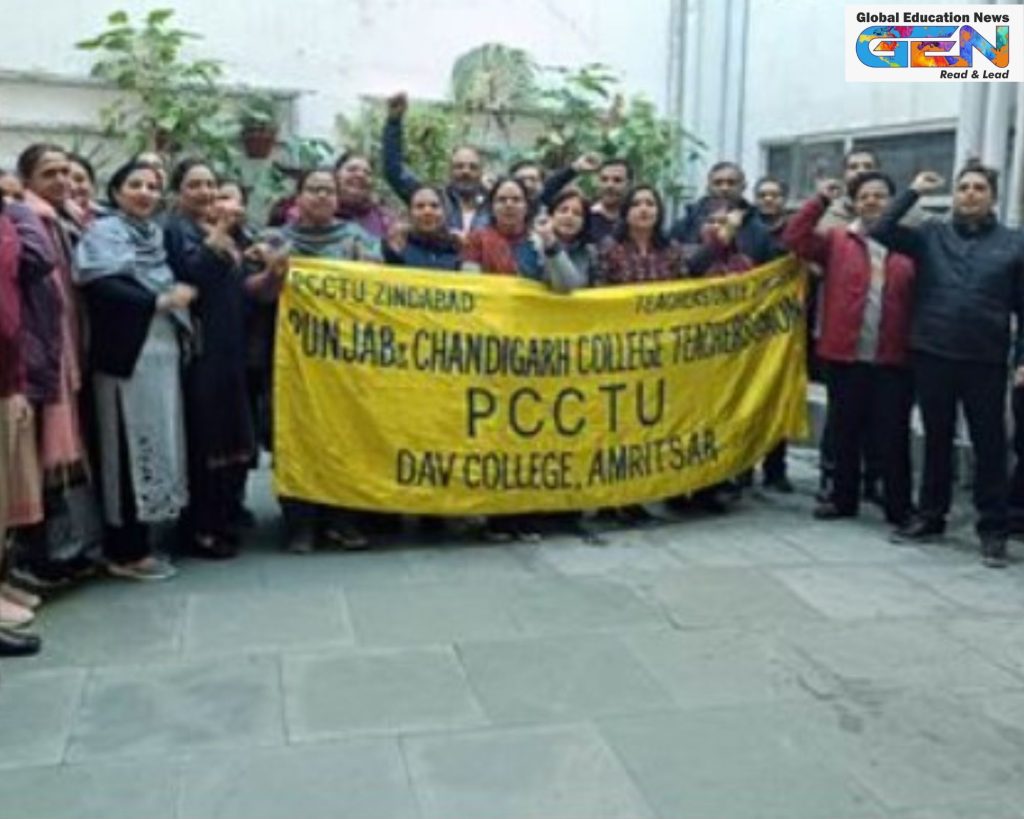
As of December 26, 2025, the corridors of Chandigarh’s government-aided colleges echo with growing discontent, as the Chandigarh Aided College Teachers’ Association (CACTA) amplifies its decade-long struggle for long-overdue University Grants Commission (UGC) benefits. In a city renowned as India’s premier education hub, where eight aided institutions educate over 30,000 students, the persistent denial of these perks isn’t just administrative foot-dragging—it’s a betrayal of national policy, eroding faculty morale and academic excellence. Stemming from a crystal-clear central directive in April 2022, the standoff highlights a troubling disconnect between Union mandates and local execution. This analysis unpacks the historical context, pinpointed grievances, human costs, and CACTA’s bold escalation plans, underscoring why swift action on UGC regulations 2018 could safeguard India’s teacher welfare and higher education equity.
The Roots of the Rift: Aided Colleges and UGC’s Promise of Parity
Government-aided colleges in India, like those in Chandigarh, operate as privately managed entities receiving 95% of their funding from the central exchequer—making them extensions of public policy rather than isolated fiefdoms. These institutions, affiliated with Panjab University (PU), blend autonomy with accountability, employing over 500 faculty members who shape the futures of diverse student cohorts in arts, sciences, and commerce.
The UGC regulations 2018—formally the “UGC (Minimum Qualifications for Appointment of Teachers and Other Academic Staff in Universities and Colleges and Measures for the Maintenance of Standards in Higher Education) Regulations, 2018″—set a gold standard for service conditions, aiming to attract and retain top talent through structured incentives. Adopted nationwide by most states and universities, including PU, these rules mandate uniform application across affiliated colleges to foster consistency in promotions, pay, and perks. Yet, in Chandigarh—a Union Territory (UT) under direct central oversight—these norms have become a flashpoint, with local administration citing “ambiguities” despite explicit federal backing. This isn’t an isolated grievance; similar implementation lags plague aided setups in other regions, but Chandigarh’s case exemplifies how policy silos undermine NEP 2020’s equity goals.
The Pivotal Pledge: Amit Shah’s 2022 Announcement and Its Unmet Echo
The saga traces back to April 1, 2022, when Union Home Minister Amit Shah unequivocally affirmed Chandigarh’s alignment with central government directives, eliminating any wiggle room for the UT administration. In a landmark statement, Shah clarified that as a UT, Chandigarh must mirror national policies without deviation—directly addressing UGC benefits for aided college teachers. This was no vague assurance; it was a green light for seamless rollout, hailed as a “historic” win by educators nationwide.
Fast-forward to 2025: Three and a half years later, the promise rings hollow. CACTA President Minakshi Rathore captured the betrayal poignantly: “After the historic announcement by Shri Amit Shah Ji on 1st April 2022, there was absolutely no scope for confusion. Yet, the Chandigarh Administration has deliberately created ambiguity without any reason, thereby denying teachers their rightful UGC benefits. This is not just a delay; it is a conscious injustice.” Multiple rounds of negotiations, including recent detentions during peaceful protests on December 21, 2025, have yielded zero progress, fueling accusations of willful neglect.
Pending Perks: A Breakdown of the UGC Benefits in Limbo
At stake are a suite of entitlements under UGC regulations 2018, designed to reward merit, combat inflation, and ensure work-life balance. These aren’t luxuries—they’re essentials for sustaining a motivated teaching cadre amid rising living costs and academic pressures. CACTA’s demands, reiterated in December 2025, center on retroactive and immediate enforcement.
| Benefit | Description | Effective Date | Why It Matters |
|---|---|---|---|
| Career Advancement Scheme (CAS) Promotions | Structured upgrades from Assistant to Associate/Professor levels based on performance and publications. | July 18, 2018 | Stalled careers mean frozen salaries; affects 70% of faculty, hindering research output and institutional rankings. |
| Dearness Allowance (DA) Enhancement | Inflation-linked pay hike to offset rising costs. | January 2025 | Delays erode real income by 5-7%; critical for mid-career teachers facing family expenses in a high-cost city like Chandigarh. |
| House Rent Allowance (HRA) | 20% of basic pay for housing support. | Immediate | Addresses acute accommodation shortages; without it, teachers forgo ₹10,000-15,000 monthly, straining budgets. |
| Probation Period Reforms | One-year probation with full salary, not half-pay. | UGC 2018 rollout | Eases entry barriers for new hires; current half-pay discourages talent, leading to 20% higher turnover. |
| Higher Superannuation Age | Extension to 65 years for sustained expertise. | UGC 2018 | Retains institutional memory; delays force premature retirements, disrupting mentorship for 30,000+ students. |
| Full UGC Regulations Compliance | Holistic adoption of 2018 norms for qualifications, service conditions, and incentives. | April 2022 onward | Ensures parity with unaided peers; non-compliance risks legal challenges and erodes trust in aided models. |
These provisions, if implemented, could inject ₹50-100 crore annually into Chandigarh’s education ecosystem, per association estimates—funds that bolster faculty development and student outcomes.
Human Toll: Morale Meltdown and Classroom Consequences
The delays transcend spreadsheets; they fracture lives and learning. Faculty, many with 10-20 years of service, grapple with stagnant pay amid Chandigarh’s 8-10% annual inflation, leading to burnout and exodus—15% of teachers eyeing private sector jumps in 2025 surveys. “We’re not asking for charity; we’re demanding dignity,” echoes a senior professor’s sentiment from recent rallies.
For students, the ripple is stark: Overburdened staff means diluted mentorship, with research supervision down 25% and extracurriculars sidelined. In a city boasting NIRF-topping institutions, this risks tarnishing Chandigarh’s sheen as a “leading education hub,” potentially deterring enrollments and investments. Broader echoes resonate across India, where aided colleges (over 5,000 nationwide) mirror these woes, amplifying calls for uniform UGC enforcement to prevent a national talent drain.
CACTA’s Counteroffensive: From Candle Marches to Mass Mobilization
True to their commitment to student welfare, CACTA has refrained from exam boycotts—a nod to the 30,000 young minds in their care. Instead, they’ve orchestrated symbolic yet searing actions: a candlelight march on December 18, 2025, drawing hundreds in a poignant display of resolve. Yet, patience wanes. On December 25, 2025, the association vowed an “intensified stir” from the next academic session, including mass protests at the Chandigarh Secretariat, marches to the Governor’s House, and sustained sit-ins at Matka Chowk.
This escalation follows exhaustive dialogues and PU Vice-Chancellor’s repeated urgings for uniform UGC adoption in aided affiliates. CACTA’s clarion call: Immediate financial releases, retroactive benefits, and a binding timeline—or face “sustained democratic agitation” that could paralyze campus life.
Horizons of Hope: Pathways to Policy Parity
The Chandigarh impasse spotlights a systemic sore: While states like Punjab and Haryana have staggered UGC rollouts with 7th Pay Commission synergies, UTs like Chandigarh lag, inviting judicial scrutiny. PU’s full embrace of 2018 regulations offers a model—enforceable via affiliation clauses—yet demands central intervention to override local inertia.
For resolution, experts advocate a tripartite task force: Ministry of Education, UGC, and UT administration, with benchmarks tied to NEP 2025 audits. Implementing these benefits wouldn’t just right wrongs; it could spark a renaissance in aided education, elevating research citations by 20% and GER in the region.