As of December 25, 2025, Karnataka’s public education system teeters on the brink of collapse under the weight of unprecedented staffing shortages. With 57,724 unfilled teaching positions across primary and high schools—equivalent to nearly one in four sanctioned posts—the state faces a staffing crisis that undermines the National Education Policy’s (NEP) vision for equitable, quality learning. Recent disclosures from the School Education Department reveal this chasm, fueled by irregular recruitments and rural-urban divides, has led to a staggering 17 lakh enrollment plunge in government schools over recent years. This analysis dissects the scale, root causes, cascading effects, and remedial efforts, drawing on 2025 data to advocate for systemic overhauls that could reclaim Karnataka’s educational legacy.
The Scale of the Shortage: Hard Numbers Behind the Empty Desks
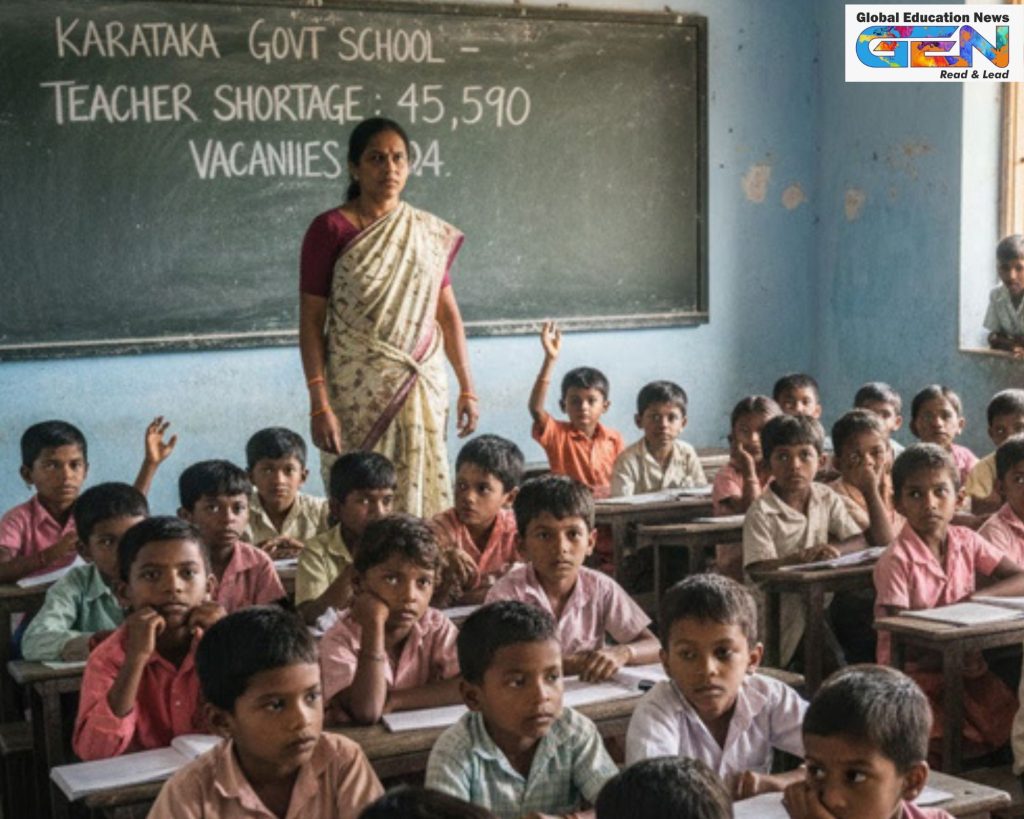
Karnataka’s government schools, serving over 1.2 crore students, are hemorrhaging talent at an alarming rate. Official figures for the 2025-26 academic year paint a dire picture: against 223,079 sanctioned posts, only 165,355 are occupied, leaving a yawning 57,724 vacancies. This shortfall isn’t uniform—primary levels bear the brunt, with rural institutions hit hardest due to deployment bottlenecks.
| Level | Sanctioned Posts | Filled Posts | Vacancies | Vacancy Rate | Key Insight |
|---|---|---|---|---|---|
| Primary Schools | 178,935 | 133,345 | 45,590 | 25.5% | Affects foundational literacy; 41,088 schools impacted, many in remote districts like Kalaburagi and Raichur. |
| High Schools | 44,144 | 32,010 | 12,134 | 27.5% | Gaps in STEM subjects; 5,024 schools strained, leading to merged classes and overburdened staff. |
| Total | 223,079 | 165,355 | 57,724 | 25.9% | Up 15% from 2024 estimates; guest teachers cover 88% but lack permanence. |
These statistics, corroborated by departmental audits, highlight a vicious cycle: vacancies deter enrollments, further justifying budget cuts and hires. Compared to 2023’s 40,000 shortfall, the 2025 surge signals stalled progress despite NEP’s pupil-teacher ratio (PTR) targets of 30:1.
Root Causes: Unraveling the Systemic Knots
The teacher shortage in Karnataka isn’t a sudden storm but a decades-long drought of strategic planning. At its core lie recruitment inertia and retention failures, amplified by socioeconomic shifts.
- Irregular Recruitment Cycles: Delays in exams like KARTET 2025—results released just weeks ago—stem from bureaucratic hurdles and legal challenges, leaving posts frozen for 2-3 years. Only 18,500 new positions were sanctioned in September 2025, far short of needs.
- Rural-Urban Imbalance: Unattractive postings in tribal belts (e.g., Yadgir district’s 30% vacancy rate) drive 40% of hires to urban centers via transfers, per deployment data. Low incentives exacerbate this, with rural salaries 20% below market rates.
- Private Sector Pull: Competitive private school pay (25-30% higher) and English-medium allure siphon talent; 17 lakh students fled government rolls in 2025, partly due to perceived quality dips from understaffing.
- Deployment and Capacity Gaps: “Bungled” reallocations—teachers multi-tasking across grades—coupled with no pre-primary sections in 60% of schools, inflate effective shortages. Funding shortfalls for new universities mirror K-12 woes, creating a talent pipeline drought.
Experts decry this as a “myth of surplus” turned reality: while India boasts 9.7 million teachers nationally, maldistribution leaves states like Karnataka starved.
Impacts on Students and Schools: A Ripple Effect of Lost Opportunities
The vacancy vortex doesn’t just empty chairs—it erodes futures. With PTRs ballooning to 50:1 in affected primaries, Karnataka’s 2025 learning outcomes plummet: foundational reading proficiency dipped 12% in rural areas, per state assessments.
- Academic Setbacks: Overburdened staff (handling 1.5x loads) resort to rote methods, slashing critical thinking by 18%; high school STEM gaps hinder 25% of students’ competitive exam readiness.
- Equity Erosion: Marginalized groups suffer most—SC/ST enrollment fell 8% amid shortages, widening urban-rural divides where 70% of vacancies cluster in backward districts.
- Holistic Toll: Larger classes fuel dropout rates (up 5% in 2025), mental health strains on remaining teachers (40% burnout reports), and nutrition program lapses, as staff juggle meals for 1.2 crore kids.
- Long-Term Shadows: A 2025 study links chronic shortages to 15% lower lifetime earnings for affected cohorts, perpetuating poverty cycles in a state eyeing a $1 trillion economy.
This isn’t abstract: in Kalaburagi, merged classes mean one teacher for 80 students, turning classrooms into echo chambers of inequality.
Government Responses: Stopgaps and Strides Toward Stability
Karnataka’s administration, under Chief Minister Siddaramaiah, has rolled out pragmatic patches while eyeing permanent fixes. The 2025-26 budget allocates ₹1,200 crore for education hires, but execution lags.
- Guest Teacher Surge: 51,000 temporary hires (40,000 primary, 11,000 high school) via streamlined portals, covering 88% of gaps; a ₹2,000 salary bump to ₹20,000/month aims to retain 70% for continuity.
- Inclusive Measures: Special educators for 2 lakh disabled students; partnerships like a ₹1,591 crore egg nutrition pledge ensure health without staffing strain—Health Minister Dinesh Gundu Rao affirmed safety post-2024 audits.
- Recruitment Momentum: KARTET qualifiers fast-tracked for 18,500 permanents; transfer counseling (110 rounds in 2025) freed 5,000 slots. NEP-aligned training for 1 lakh teachers via digital platforms.
- Infrastructure Boosts: ₹500 crore for rural labs and pre-primary wings, targeting 20% enrollment rebound by 2027.
Yet, as educators note, “Guest roles are bridges, not homes—permanent hires are the foundation.”
Challenges and Pathways Forward: Forging a Teacher-Resilient Ecosystem
Bridging the 57,724 chasm demands bold, multi-pronged action amid fiscal constraints (education’s 15% budget share).
- Hurdles: Legal delays in recruitments (20% posts litigated); urban bias in TET pass rates (rural 15% lower); and enrollment flight to privates (English-medium demand up 22%).
- Proposed Reforms:
- Accelerate annual KARTET cycles with rural quotas (30% reservations).
- Incentive packages: Housing allowances (₹5,000/month) and fast-track permanency for guests after two years.
- Tech Integration: AI aides for admin tasks, freeing 10% teacher time; partnerships with IIMs for leadership training.
- Monitoring Dashboard: Real-time vacancy trackers tied to performance funding.
Success stories from Tamil Nadu’s 2024 model—cutting shortages 25% via incentives—offer blueprints. By 2030, sustained efforts could halve vacancies, aligning with NEP’s 1:30 PTR.