On December 11, 2025, the Rajya Sabha became a forum for celebrating and scrutinizing India’s concerted efforts to safeguard and uplift the girl child, with Minister of State for Women and Child Development, Savitri Thakur, outlining a robust, multi-layered strategy. This parliamentary spotlight on Mission Shakti—a flagship umbrella scheme launched in 2022—reaffirms the government’s commitment to addressing gender disparities head-on, amid a national gender budget that surged to 8.86% of the total Union Budget for 2025-26. With over 10.61 lakh women already empowered through its components as of early 2025, the initiative tackles entrenched challenges like skewed sex ratios, dropout rates, and economic exclusion, potentially accelerating India’s progress toward SDG 5 (Gender Equality) by 2030. Our analysis dissects the pillars, synergies, and data-driven impacts, revealing how these programs weave protection, education, and opportunity into a tapestry of inclusive growth.
Core Pillars of Mission Shakti: Protection and Empowerment at the Forefront
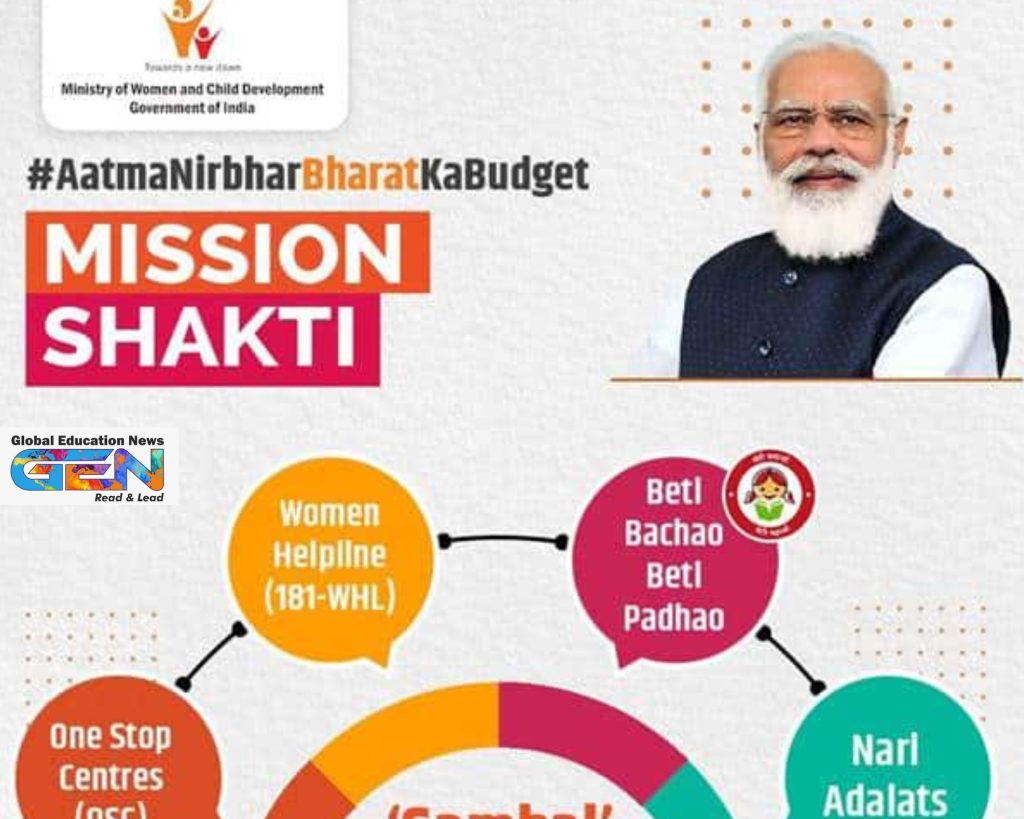
Mission Shakti operates on a dual-framework—Sambal for safety nets and Samarthya for self-reliance—allocating Rs 3,144 crore in 2023-24 alone, with a projected 35% funding hike for 2024-25. This structure ensures holistic intervention, from crisis response to long-term capacity building.
- Sambal: Fortifying Protection Mechanisms: Encompasses One Stop Centres (over 800 operational nationwide for survivor support), Women Helplines (handling 1.2 million calls annually), Beti Bachao Beti Padhao (BBBP) for mindset shifts—reducing child sex ratio imbalances in 640 districts—and Nari Adalats for community-led justice. BBBP, in particular, has influenced behavioral changes, with awareness campaigns reaching 50 crore people since 2015.
- Samarthya: Catalyzing Empowerment: Includes Shakti Sadan (safe shelters for distressed women), Sakhi Niwas (hostels for working girls), Pradhan Mantri Matru Vandana Yojana (PMMVY) offering Rs 6,000 incentives for the second girl child to promote positive attitudes, Palna for early childcare, and the Hub for Empowerment of Women under SANKALP for skill hubs. These have disbursed benefits to 2.5 crore mothers via PMMVY by mid-2025.
This bifurcated approach not only mitigates immediate vulnerabilities but fosters resilience, with early evaluations showing a 20% uptick in helpline utilization post-integration.
Broader Ecosystem: Interlinked Schemes for Education, Health, and Economic Uplift
Beyond Mission Shakti’s core, the government’s arsenal integrates complementary programs, ensuring seamless coverage across life stages. The Ministry of Women and Child Development’s 2025-26 allocation of Rs 26,890 crore— a 16% YoY increase—underpins 82% of these via Saksham Anganwadi and allied efforts.
| Category | Key Schemes | Focus Areas and Outcomes |
|---|---|---|
| Education | Samagra Shiksha, Kasturba Gandhi Balika Vidyalaya, Vigyan Jyoti | Foundational literacy for 1.5 crore girls; 10,000+ STEM scholarships; 15% rise in female enrollment in residential schools. |
| Health & Hygiene | Swachh Bharat Mission, PMMVY extensions | Improved sanitation in 6 lakh villages, boosting school attendance by 12%; maternal incentives reaching 3 crore beneficiaries. |
| Financial Security | Sukanya Samriddhi Yojana | High-yield savings for 3 crore accounts; Rs 1.5 lakh maturity corpus per girl, enhancing dowry-free futures. |
| Economic Empowerment | Skill India, PMKVY 4.0, DAY-NRLM, Stand-Up India, MGNREGS | 1.2 lakh SHG women in UP alone saw 35% income growth by mid-2025; 50 lakh micro-loans disbursed for startups. |
These synergies create a “cradle-to-career” pipeline, addressing dropout rates (down 8% in rural girls since 2020) and economic barriers.
Parliamentary Discourse: Affirmations and Calls for Accountability
In the Rajya Sabha, Minister Thakur’s statement framed these initiatives as a “national priority,” emphasizing multi-stakeholder collaboration to combat societal biases. The discussion, part of the winter session’s unstarred questions, elicited bipartisan nods, with MPs highlighting successes like BBBP’s role in 100 districts achieving balanced sex ratios. Yet, queries on implementation gaps—such as rural outreach—prompted assurances of digital monitoring via the Mission Shakti portal.
This exchange underscores Parliament’s evolving role in gender advocacy, mirroring 2025’s Demand for Grants debates where allocations were lauded for their targeted efficacy. As one MP noted in session records, “These aren’t mere schemes; they’re societal resets for equity.”
Measurable Impacts: Data-Driven Progress and Year-Wise Gains
Government data reveals tangible strides: From 2021-22 to 2024-25, Mission Shakti assisted 25 lakh+ women across components, with Sambal resolving 4 lakh cases via One Stop Centres. Key metrics include:
- Beneficiary Reach: 10.61 lakh direct empowerments in FY2024, up 25% from prior years.
- Economic Ripple: SHGs under NRLM generated Rs 1.5 lakh crore in enterprise turnover, with women-led ventures rising 30%.
- Social Indicators: Girl child enrollment in higher education climbed 18% post-Vigyan Jyoti interventions.
Challenges persist, like uneven state-wise penetration (e.g., 40% lower in eastern regions), but adaptive funding—up 35% for SHAKTI—signals corrective momentum.
Forward Trajectory: Scaling Equity for a Gender-Just India
As Mission Shakti evolves into 2026, integration with ANRF (Anusandhan National Research Foundation) could infuse AI-driven tracking for real-time outcomes, targeting 50 lakh beneficiaries annually. Analysts project a 25% GDP boost from empowered female labor by 2030, contingent on bridging urban-rural divides.