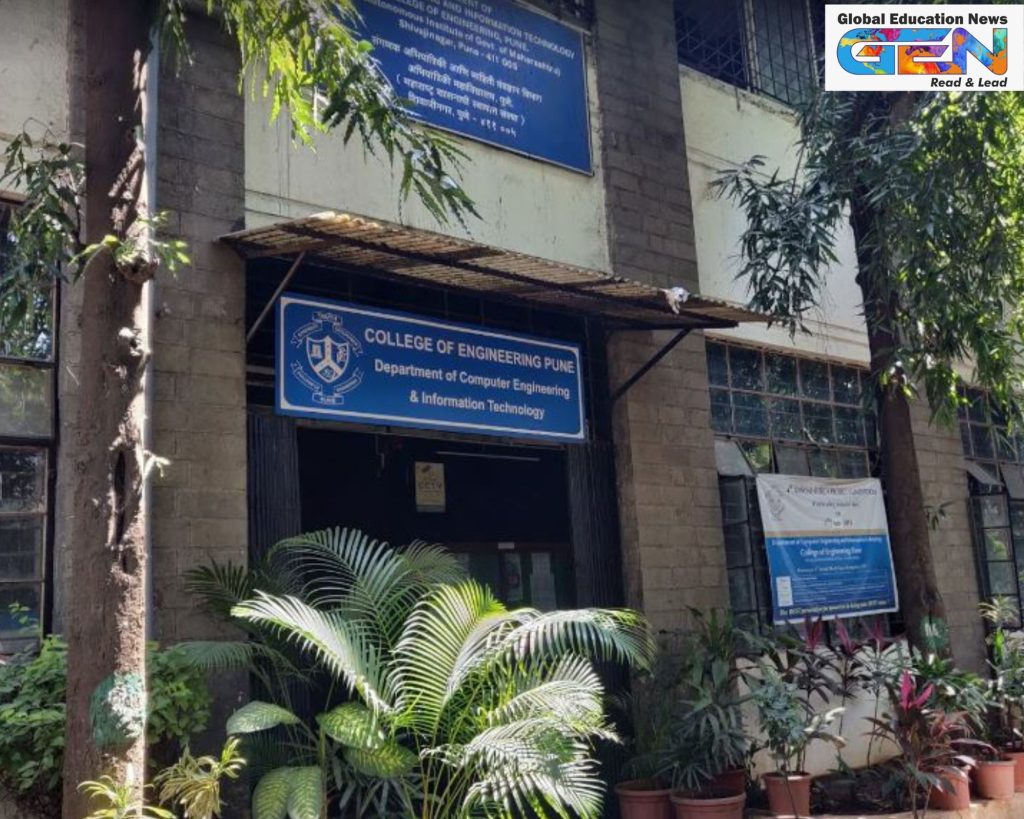
In a landmark announcement, Maharashtra’s Higher and Technical Education Minister Chandrakant Patil revealed on August 30, 2025, that the College of Engineering Pune (COEP) Technological University is on track to establish its Chikhali campus as a sub-centre of the prestigious Indian Institute of Technology (IIT) Bombay. This development, shared during COEP’s second convocation ceremony in Pune, marks a significant step toward elevating Pune’s role as a global innovation hub. With discussions underway to allow students at Chikhali to earn IIT Bombay degrees, this partnership promises to reshape technical education and research in Maharashtra. Here’s an in-depth look at this transformative collaboration.
A Strategic Partnership for Innovation
Announced at COEP’s convocation, where 358 postgraduate students (271 M.Tech, 87 MBA) and 725 undergraduate students received degrees, the partnership aims to leverage IIT Bombay’s expertise to enhance COEP’s research capabilities. The Chikhali campus, spanning 35 acres, is designed to focus exclusively on advanced research, complementing the undergraduate and postgraduate programs at COEP’s main Pune campus.
- IIT Bombay Sub-Centre Status: Discussions with the Central Government and IIT Bombay Director Shirish Kedare are exploring the possibility of recognizing Chikhali as an IIT Bombay sub-centre, potentially allowing students to earn IIT degrees.
- Research Focus: The Chikhali facility will prioritize cutting-edge research in fields like artificial intelligence, machine learning, and Internet of Things, aligning with COEP’s nine planned Centres of Excellence.
- Academic Exchange: Initial plans include course exchanges, joint projects, and shared lectures, fostering collaboration between COEP and IIT Bombay.
Why Chikhali as an IIT Sub-Centre?
The decision to designate Chikhali as a sub-centre stems from strategic and practical considerations, as establishing a new IIT in Pune is challenging due to the proximity of IIT Bombay in Mumbai.
- Regional Innovation Hub: Located near industrial estates like Chakan and Bhosari, the Chikhali campus is ideally positioned to collaborate with industry, driving innovation and technology transfer.
- Degree Prestige: By potentially awarding IIT Bombay degrees, the partnership aims to enhance the global recognition of research conducted at Chikhali, mirroring models where students earn foreign university degrees locally.
- Long-Term Vision: Minister Patil hinted at the possibility of Chikhali evolving into an independent IIT, aligning with the Developed India 2047 vision to sustain an 8% growth rate through innovation.
Impact on Students and Research
This collaboration promises significant benefits for students, researchers, and India’s technological landscape.
- Enhanced Opportunities: Students at Chikhali could access IIT Bombay’s world-class resources, faculty, and global network, boosting their career prospects.
- Industry-Relevant Research: The campus’s proximity to industrial hubs ensures research aligns with market needs, fostering innovations that could lead to patents and global licensing.
- Global Innovation Goals: As emphasized by Patil and guest speaker Arvind Goyal, Vice-Chairman of Tata Auto-Comp Systems, partnerships like this will position India as a leader in AI and digital technologies over the next two decades.
Challenges and Next Steps
While the partnership holds immense promise, challenges remain in finalizing the collaboration and infrastructure development.
- Approval Process: Discussions with the Central Government and IIT Bombay are ongoing, with no fixed timeline for formal sub-centre status.
- Infrastructure Development: The Chikhali campus, under construction since 2022 with a ₹370 million budget, is still in progress, with the state government releasing ₹25 crore of the allocated ₹150 crore.
- Balancing Autonomy: COEP, a unitary public university since gaining university status in 2022, must balance its autonomy with IIT Bombay’s oversight to ensure seamless collaboration.