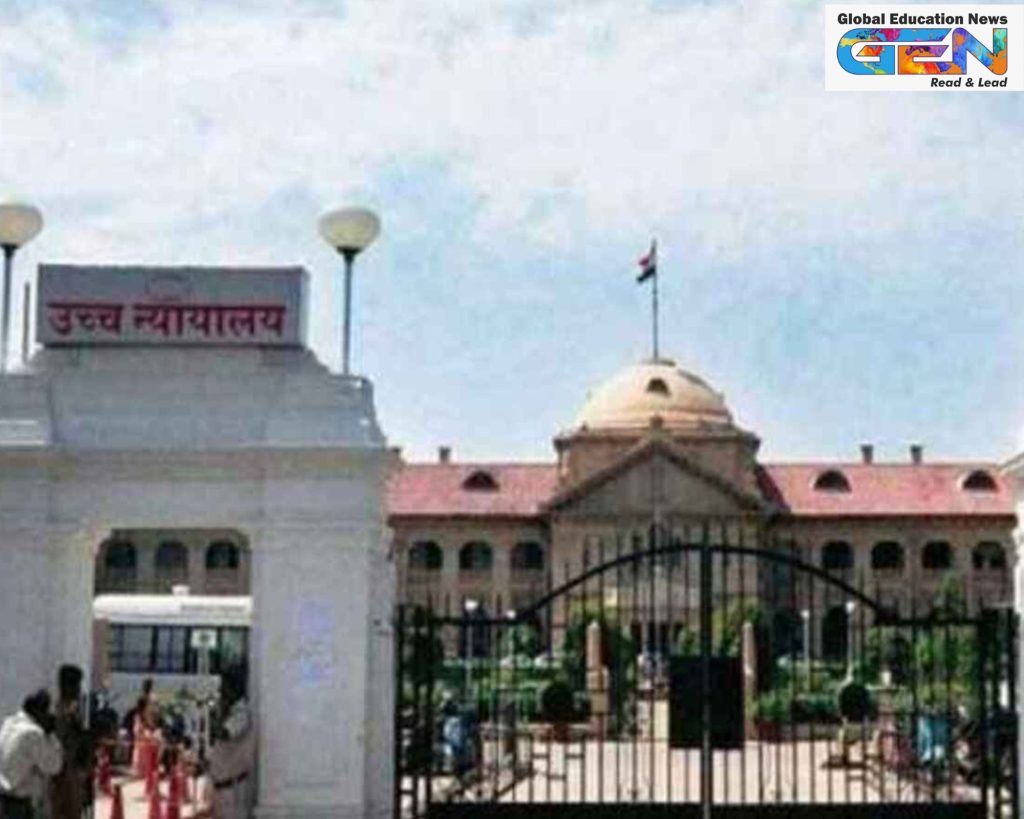
The Allahabad High Court has delivered a groundbreaking ruling by striking down Uttar Pradesh government orders that allowed over 79% reservation in government medical colleges across four districts. This decision, made by the Lucknow bench, ensures that admissions align with the Reservation Act of 2006, reinforcing the 50% reservation cap and promoting fairness in medical education.
- Key Points:
- Over 79% reservation in medical colleges deemed illegal.
- Court mandates adherence to the 50% reservation cap.
- Ruling aims to ensure equitable access to medical education.
The Case That Sparked Change
The verdict came in response to a petition filed by NEET candidate Sabra Ahmed, who challenged the excessive reservation in government medical colleges in Ambedkar Nagar, Kannauj, Jalaun, and Saharanpur. With a score of 523 marks and an all-India rank of 29,061 in NEET-2025, Ahmed highlighted that only 7 out of 85 state-quota seats were allocated to the unreserved category, violating established legal norms.
- Key Points:
- Sabra Ahmed’s petition exposed unlawful reservation practices.
- Government orders from 2010–2015 increased reservation beyond legal limits.
- Court ruling protects the rights of unreserved category candidates.
Court Rejects State’s Defense
The Uttar Pradesh government and the Director General of Medical Education and Training argued that the 50% reservation cap was not absolute, citing the Indira Sawhney case. However, Justice Pankaj Bhatia, presiding over the case, rejected this defense, emphasizing that any increase in reservation must strictly follow legal procedures outlined in the Reservation Act of 2006.
- Key Points:
- State’s reliance on Indira Sawhney case dismissed by the court.
- Reservation increases must comply with legal and procedural standards.
- Court prioritizes transparency and fairness in seat allocation.
Impact on Medical Admissions
The court’s directive to re-fill seats in the affected medical colleges marks a significant shift in Uttar Pradesh’s medical admission process. By enforcing the 50% reservation cap, the ruling ensures a balanced distribution of seats, giving unreserved category candidates a fairer chance to secure admission.
- Key Points:
- Fresh admissions to be conducted in line with the Reservation Act of 2006.
- Ruling affects colleges in Ambedkar Nagar, Kannauj, Jalaun, and Saharanpur.
- Decision promotes merit-based access to medical education.
A Step Toward Educational Equity
This landmark ruling is a victory for students seeking equitable access to medical education in Uttar Pradesh. By quashing the excessive reservation, the Allahabad High Court has set a precedent for upholding constitutional limits on reservation policies, potentially influencing similar cases across India.
- Key Points:
- Reinforces the constitutional principle of a 50% reservation cap.
- Encourages fair and transparent admission processes nationwide.
- Empowers NEET candidates to challenge unlawful reservation practices.
What’s Next for UP Medical Colleges?
The state government has been directed to conduct fresh seat allocations in strict compliance with the Reservation Act of 2006. This process will likely reshape the admission landscape for NEET 2025 aspirants, ensuring that merit and fairness take precedence in Uttar Pradesh’s medical colleges.
- Key Points:
- Fresh admissions to prioritize compliance with legal reservation limits.
- Ruling may inspire reforms in other states’ reservation policies.
- Students and educators urged to stay updated on new admission guidelines.