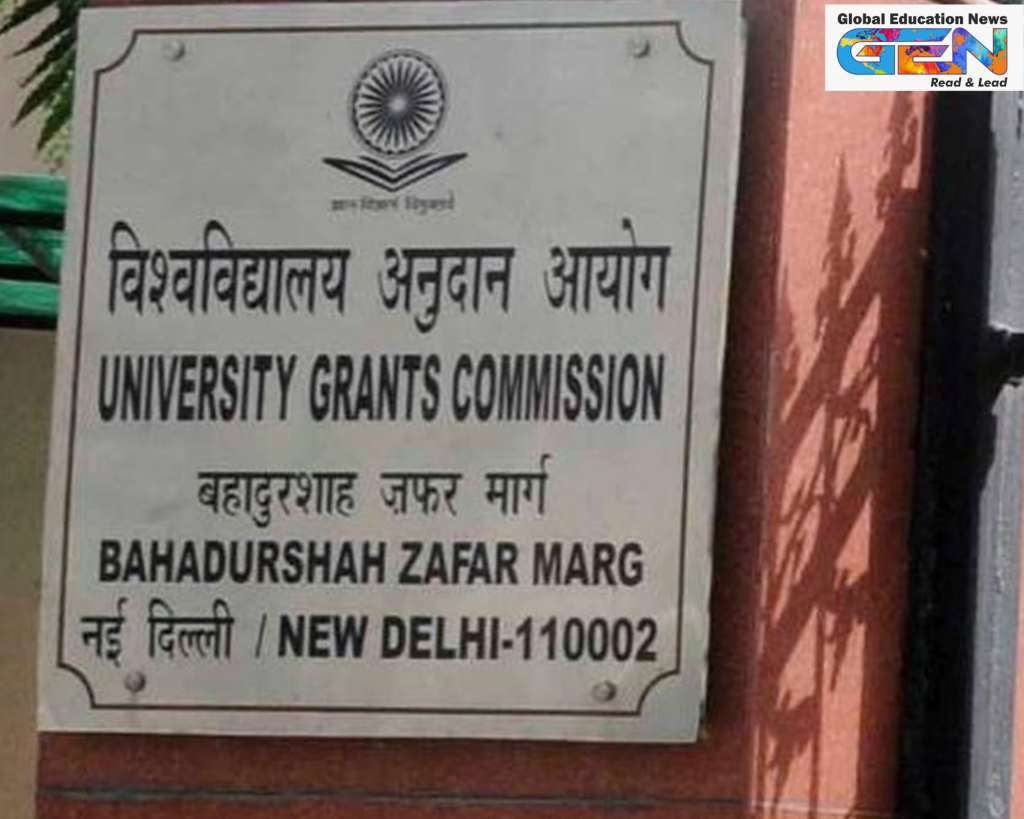
The University Grants Commission (UGC) has stirred the academic pot with its draft Learning Outcomes-based Curriculum Framework (LOCF), unveiled on August 20, 2025. Designed to align with the National Education Policy (NEP) 2020, the LOCF aims to revolutionize undergraduate education by emphasizing flexibility, innovation, and outcome-based education (OBE). Yet, the Left Democratic Front (LDF) government in Kerala has raised a red flag, labeling it a covert attempt to embed Rashtriya Swayamsevak Sangh (RSS) ideology into academia. What’s behind this clash, and how will it shape the future of Indian higher education? Let’s dive into the details.
Key Points:
- UGC’s LOCF targets nine undergraduate subjects, promoting a shift from rote learning to OBE.
- Kerala’s LDF government accuses the framework of pushing Hindutva ideology.
- The debate raises questions about academic freedom, curriculum design, and NEP 2020’s goals.
What is the LOCF and Why Does It Matter?
The LOCF is a model curriculum framework crafted by the UGC to foster “flexibility and innovation in programme design and syllabi development.” Covering subjects like Anthropology, Chemistry, Commerce, Economics, Geography, Home Science, Mathematics, Physical Education, and Political Science, it aligns with NEP 2020’s vision of holistic, multidisciplinary education. The framework emphasizes measurable learning outcomes, integrating Indian Knowledge Systems (IKS) and moving away from traditional rote learning.
The UGC has invited stakeholder feedback on the draft documents, signaling an intent to refine the framework collaboratively. But the inclusion of certain elements has sparked controversy, particularly in Kerala, where the government sees an ideological agenda at play.
Key Points:
- LOCF covers nine undergraduate disciplines, with more potentially to follow.
- Aligns with NEP 2020’s focus on multidisciplinary, outcome-based education.
- Encourages integration of Indian Knowledge Systems, sparking debate over content.
Kerala’s Pushback: A Stand Against Ideological Influence
Kerala’s Higher Education Minister, R. Bindu, has fiercely opposed the LOCF, calling it a “ploy to impose RSS’ Hindutva ideology” under the guise of educational reform. The state’s objections center on specific curriculum inclusions that Dr. Bindu argues reflect the ideological leanings of the Sangh Parivar:
- Ancient Texts as Core Content: The inclusion of texts like the Upanishads, Mahabharata, and Arthashastra in sustainable development studies is seen as prioritizing Hindu-centric narratives.
- Ideologues in Reading Lists: Recommendations to study biographies of figures like V.D. Savarkar and Deendayal Upadhyaya raise concerns about promoting RSS-aligned thinkers.
- Concepts Like ‘Ram Rajya’: Proposals to explore ‘Ram Rajya’ in contexts like corporate social responsibility (CSR) and environmental, social, and governance (ESG) frameworks are viewed as ideologically driven, contradicting NEP 2020’s aim of academic flexibility.
Dr. Bindu argues these elements risk undermining the secular and diverse ethos of Indian education, replacing it with a singular ideological lens.
Key Points:
- Kerala accuses LOCF of embedding Hindutva ideology in academic curricula.
- Specific concerns include Hindu-centric texts and ideologue-focused readings.
- The state sees a disconnect between LOCF and NEP 2020’s flexibility goals.
Academic Community’s Concerns: Flexibility or Restriction?
The academic response to LOCF is mixed, with some educators cautiously optimistic about its potential to modernize curricula, while others fear it could stifle academic freedom. Key concerns include:
- Multidisciplinary Limitations: Critics worry that the LOCF’s structure may limit interdisciplinary possibilities at the undergraduate level, contrary to NEP 2020’s vision.
- Language Faculty Impact: There’s apprehension about reduced teaching opportunities for language faculty, including English, as the framework prioritizes core subjects.
- Inconsistent Learning Outcomes: The alignment between major and minor learning outcomes is uneven, with some minors disconnected from majors or overlapping excessively, causing confusion about degree structures.
The UGC has yet to clarify whether students taking electives in the same subject for both major and minor credits will receive a single major degree or a major with a minor in a subfield, adding to the uncertainty.
Key Points:
- LOCF may limit multidisciplinary options, raising concerns among academics.
- Language faculty face potential job cuts due to curriculum restructuring.
- Unclear alignment between major and minor outcomes creates confusion.
Kerala’s Strategy: A Measured Counterapproach
The Kerala government is not sitting idle. It has tasked the Kerala State Higher Education Council (KSHEC) with conducting a thorough review of the LOCF. An expert committee will soon be formed to analyze the draft curricula and propose recommendations. This move reflects Kerala’s commitment to safeguarding its progressive educational ethos while engaging with national reforms.
The state’s response will likely influence other regions, as Kerala has a history of shaping educational discourse in India. For now, the KSHEC’s study is expected to provide a detailed critique, balancing academic innovation with concerns about ideological overreach.
Key Points:
- Kerala’s KSHEC will lead a comprehensive review of the LOCF.
- An expert committee will formulate recommendations to address ideological concerns.
- The state aims to protect its secular, progressive educational framework.
What’s at Stake for Indian Students?
The LOCF debate goes beyond policy—it impacts students, educators, and the future of Indian higher education. For students, the framework could reshape how they engage with undergraduate programs, with potential benefits like clearer learning outcomes but risks of reduced academic flexibility. For educators, the changes raise questions about job security and curriculum autonomy. Nationally, the clash between UGC and Kerala highlights broader tensions over balancing tradition, innovation, and ideological neutrality in education.
Key Points:
- Students may face changes in how undergraduate degrees are structured.
- Educators worry about job security and academic freedom.
- The debate reflects broader tensions over ideology in Indian education.
How to Navigate the LOCF Changes: Tips for Students and Educators
As the LOCF moves toward implementation, here’s how stakeholders can prepare:
- Stay Informed: Follow UGC updates and provide feedback on the draft LOCF to shape its final form.
- Engage Locally: Students and educators in Kerala can participate in KSHEC’s review process to voice concerns.
- Plan Academically: Students should research programs carefully, considering how LOCF may affect major-minor combinations.
- Advocate for Balance: Push for curricula that integrate Indian Knowledge Systems without compromising diversity or secularism.
Key Points:
- Active participation in feedback processes can influence LOCF’s final shape.
- Students and educators should prepare for potential curriculum shifts.
- Advocacy for inclusive education is crucial amid ideological debates.