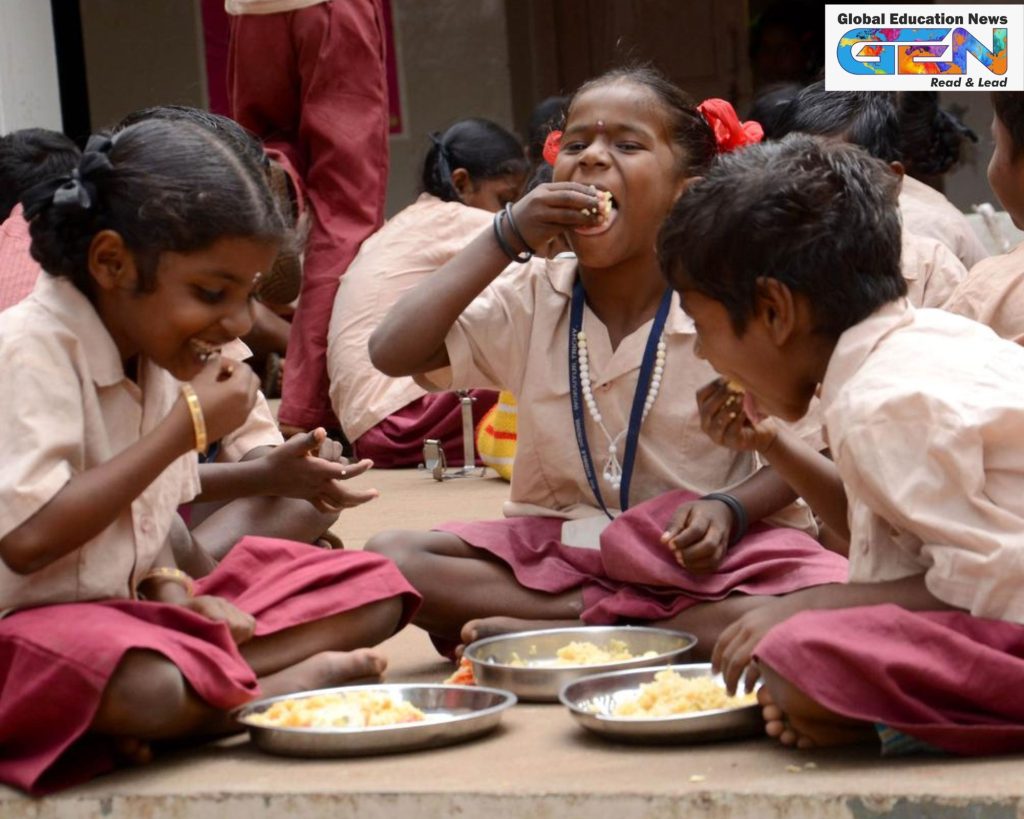
In a landmark move to enhance child nutrition and education, Tamil Nadu Chief Minister M.K. Stalin announced the expansion of the Chief Minister’s Breakfast Scheme on August 26, 2025, set to benefit 20.59 lakh students across government and aided primary schools. Launched as a pioneering initiative to combat hunger and foster academic growth, this scheme underscores Tamil Nadu’s legacy of innovative school meal programs. With a vibrant menu and a focus on student welfare, this expansion is a game-changer for young learners. Here’s a deep dive into the scheme’s impact, history, and what it means for Tamil Nadu’s future.
A Milestone Expansion: Reaching 20.59 Lakh Students
The Chief Minister’s Breakfast Scheme, a flagship program of the Tamil Nadu government, is expanding to include government and aided primary schools in urban areas, bringing the total coverage to 20.59 lakh students from Classes 1 to 5. Launched at St. Susaiyappar Primary School in Mylapore, Chennai, by CM M.K. Stalin, the event will see Punjab CM Bhagwant Mann in attendance, highlighting the scheme’s national significance.
Key Points:
- Coverage: Now benefits 20.59 lakh students across 2,430 additional schools in urban areas.
- Launch Date: Expansion kicks off on August 26, 2025, at a ceremony in Chennai.
- Objective: Provides free breakfast to address hunger, improve attendance, and enhance learning outcomes.
- Inter-State Recognition: Punjab CM’s presence underscores the scheme’s model status for other states.
A Legacy of Nourishment: Tamil Nadu’s Pioneering Role
Tamil Nadu has a storied history of prioritizing student nutrition, dating back to the Justice Party’s early efforts. The Breakfast Scheme builds on this legacy, evolving from the iconic noon meal program introduced by late CM K. Kamaraj, upgraded by M.G. Ramachandran into a nutritious meal scheme, and enhanced by M. Karunanidhi with the addition of eggs.
Key Points:
- Historical Roots: Initiated with K. Kamaraj’s noon meal program, a first-of-its-kind in India.
- Evolution: MGR’s nutritious meal scheme and Karunanidhi’s egg inclusion set benchmarks for child welfare.
- Launch of Breakfast Scheme: Began on September 15, 2022, at Adhimoolam Corporation Primary School in Madurai, marking India’s first school breakfast program.
- Previous Expansions: Scaled up in August 2023 (18.5 lakh students, 30,992 schools) and July 2024 (2.23 lakh students, 3,995 aided schools).
Impact on Students: More Than Just a Meal
The Breakfast Scheme is more than a meal—it’s a foundation for growth, as CM Stalin describes. By providing free breakfast daily from Monday to Friday, the program boosts school attendance, improves learning abilities, and supports child health. A study by the State Planning Commission highlights increased enrollment ratios and improved student aptitude, making this a model for school nutrition programs nationwide.
Key Points:
- Health Benefits: Addresses anemia and malnutrition, targeting areas with high prevalence as per NHFS-5 data.
- Academic Impact: Enhances concentration and attendance, with a reported 10% rise in enrollment since 2022.
- Menu Variety: Offers 13 food items, including Rava Upma, Vegetable Sambar, Pongal, and Sweet Kesari, ensuring nutritional diversity.
- Social Impact: Reduces hunger-related barriers, fostering equality in education access.
The 2025 Expansion: What’s New?
The latest phase extends the scheme to 3.5 lakh additional students in 2,430 government-aided schools in urban areas, ensuring comprehensive coverage across Tamil Nadu. This marks the fourth phase of expansion since the scheme’s inception, reflecting the state’s commitment to child development.
Key Points:
- Urban Focus: Targets urban government and aided primary schools, previously covering rural areas.
- Scale: Adds 3.5 lakh students, bringing the total to 20.59 lakh across thousands of schools.
- Menu Details: Includes Upma, Kitchadi, Pongal, and sweets like Kesari, served with vegetable sambar for balanced nutrition.
- Event Significance: CM Stalin and Punjab CM Mann’s joint launch highlights inter-state collaboration.
Eligibility and Application Process
The Breakfast Scheme is designed to be inclusive, requiring no formal application process, making it accessible to all eligible students.
Key Points:
- Eligibility: Open to students in Classes 1 to 5 in Tamil Nadu’s government and aided primary schools.
- No Documentation: Benefits are provided directly at schools, eliminating paperwork barriers.
- Coverage: Applies to all school working days, ensuring consistent nutrition support.
- Official Portal: Details available at tnsocialwelfare.tn.gov.in.
Why It Matters: A Model for India
The Chief Minister’s Breakfast Scheme has drawn national and international attention, with states like Punjab and even countries like Canada exploring similar models. CM Stalin calls it a “pioneering work” that sets a benchmark for student welfare programs. With a budget of ₹33.56 crore initially and ongoing investments, the scheme reflects Tamil Nadu’s Dravidian Model of governance, prioritizing social equity and education.
Key Points:
- National Recognition: Leaders like Punjab CM Bhagwant Mann endorse its impact.
- Global Influence: Similar programs inspired in Canada, showcasing Tamil Nadu’s leadership.
- Economic Support: Addresses economically backward areas and tribal regions, reducing disparities.
- Future Growth: Stalin vows to continue such initiatives, ensuring Tamil Nadu’s leadership in education reform.
Complementary Education Initiatives
The Breakfast Scheme is part of Tamil Nadu’s broader commitment to student welfare. Programs like Illam Thedi Kalvi (₹660.35 crore, benefiting 3.4 million students) and Ennum Ezhuthum (2.5 million students) complement it, alongside infrastructure upgrades like 22,900 smart classrooms and 8,209 high-tech labs. These efforts collectively enhance the state’s education ecosystem.
Key Points:
- Illam Thedi Kalvi: Engaged 5.98 lakh students in 2025 with ₹44.14 crore funding.
- Ennum Ezhuthum: Supports 2.5 million students in literacy and numeracy skills.
- Infrastructure: High-speed internet in 28,067 schools and smart classrooms for 16.77 lakh students.
- Holistic Approach: Combines nutrition, education, and technology for comprehensive child development.
How to Get Involved
Parents, educators, and community members can support the scheme by spreading awareness and ensuring student participation. No registration is needed—students automatically receive breakfast at school. For updates, visit the official portal or follow @CMOTamilnadu on social media.
Key Points:
- Community Role: Encourage attendance to maximize the scheme’s benefits.
- Stay Updated: Follow tnsocialwelfare.tn.gov.in for guidelines and updates.
- Feedback: Share experiences to help refine the program’s implementation.
- National Advocacy: Promote similar schemes in other states for broader impact.