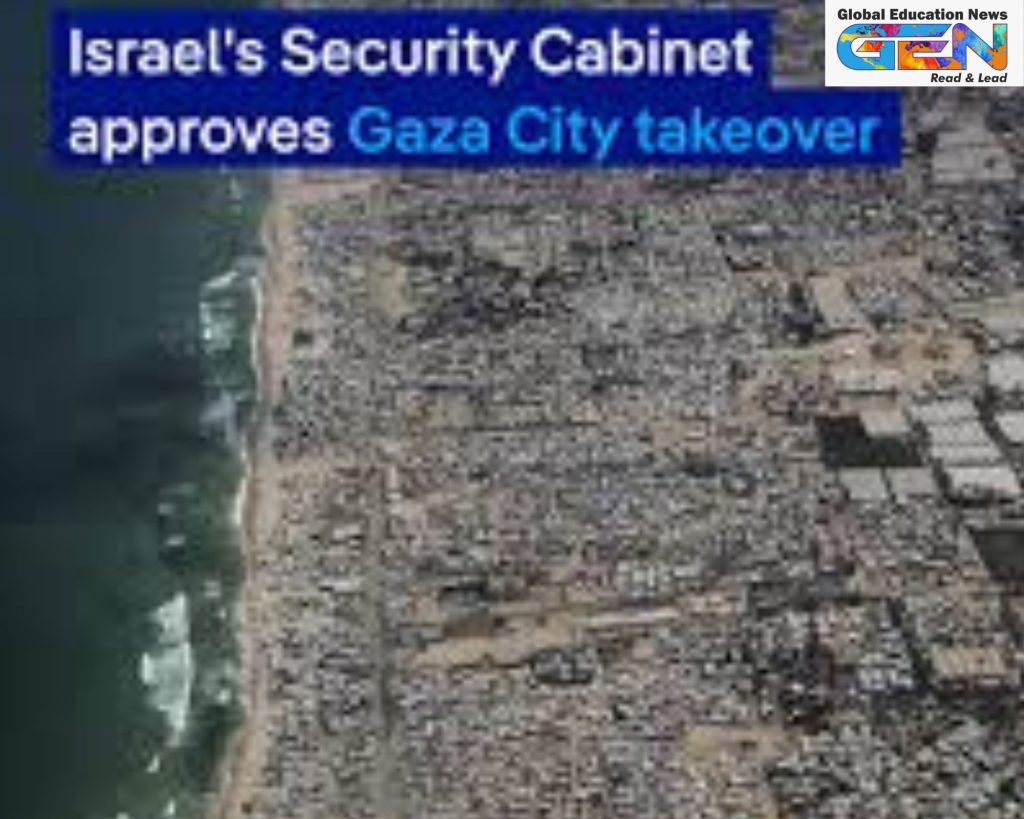
On August 8, 2025, Israel’s Security Cabinet approved Prime Minister Benjamin Netanyahu’s plan to take military control of Gaza City, marking a significant escalation in the nearly two-year Israel-Gaza war. The decision, made after a 10-hour meeting, aims to defeat Hamas, secure the release of hostages, and establish Israeli security control over the enclave. However, it has sparked fierce opposition, with Israeli opposition leader Yair Lapid labeling it “a disaster that will lead to many more disasters” and international voices warning of catastrophic consequences.
Key Points:
- Security Cabinet Vote: Approved Netanyahu’s plan to take over Gaza City, with intentions to eventually control the entire Gaza Strip.
- Five Objectives: Disarm Hamas, return all hostages (50 total, ~20 believed alive), demilitarize Gaza, establish Israeli security control, and create a non-Hamas, non-Palestinian Authority civilian administration.
- Opposition: Yair Lapid and military leaders, including IDF Chief of Staff Lt. Gen. Eyal Zamir, strongly oppose the plan, citing risks to hostages and soldiers.
Yair Lapid’s Critique: A Strategic Misstep?
Israeli opposition leader Yair Lapid condemned the decision, accusing far-right ministers Itamar Ben-Gvir and Bezalel Smotrich of pressuring Netanyahu into a move that aligns with Hamas’s interests. Lapid warned that the takeover would:
- Endanger the lives of the 20 remaining hostages believed to be alive.
- Lead to the deaths of many Israeli soldiers in prolonged fighting.
- Cost tens of billions to Israeli taxpayers.
- Cause political collapse and trap Israel in a “useless occupation” without a clear post-war plan.
Lapid’s post on X stated, “This is exactly what Hamas wanted: for Israel to be trapped in the field without a goal, without defining the picture of the day after.” He argued that the decision contradicts military advice and ignores the exhaustion of Israeli forces after nearly two years of conflict.
Key Points:
- Lapid accuses Netanyahu of yielding to ultranationalist ministers to preserve his coalition.
- Warns of a prolonged insurgency and humanitarian burden with no clear strategy.
- Public sentiment, per polls, favors a ceasefire deal to secure hostage release over escalation.
Military and Hostage Concerns
The Israeli Defense Forces (IDF), led by Lt. Gen. Eyal Zamir, expressed significant reservations about the plan. Zamir warned that occupying Gaza City could:
- Endanger the 20 living hostages held by Hamas in tunnels and secret locations.
- Overburden an already exhausted military, with reservists having served multiple tours.
- Lead to a humanitarian disaster by displacing up to 1 million Palestinians from Gaza City.
Families of hostages, such as Einav Zangauker, whose son Matan is among the captives, protested outside Netanyahu’s office, accusing him of sabotaging ceasefire talks. The Hostages and Missing Families Forum called the decision a “death sentence” for captives, urging a deal to end the war.
Key Points:
- Hostage Risks: Hamas has threatened to execute hostages if Israeli forces advance.
- Military Strain: IDF leadership prefers a ceasefire over a full-scale occupation.
- Protests: Demonstrations across Israel demand an end to the war and hostage release.
Humanitarian and International Fallout
The plan involves evacuating Palestinian civilians from Gaza City to central camps by October 7, 2025, followed by a ground offensive and siege against Hamas militants. This has raised alarms about:
- Forced Displacement: Up to 1 million Palestinians could be displaced, exacerbating the existing humanitarian crisis.
- Famine Conditions: UN agencies report 99 hunger-related deaths in 2025, with acute malnutrition affecting 12,000 children under five in July alone.
- Infrastructure Devastation: Over 60% of Gaza’s buildings and critical infrastructure have been destroyed, with 87% of the territory under militarized zones or evacuation orders.
International condemnation has been swift:
- UK Prime Minister Keir Starmer called the plan “wrong,” warning it would lead to “more bloodshed.”
- UN High Commissioner Volker Türk demanded the plan be halted, citing violations of international humanitarian law and International Court of Justice rulings.
- Turkey, Spain, and China condemned the escalation, urging a ceasefire and humanitarian aid access.
- US President Donald Trump took a neutral stance, stating the decision is “up to Israel.”
Key Points:
- Humanitarian Crisis: Gaza faces famine, with 61,000 Palestinians killed since October 2023, a third of them children.
- International Law: Forced displacement and occupation violate global norms, risking further isolation for Israel.
- Aid Challenges: Israel plans to provide aid outside combat zones, but UN agencies criticize existing restrictions.
Netanyahu’s Vision: Control Without Governance?
Netanyahu outlined a plan to take control of Gaza City, with intentions to eventually secure the entire Gaza Strip, but emphasized Israel does not want to govern it permanently. He proposed handing over administration to “friendly Arab forces” opposed to Hamas, while maintaining an Israeli security perimeter.
- The plan includes disarming Hamas, demilitarizing Gaza, and establishing a new civilian administration.
- Netanyahu rejected an Egyptian proposal for a Palestinian technocratic administration, favoring Israeli security control.
- Some analysts suggest the escalation may be a tactic to pressure Hamas into ceasefire concessions.
Key Points:
- Temporary Occupation: Framed as a limited operation to avoid long-term governance.
- Arab Forces: Netanyahu envisions a coalition to govern Gaza, though no Arab nation has agreed.
- Hamas Response: Called the plan a “coup” against ceasefire talks, accusing Netanyahu of prioritizing personal interests.
The Broader Context: A War-Weary Region
The Israel-Gaza war, sparked by Hamas’s October 7, 2023, attack that killed 1,200 Israelis and abducted 251 hostages, has devastated Gaza. With 61,000 Palestinian deaths and 90% of the population displaced, the territory faces a humanitarian catastrophe. The decision to take over Gaza City, home to partially functioning hospitals and displaced communities, risks further destruction and loss of life.
Key Points:
- Casualties: 42 Palestinians killed in southern Gaza airstrikes on August 7, 2025, including 13 aid-seekers.
- Hostage Crisis: Of the 50 remaining hostages, only 20 are believed alive, held in Hamas tunnels.
- Global Pressure: Allies like the UK and EU urge a ceasefire, while Israel faces accusations of genocide and ethnic cleansing, which it denies.
What’s Next? A Precarious Path Forward
The Gaza City takeover plan awaits full cabinet approval, expected by Sunday, August 10, 2025, and will involve tens of thousands of Israeli troops. The operation’s success hinges on navigating:
- Military Challenges: Urban warfare in Gaza City’s dense streets could lead to guerrilla-style fighting.
- Hostage Safety: Families fear Hamas may execute captives if troops advance.
- International Isolation: Continued escalation risks further sanctions and strained alliances.
The decision reflects a divide between Netanyahu’s coalition, bolstered by far-right ministers, and military leaders advocating for diplomacy. As protests grow in Israel and Gaza braces for more displacement, the path to peace remains uncertain.
Key Points:
- Full Cabinet Vote: Required to finalize the plan, potentially by August 10.
- Public Protests: Tens of thousands in Israel demand a ceasefire and hostage deal.
- Global Stakes: The plan could derail ceasefire talks and worsen Gaza’s humanitarian crisis.