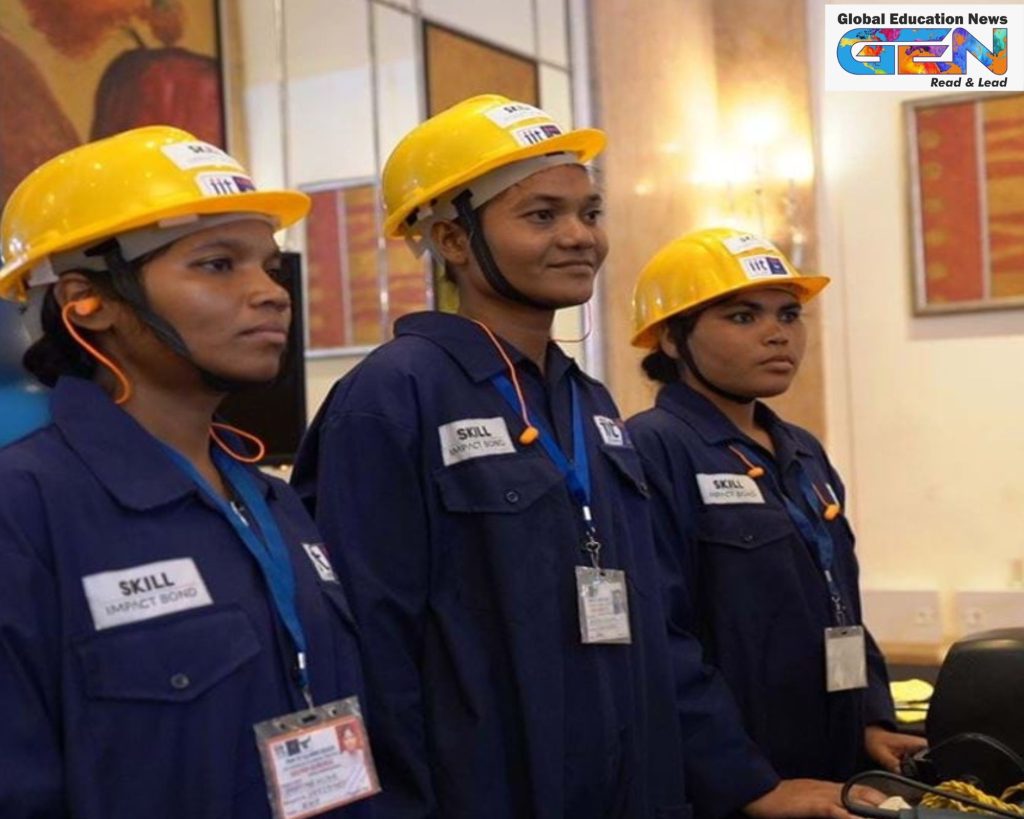
Launched in November 2021, the Skill Impact Bond (SIB) is India’s first development impact bond dedicated to transforming vocational training by prioritizing job placement and retention over mere enrolment. Spearheaded by the National Skill Development Corporation (NSDC) under the Ministry of Skill Development and Entrepreneurship, this $14.4 million initiative aims to skill 50,000 young Indians by 2025, with 62% being women. Backed by a global coalition including the British Asian Trust, Michael & Susan Dell Foundation, and HSBC India, the SIB is reshaping India’s skilling landscape with a focus on retail, healthcare, apparel, logistics, IT-ITeS, and BFSI sectors. Ready to see how it’s changing lives? Let’s dive in
- Key Points:
- Targets 50,000 youths, 62% women, for job-ready skills by 2025.
- Focuses on high-demand sectors like retail, healthcare, and IT.
- Outcome-based funding rewards certification, placement, and retention.
What Makes the Skill Impact Bond Unique?
Unlike traditional skilling programs that measure success by enrolment numbers, the SIB uses an outcome-based financing model. This innovative approach, backed by $4 million from risk investors like NSDC and the Michael & Susan Dell Foundation, ties funding to measurable results:
- Certification: Completing training in sectors like retail or healthcare.
- Job Placement: Securing wage employment.
- Retention: Staying employed for at least three months.
Outcome funders (e.g., JSW Foundation, HSBC India) repay investors only when these outcomes are achieved, verified by Oxford Policy Management through CATI surveys and document checks. This ensures accountability and drives real-world impact.
- Key Points:
- Outcome-based model prioritizes jobs over training completion.
- $14.4 million fund, with $4 million from risk investors.
- Independent verification ensures transparency and accountability.
Empowering Women: Closing the Gender Gap
With India’s female labour force participation rate at a low 20.3%—the lowest in South Asia—the SIB places women at its core. Targeting 62% female participants, it addresses barriers like socio-cultural norms, poor health, and lack of mobility. By Cohort IV (six-month training cycles), women achieved:
- 92% certification rate (up from 86%).
- 81% job placement rate (up from 66%).
- 66% three-month retention rate (up from 48%).
Women are also embracing entrepreneurship, with self-employment rising from 6% to 14%, especially among sewing machine operators. Strategies like family engagement, workplace familiarization, and post-placement support have boosted retention, narrowing the gender gap in outcomes.
- Key Points:
- 74% of trainees are women from low-income backgrounds.
- Significant improvements in certification, placement, and retention.
- Encourages women’s entrepreneurship, especially in apparel.
Regional Impact and Success Stories
By July 2025, the SIB has trained 29,000 first-time job seekers across 24 states and union territories, with 73% securing jobs. Jharkhand leads with 27% of total enrolment, followed by Uttar Pradesh (9.1%), Maharashtra (8.7%), Odisha (8.3%), and Telangana (6.7%). A standout story is Baindla Hemalatha, a 26-year-old from Hyderabad, who completed IT/ITeS training through Magic Bus India Foundation and secured a job at Kapston Services with a competitive salary. Such stories highlight the SIB’s focus on low-income youth (household income < ₹25,000/month) aged 18-40 with education up to undergraduate level.
- Key Points:
- 29,000 trained, 73% employed across 18 sectors.
- Jharkhand leads enrolment, followed by UP and Maharashtra.
- Success stories like Baindla Hemalatha showcase real impact.
Challenges and Solutions
Despite its success, the SIB faces challenges:
- Gender Pay Gap: Men earn ₹12,400-₹15,700/month, while women earn ₹11,500-₹13,000.
- Retention Barriers: Socio-cultural norms and mobility issues hinder women’s long-term employment.
- Scale: Reaching 50,000 trainees by 2025 requires sustained effort.
To address these, the SIB employs contextualized counseling (engaging families), fit-for-purpose curricula aligned with employer needs, and post-placement tracking to reduce dropouts. These strategies have led to 56% of women and 62% of men retaining jobs for three months, with 40% of women and 66% of men staying employed for six months.
- Key Points:
- Gender pay gap persists but is narrowing.
- Family engagement and mobility support boost retention.
- Rigorous monitoring ensures continuous improvement.
The Power of Partnerships
The SIB’s success stems from its global coalition:
- Risk Investors: NSDC, Michael & Susan Dell Foundation ($4 million).
- Outcome Funders: JSW Foundation, HSBC India, CIFF, Dubai Cares.
- Technical Partners: USAID, UK’s FCDO.
- Training Partners: Gram Tarang, Learnet Skills, Magic Bus, PanIIT, Tata STRIVE.
- Evaluators: Oxford Policy Management, with Dalberg Advisors as performance managers.
This collaboration, praised by Shri Atul Kumar Tiwari, Secretary of MSDE, fosters innovation, data-driven decisions, and gender-responsive delivery, setting a model for future skilling programs.
- Key Points:
- Diverse coalition drives innovation and accountability.
- Training partners deliver across 24 states and 18 sectors.
- Independent evaluation ensures credible outcomes.
Tips for Aspiring Trainees
Want to join the Skill Impact Bond? Here’s how:
- Check Eligibility: Age 18-40, household income < ₹25,000/month, education up to undergraduate.
- Apply via NSDC Partners: Contact training providers like Magic Bus or Tata STRIVE.
- Prepare for Commitment: Expect six-month training with job placement support.
- Leverage Support: Engage with counseling and post-placement guidance to stay employed.
Visit nsdcindia.org for program details and application processes.
- Key Points:
- Open to low-income youth aged 18-40.
- Apply through NSDC-affiliated partners.
- Benefit from counseling and job retention support.
The Bigger Picture: A New Skilling Paradigm
The Skill Impact Bond is more than a program—it’s a paradigm shift in India’s skilling ecosystem. By focusing on outcomes over inputs, it aligns with NEP 2020 and NIPUN Bharat, addressing India’s youth employment crisis (exacerbated by COVID-19) and low female workforce participation (20.3%). With 70% of women and 81% of men securing jobs, and retention rates improving, the SIB is proving that gender-responsive, outcome-driven skilling can transform lives. As Richard Hawkes, CEO of British Asian Trust, noted, “Linking funding to outcomes is having an incredible impact.” Will this model redefine skilling globally?
- Key Points:
- Aligns with NEP 2020’s focus on employability.
- Addresses low female workforce participation (20.3%).
- Sets a global model for outcome-based skilling.
Join the Skilling Revolution!
The Skill Impact Bond is rewriting the rules of vocational training, empowering 29,000+ youths—74% women—with jobs and skills across India. With 75% job placement and 60% three-month retention at its midpoint, it’s a beacon of hope for low-income communities. Aspiring trainees, connect with NSDC partners at nsdcindia.org to join the next cohort. Educators and policymakers, take note: this outcome-driven model is the future! As @britishasiantst tweeted, “#SkillImpactBond is transforming lives with 23,000+ trained and 75% in jobs!” Let’s skill India for a brighter, more inclusive future!