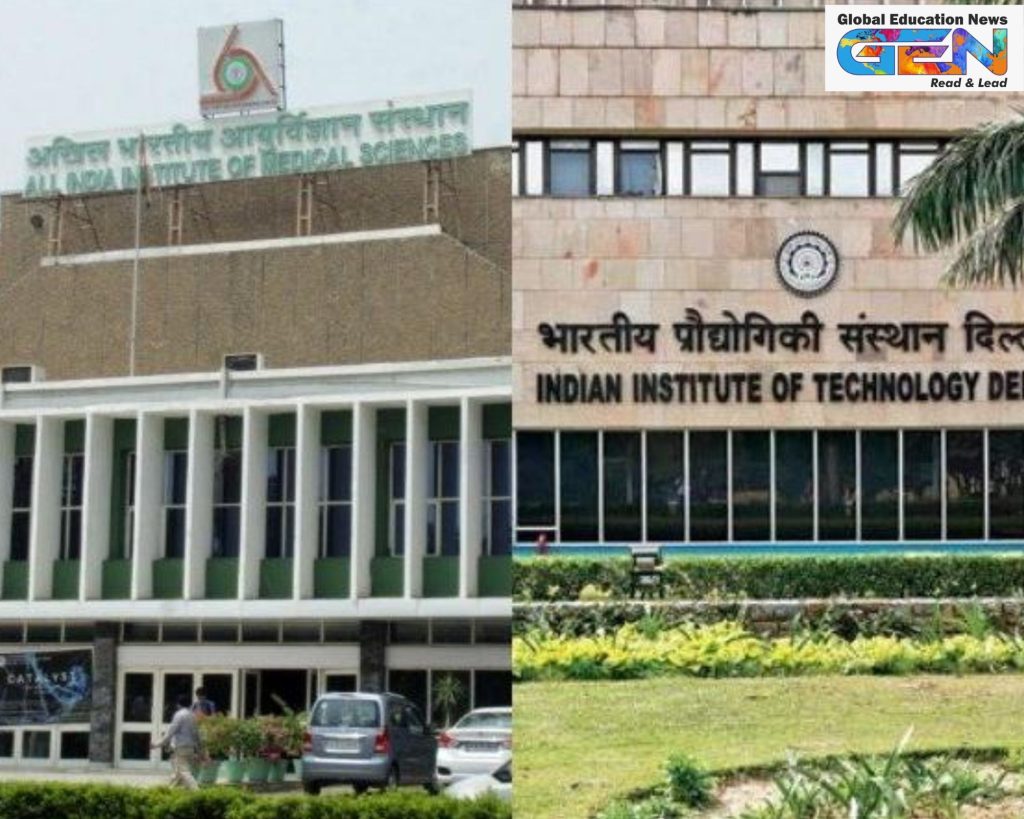
A groundbreaking partnership between IIT Delhi and AIIMS Delhi is set to redefine healthcare in India! On June 4, 2025, these top institutions signed a Memorandum of Understanding (MoU) to establish a Center of Excellence for Artificial Intelligence in Healthcare (AI-CoE). With a hefty ₹330 crore grant, this initiative aims to transform national health programs by leveraging artificial intelligence (AI) for early diagnosis, affordable care, and outreach to underserved communities.
- MoU Signed: Formalized on June 4, 2025, by Prof. M Srinivas (AIIMS) and Prof. Rangan Banerjee (IIT Delhi).
- Funding Power: ₹330 crore grant from the Ministry of Education under “Make AI in India, Make AI Work for India.”
- Core Vision: Create AI-driven tools for early disease detection and better healthcare access.
Inside the AI-CoE: A Hub for Healthcare Innovation
- Key Focus: Early detection of cancer, vector-borne diseases, and maternal-child health.
- Powerhouse Consortium: Includes IIT Ropar, IIT Mandi, PGIMER Chandigarh, and Cachar Cancer Hospital.
- Global Ambition: Position India as a leader in AI-driven healthcare solutions.
The AI-CoE is a game-changer, designed to tackle India’s toughest health challenges. From creating AI platforms for cancer screening to managing chronic diseases and infectious outbreaks, this center will harness data from Ayushman Bharat Health Accounts (ABHA) to deliver scalable, affordable solutions. Its mission? To bring quality healthcare to remote and marginalized communities, making it a national and global beacon of innovation.
Why This Collaboration Is a Big Deal
- Proven Partnership: Builds on past successes like CARE-DAT for assistive technologies.
- Patient-First Approach: Focuses on affordability, accessibility, and quality care.
- Four-Year Plan: Aims to deploy AI tools in clinics and hospitals by 2029.
IIT Delhi and AIIMS Delhi have a history of impactful collaborations, like the Centre for Advanced Research and Excellence in Disability & Assistive Technology (CARE-DAT). This new venture, however, is their most ambitious yet. Prof. M Srinivas, AIIMS Delhi Director, hailed it as a “transformative milestone,” while IIT Delhi’s Prof. Rangan Banerjee emphasized its potential for cost-effective solutions. Over the next four years, the AI-CoE will roll out AI tools to streamline diagnostics and enhance patient outcomes nationwide.
Leaders Driving the AI Revolution
- Chief Project Managers: Dr. Krithika Rangarajan (AIIMS) and Prof. Chetan Arora (IIT Delhi).
- Expert Goals: Upskill healthcare providers and develop indigenous AI solutions.
- Industry Support: Partnerships with startups, IIT Madras, IISc Bangalore, and more.
Leading the charge are Dr. Krithika Rangarajan from AIIMS Delhi, a champion of patient-centric tech, and Prof. Chetan Arora from IIT Delhi, an AI algorithm expert. Their vision is to build a unified AI platform that screens multiple diseases—like breast cancer and diabetic retinopathy—during routine checkups. With a consortium that includes IIT Ropar, PGIMER Chandigarh, and industry partners, the AI-CoE blends academic, medical, and tech expertise for maximum impact.
Key Objectives of the AI-CoE
- Early Detection: AI algorithms for spotting cancer and vector-borne diseases early.
- Skill Development: Train doctors and staff to use AI tools effectively.
- Accessibility: Deliver healthcare to underserved regions via digital platforms like ABHA.
The AI-CoE is laser-focused on solving real-world problems. By developing AI models for early detection of diseases and upskilling healthcare providers, it aims to save lives and reduce costs. Its self-sustaining revenue model ensures long-term impact, while India’s vast health data offers a unique edge for creating specialized AI algorithms that can compete globally.
How AI Will Reshape Healthcare
- Smart Diagnostics: Single platforms to screen multiple diseases in one visit.
- Pandemic Readiness: AI tools for tracking and managing outbreaks.
- Affordable Care: Lowering costs for screenings and treatments.
Picture a world where a single ultrasound detects multiple health risks in minutes. The AI-CoE is working to make this a reality, developing platforms that screen for cancer, vector-borne diseases, and maternal-child health issues during routine visits. These tools will lighten doctors’ workloads, cut diagnostic costs, and strengthen pandemic preparedness—a win for patients and healthcare systems alike.
Setting a Global Standard
- International Reach: Position India as a hub for AI healthcare innovation.
- Global Partners: Collaborations with UCL, IIT Madras, and other top institutions.
- Ethical AI: Balancing technology with compassion and equity.
The AI-CoE isn’t just for India—it’s set to make waves globally. By partnering with institutions like University College London (UCL) and leveraging India’s health data, it aims to create indigenous AI solutions that rival the best in the world. Experts like Dr. KP Kochhar from AIIMS emphasize the need for a human touch, ensuring AI enhances care without losing compassion.
What’s Next for the AI-CoE?
- Location Finalization: To be decided by August 2025.
- Research Expansion: Open to proposals from academic and industry partners.
- Progress Tracking: Central Project Monitoring Unit to review every 3–6 months.
The AI-CoE is hitting the ground running, with plans to finalize its location by August 2025. Over the next four years, it will deploy AI platforms across hospitals and clinics, monitored by a Central Project Monitoring Unit. The center will also invite research proposals to keep innovation flowing. Stay tuned for updates on this transformative journey!