A Visionary’s Final Chapter
- Passing at 95: Dr M. R. Srinivasan died on May 20, 2025, in Udhagamandalam, Tamil Nadu.
- Nuclear Pioneer: Former Chairman of the Atomic Energy Commission and founding Chairman of NPCIL.
- Legacy of Excellence: Shaped India’s self-reliant nuclear energy programme.
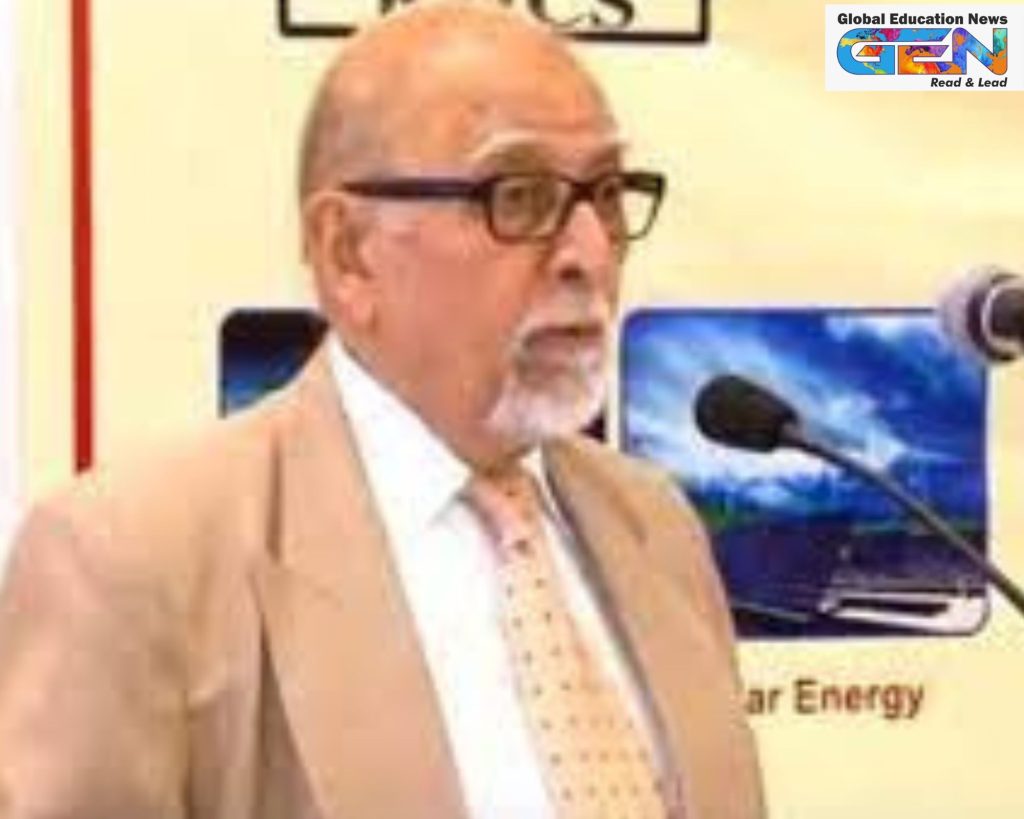
On May 20, 2025, India lost a scientific giant, Dr M. R. Srinivasan, whose brilliance propelled the nation into the nuclear age. At 95, the mechanical engineer and nuclear scientist left behind a legacy that powers India’s energy security and inspires generations. From building India’s first nuclear reactor to founding the Nuclear Power Corporation of India Limited (NPCIL), his life was a testament to innovation and dedication to India’s nuclear energy programme.
From Bangalore to Global Impact
- Early Life: Born on January 5, 1930, in Bangalore, third of eight siblings.
- Education: Earned a Mechanical Engineering degree from UVCE (1950), followed by a master’s and PhD from McGill University (1952, 1954).
- Global Foundation: Specialised in gas turbine technology, setting the stage for his nuclear career.
Growing up in Bangalore, young Srinivasan was drawn to physics but chose engineering at the prestigious University Visvesvaraya College of Engineering. His academic journey took him to McGill University in Canada, where he honed his expertise in mechanical engineering. This global perspective laid the groundwork for his transformative contributions to nuclear science in India.
Building India’s Nuclear Future
- Apsara Reactor: Worked with Dr Homi Bhabha to construct India’s first nuclear research reactor, operational in 1956.
- Leadership Roles: Chief Project Engineer at Madras Atomic Power Station (1967) and Director of Power Projects Engineering Division (1974).
- Chairman of AEC and NPCIL: Appointed in 1987, oversaw 18 nuclear power units’ development.
Joining the Department of Atomic Energy in 1955, Srinivasan collaborated with Dr Homi Bhabha to bring Apsara, India’s first nuclear reactor, to life. His rise through the ranks—from Principal Project Engineer to Chairman of the Atomic Energy Commission—saw him drive self-reliant nuclear power in India. As NPCIL’s founding Chairman, he spearheaded the creation of 18 nuclear power units, cementing India’s place in the global nuclear arena.
A Global and National Force
- International Influence: Senior advisor to the IAEA in Vienna (1990–1992).
- Policy Shaper: Member of India’s Planning Commission (1996–1998) and National Security Advisory Board (2002–2008).
- Education Advocate: Chaired Karnataka’s Task Force on Higher Education (2002–2004).
Srinivasan’s expertise transcended borders. As an advisor to the International Atomic Energy Agency, he influenced global nuclear safety standards. Back home, his roles in the Planning Commission and National Security Advisory Board shaped India’s energy and security policies. His work in higher education in India further showcased his commitment to nation-building.
Honored for a Lifetime of Service
- Padma Awards: Received Padma Shri (1984), Padma Bhushan (1990), and Padma Vibhushan (2015).
- Global Recognition: Founder-member of the World Association of Nuclear Operators (WANO).
- Academic Honors: Fellow of the Indian National Academy of Engineering and Indian Nuclear Society.
Dr Srinivasan’s contributions earned him India’s highest civilian honors, including the Padma Vibhushan in 2015. His role in founding WANO and his fellowships in prestigious institutions reflect his global and national stature in nuclear technology and engineering.
A Legacy That Powers India
- Energy Security: Laid the foundation for India’s self-reliant nuclear power infrastructure.
- Inspiration for Future: His work continues to guide scientists and engineers.
- Enduring Impact: NPCIL and India’s nuclear programme stand as monuments to his vision.