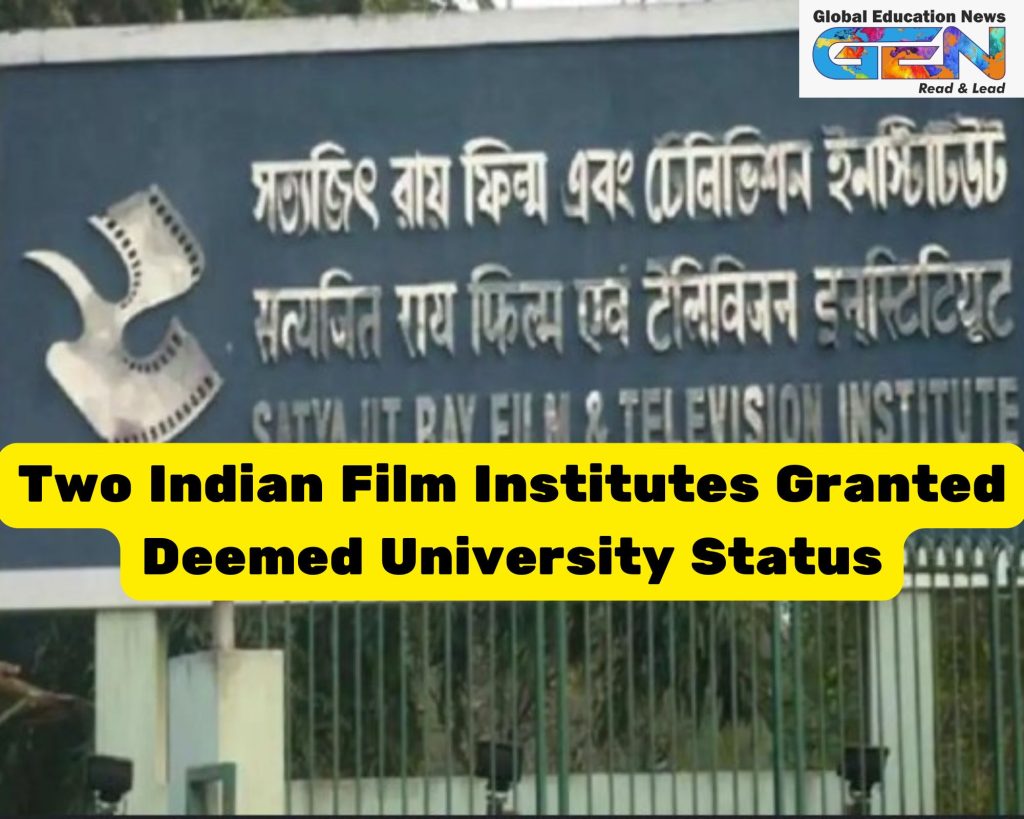
In a transformative move for Indian film and media education, two premier film institutes have been granted deemed-to-be university status by the Ministry of Education, Government of India, on April 23, 2025. Notified under Section 3 of the UGC Act, 1956, this recognition elevates these institutions from diploma-granting bodies to degree-awarding universities, aligning with the National Education Policy (NEP) 2020. This article explores the significance of this milestone, the opportunities it creates, and the legacy of these institutes in shaping Indian cinema.
Understanding the Deemed University Status
The deemed-to-be university status marks a pivotal shift, granting these institutes greater academic and administrative autonomy. Recommended by the University Grants Commission (UGC), this status empowers them to offer a range of programs while fostering innovation in film and media education.
Key Points:
- Degree-Granting Power: The institutes can now award bachelor’s, master’s, and PhD degrees, replacing their previous postgraduate diploma offerings.
- Research Opportunities: The status enables the introduction of doctoral and research programs, positioning the institutes as global hubs for film studies.
- National Rankings: Participation in the National Institutional Ranking Framework (NIRF) will enhance their visibility and competitiveness.
- Credit Flexibility: Integration with the Academic Bank of Credits (ABC) allows students to transfer credits, promoting flexibility as per NEP 2020.
- Autonomy: Increased freedom to design curricula, forge global partnerships, and adapt to industry trends.
This milestone, widely celebrated on social platforms, reflects the institutes’ decades-long contributions to Indian cinema and their potential to shape its future.
Legacy of the Film Institutes
Both institutes have been cornerstones of India’s film and television education, nurturing talent that has defined Indian and global cinema.
Institute in Pune
Established in 1960 on a historic campus with roots in a renowned film company from the 1930s, this institute is a beacon of cinematic heritage. Its studios, among the oldest still in use, continue to inspire creativity.
Key Points:
- Historical Roots: Built on the legacy of a film company known for iconic movies, the institute preserves a rich cinematic tradition.
- Academic Growth: It began offering courses in 1961, expanding to television training in 1974 after integrating with a national broadcaster’s training wing.
- Global Standing: As a member of an international association of film schools, it was ranked among the world’s top film schools in 2019.
- Notable Achievements: Recent student films have earned international acclaim, including a nomination for the 2025 Oscars in the Live Action Short Film category and an award at the 77th Cannes Film Festival.
Institute in Kolkata
Founded in 1995 and named after a legendary filmmaker, this institute is a leading center for professional training in filmmaking and television production.
Key Points:
- Vision and Establishment: Registered as an autonomous body, it emphasizes collaborative learning and technical excellence.
- Program Offerings: It provides three-year postgraduate programs in six filmmaking specializations and two-year courses in electronics and digital media.
- International Recognition: A member of the same global film school association, it was also ranked among the top film schools in 2019, with student films winning awards at major festivals.
- Recent Milestones: Its student films have been honored at international and national film festivals, showcasing creative excellence.
Implications for Students and Faculty
The deemed university status unlocks significant opportunities for students, faculty, and the institutes’ global reputation.
Key Points:
- Career Advancement: Degrees will carry greater weight in the job market, addressing past challenges where diploma holders faced salary disparities.
- Research Pathways: Students can pursue PhD programs, fostering innovation in film theory, media technology, and cultural studies.
- International Collaboration: The status facilitates partnerships with global film schools, enabling student exchanges and joint projects.
- Faculty Growth: Faculty will lead research and develop innovative curricula, enhancing teaching quality.
- Flexible Learning: The Academic Bank of Credits ensures students can pursue interdisciplinary studies with ease.
Participation in NIRF rankings will drive improvements in infrastructure, faculty recruitment, and placement strategies, ensuring long-term growth.
Alignment with National Education Policy (NEP) 2020
The new status aligns the institutes with the transformative goals of NEP 2020, emphasizing autonomy, multidisciplinary education, and global competitiveness.
Key Points:
- Academic Freedom: The institutes can design cutting-edge programs tailored to the evolving film and media industry.
- Multidisciplinary Learning: New courses in emerging fields like podcasting, new media, and digital content creation can be introduced.
- Inclusivity: The Academic Bank of Credits promotes accessibility by allowing credit transfers across institutions.
- Global Standards: Adherence to UGC norms and NIRF participation will elevate the institutes to world-class status.
This development underscores the government’s commitment to advancing creative education, as highlighted in online discussions celebrating the announcement.
Challenges and Future Prospects
While the deemed university status is a major achievement, the institutes face challenges to fully capitalize on this opportunity.
Key Points:
- Infrastructure Needs: Investments in modern facilities, such as advanced editing suites and digital labs, are essential for degree and research programs.
- Faculty Expansion: Hiring qualified faculty with expertise in emerging fields will support research and academic growth.
- Affordability Concerns: Past protests over high entrance exam fees highlight the need for accessible education through scholarships and reduced costs.
- Regulatory Compliance: The institutes must meet UGC conditions, such as aligning governance structures, to maintain their status.
To build on this milestone, the institutes can:
- Expand community outreach through short courses and public programs.
- Strengthen industry partnerships to enhance internships and placements.
- Promote inclusivity by addressing financial barriers for diverse students.
Conclusion
The conferment of deemed-to-be university status to these premier film institutes on April 23, 2025, heralds a new era for Indian film and media education. By enabling degree programs, doctoral research, and global partnerships, this recognition empowers the institutes to innovate and excel. With their rich legacies—one rooted in historic studios, the other inspired by a cinematic icon—they are poised to shape the future of Indian cinema on a global stage. Aligned with NEP 2020, these institutes will continue to inspire and nurture creative talent, ensuring their impact endures for generations.
For updates on admissions, new programs, and application details, visit the institutes’ official websites.