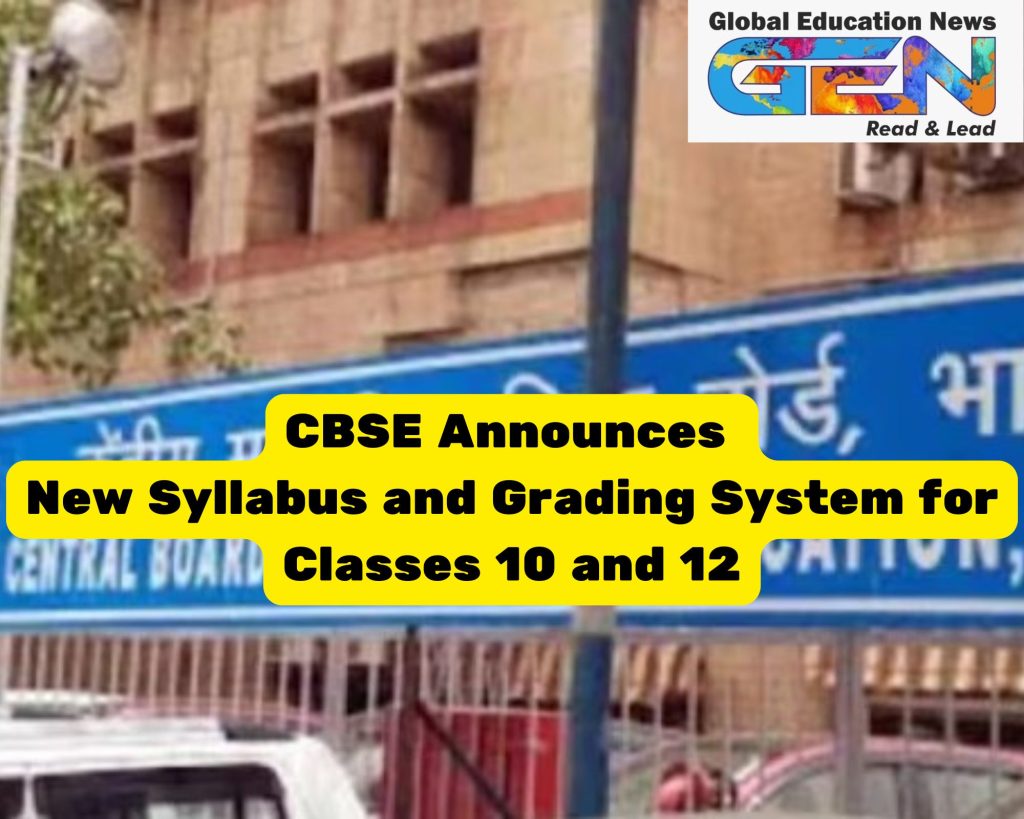
The Central Board of Secondary Education (CBSE) has unveiled several major changes to its syllabus for the 2025-2026 academic session. These updates are designed to improve the learning experience, promote practical skills, and ease the pressure of board exams for students. Here’s a breakdown of the key changes:
Contents
1. New 9-Point Grading System
- Comprehensive Evaluation: The new grading system replaces the older method and offers a more holistic approach to assessing students.
- Detailed Results: Students will now receive detailed grades that reflect not only their marks but also their overall understanding and performance in subjects.
- Fairer Assessment: The system aims to reduce the impact of small differences in marks, providing a more accurate and fair evaluation of a student’s capabilities.
2. Option for Two Annual Exams in Class 10
- Two Opportunities to Appear: Class 10 students can now appear for two board exams per year—one in February and the other in April.
- Less Pressure: This new structure reduces exam-related stress, giving students a chance to retake the exam if they don’t perform well in the first attempt.
- Better Time Management: With the option of multiple attempts, students can manage their study time more effectively and improve their performance.
3. Introduction of Skill-Based Subjects
- Practical Knowledge: CBSE has added several skill-based subjects to the curriculum, such as coding, data analysis, and financial literacy.
- Focus on Employability: These subjects are designed to equip students with practical skills that will be useful in the job market, enhancing their career prospects.
- Alignment with Global Trends: The addition of these subjects follows global educational trends, encouraging students to develop a more versatile skill set.
4. Shift Towards Practical and Hands-On Learning
- Active Learning: The new syllabus emphasizes practical learning methods over traditional rote memorization. Students are encouraged to think critically and solve problems.
- Innovative Teaching Methods: Teachers are urged to adopt creative and interactive approaches to help students engage with the material more deeply.
- Variety of Assessments: Assessments will no longer be limited to written exams. Instead, students will be evaluated through projects, practical assignments, and other interactive methods.
5. Benefits for Students and Educators
- Student-Centered Learning: The changes focus on a more personalized learning experience, catering to the diverse needs of students.
- Holistic Development: The new syllabus aims to foster both academic and personal growth, preparing students for real-world challenges.
- Support for Teachers: With updated teaching methods and assessment tools, educators will be able to provide a more dynamic and effective learning environment.
6. Conclusion: A Step Forward in Education
- Improved Learning Experience: The new syllabus and grading system aim to make learning more engaging, practical, and less stressful for students.
- Preparing for the Future: These reforms will help students not only excel academically but also acquire important life skills, preparing them for success in their careers and beyond.
- Long-Term Benefits: By embracing modern teaching methods and offering flexibility through multiple exam opportunities, CBSE is enhancing the overall educational experience for students across the country.
In summary, the changes introduced by CBSE for the 2025-2026 academic session are designed to make education more practical, holistic, and student-friendly, better equipping students for the future.