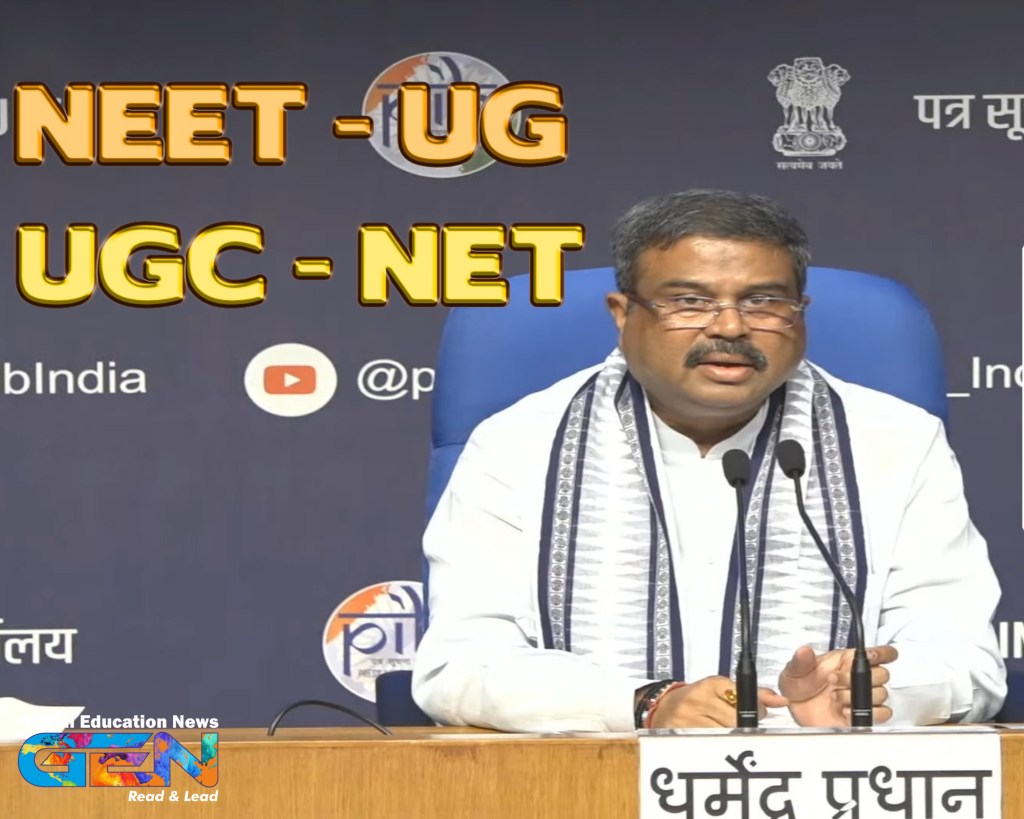
The National Eligibility cum Entrance Test for Undergraduates (NEET UG), India’s largest medical entrance exam, might soon be moving to an online format, with the final decision expected in the near future. This potential shift, announced by Union Education Minister Dharmendra Pradhan, could be implemented by 2025, after ongoing discussions between the Education and Health Ministries.
Currently, NEET UG is conducted offline, with candidates answering multiple-choice questions on Optical Mark Recognition (OMR) sheets. This year, over 24 lakh aspirants appeared for the test, all vying for 1.08 lakh MBBS seats across the country. The exam’s sheer scale makes it one of the most important and competitive medical entrance exams in the world, and the proposed digital shift could revolutionize the way millions of students experience this crucial stage in their academic journey.
Why the Shift to Online?
The move to an online NEET UG exam is being considered to streamline the process, improve accessibility, and increase transparency. By switching to a digital format, the examination could be conducted more efficiently, with faster result processing and greater accuracy in evaluation.
The online format is also expected to reduce logistical issues associated with the offline exam, such as paper handling, printing, and storage. Moreover, an online system can handle a large number of candidates simultaneously, allowing for greater flexibility in exam scheduling and reducing congestion at exam centers.
Key Benefits of Going Online
The potential transition to an online NEET UG exam promises several significant advantages, including:
- Reduced Errors and Faster Processing: The digital format would minimize human error in evaluating OMR sheets and allow for quicker processing of results.
- Wider Accessibility: With online exams, more test centers could be set up across the country, making it easier for candidates to find convenient locations.
- Better Security and Monitoring: Online exams could integrate AI-driven proctoring and other digital security measures, ensuring a fair and transparent examination process.
- Quick Result Declaration: The automated system could speed up the evaluation process, providing results faster and reducing candidate anxiety.
Current Format of NEET UG
As of now, NEET UG is conducted in an offline format, where candidates mark their answers on OMR sheets. The exam consists of multiple-choice questions across subjects such as Physics, Chemistry, and Biology. With over 24 lakh students taking the exam annually, competition for MBBS seats is intense, and the exam plays a pivotal role in determining future medical professionals in India.
The shift to online could have a transformative impact on how the exam is conducted and managed, addressing issues like overcrowded centers, long wait times, and logistical challenges. By embracing technology, NEET UG could become more efficient, secure, and accessible for aspirants across the country.
Reforms Under Discussion
While the move to make NEET UG online is still under review, discussions between the Education and Health Ministries are progressing. They are focusing on ensuring that the online transition maintains fairness, security, and accessibility. A significant challenge is the security of the digital platform, as preventing cheating and malpractice is crucial for maintaining the integrity of the exam.
One potential solution being discussed is the implementation of AI-driven proctoring systems that can monitor candidates in real time, ensuring that all rules and guidelines are followed. These technologies could also provide a more efficient and reliable examination environment.
Timeline for Change
The final decision on whether the NEET UG exam will go online is expected soon, with a target implementation date of 2025. This timeline gives the government and the Ministry of Education ample time to work on the logistics and technical infrastructure required to handle the digital transformation. If successful, the shift to an online NEET UG could set a precedent for other competitive exams in India to adopt similar models.
Global Trends and Related Discussions
The move to online exams is not unique to India. Many countries around the world have adopted online formats for various entrance exams to improve accessibility, efficiency, and security. India’s efforts to transition NEET UG to an online exam aligns with these global trends and reflects the growing role of technology in shaping the future of education.
Across the world, digital exams have proven to be more secure and efficient, particularly during the pandemic when many education systems were forced to pivot to online learning and exams. As India prepares for a digital shift, it is looking to these global examples for inspiration.