Date: October 12, 2026
Place: New Delhi
Education News: Inclusive Education
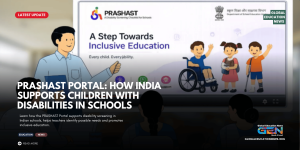
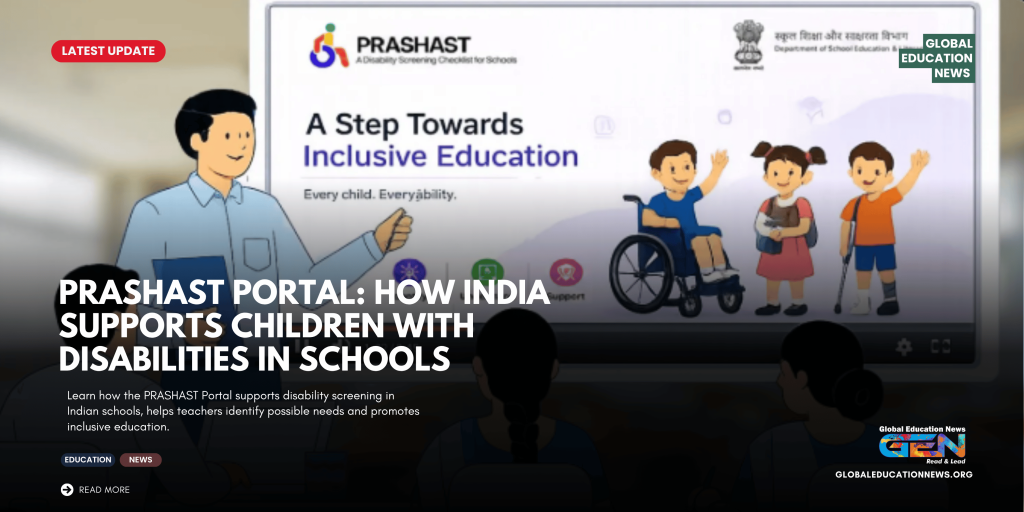
The Ministry of Education is highlighting nationwide screening and awareness efforts under the PRASHAST Portal initiative, which helps schools identify children who may require disability-related assessment and additional educational support. The initiative supports inclusive education by encouraging teachers and school authorities to recognise potential learning and developmental needs and connect children with appropriate assessment and assistance.
The PRASHAST platform is designed to support the early identification of children who may have disabilities. Its purpose is not to label students or limit their educational opportunities, but to help schools understand individual needs and facilitate access to suitable support. The initiative also reinforces the importance of creating learning environments where children with disabilities can participate in education with dignity and equal opportunity.
What Is the PRASHAST Portal and Why Is It Important?
PRASHAST stands for Pre-Assessment Holistic Screening Tool. Developed to support school-level disability screening, it helps teachers identify children who may need further professional assessment.
Teachers are often among the first people to notice when a child experiences difficulties with communication, learning, mobility, hearing, vision or other aspects of classroom participation. A structured screening approach can help schools recognise possible support needs and guide families towards appropriate assessment services.
However, screening is not the same as a medical or clinical diagnosis. The results should be treated as an initial indication that further assessment or support may be helpful.
How Does PRASHAST Support Inclusive Education in India?
The PRASHAST initiative supports inclusive education by helping schools identify potential barriers to learning and participation. Early recognition can help educators work with families and qualified professionals to determine the support a child may need.
Its role can be understood through the following areas:
- Early identification: Helps teachers recognise signs that a child may benefit from further assessment.
- Appropriate referrals: Encourages families and schools to seek professional evaluation when needed.
- Better educational planning: Helps educators consider suitable classroom support and learning adaptations.
- Greater awareness: Builds understanding of disability-related needs among teachers and school communities.
- Inclusive participation: Encourages schools to make learning more accessible without excluding or stigmatising children.
The effectiveness of these efforts depends on how screening information is used. Children should receive respectful treatment, appropriate follow-up and equal opportunities to learn.
What Role Do Teachers Play in PRASHAST Screening?
Teachers play an important role because they observe children’s learning and classroom participation regularly. A structured screening tool can help them identify situations in which a student may need additional attention or assessment.
Their responsibilities include:
- Observing learning and participation needs without making assumptions about a child’s abilities.
- Following the applicable screening guidance and using the tool appropriately.
- Communicating sensitively with parents or guardians when further assessment may be beneficial.
- Referring families to qualified professionals or relevant services through the appropriate process.
- Protecting children’s privacy and handling screening information responsibly.
- Ensuring that screening outcomes do not become grounds for discrimination, exclusion or reduced expectations.
Screening should be part of a supportive process, not a substitute for professional assessment or an independent basis for deciding whether a child can attend school.
How Can PRASHAST Help Children with Disabilities?
Children with disabilities may need different forms of educational support depending on their individual circumstances. Identifying those needs early can help families and schools explore suitable services and adjustments.
| Area of support | How schools may respond |
|---|---|
| Learning support | Adapt teaching methods and learning materials to individual needs |
| Hearing-related needs | Explore appropriate assessment and communication support |
| Vision-related needs | Consider accessible learning materials and suitable classroom arrangements |
| Mobility-related needs | Review accessibility and physical participation barriers |
| Communication needs | Provide suitable communication strategies and specialist guidance |
| Individual learning requirements | Work with families and qualified professionals to plan appropriate support |
These are examples of possible responses, not automatic outcomes of screening. The appropriate support depends on professional assessment, the child’s needs and the services available.
What Is the Difference Between Disability Screening and Diagnosis?
Understanding this distinction is essential to using PRASHAST responsibly.
| Disability screening | Professional diagnosis or assessment |
|---|---|
| Helps identify possible signs of a disability or support need | Evaluates the child’s condition through an appropriate professional process |
| May be conducted using a structured school-level tool | Requires assessment by suitably qualified professionals |
| Indicates whether further evaluation may be helpful | Provides a more informed understanding of the child’s needs |
| Supports decisions about referral and follow-up | Can guide appropriate interventions, services and support |
| Must not be used to stigmatise or exclude a child | Should inform support while respecting the child’s rights and dignity |
A screening result alone does not establish that a child has a disability. Families should be given clear information about next steps and the purpose of any recommended assessment.
How Does PRASHAST Fit into India’s Inclusive Education Goals?
India’s inclusive-education approach seeks to improve educational access and participation for children with disabilities. School-level awareness and screening can contribute to this goal when they are linked with suitable assessment, accessible learning environments and appropriate support.
The broader objective is to help schools recognise that children learn in different ways and may require different forms of assistance. Teachers, families, school administrators and professionals all have a role in creating environments where children can learn without discrimination.
For screening initiatives to deliver meaningful benefits, schools need clear procedures, trained personnel, confidentiality safeguards and effective follow-up arrangements.
PRASHAST Initiative: Key Details at a Glance
| Detail | Information |
|---|---|
| Initiative | PRASHAST |
| Full form | Pre-Assessment Holistic Screening Tool |
| Government ministry | Ministry of Education |
| Primary setting | Schools |
| Main purpose | Help identify children who may require disability-related assessment and educational support |
| Key users | Teachers and school personnel following the applicable guidance |
| Intended outcome | Better identification, referral and inclusive educational support |
| Important safeguard | Screening is not a diagnosis and must not be used to stigmatise or exclude learners |
Frequently Asked Questions (FAQs)
1. What is the PRASHAST Portal?
PRASHAST is a school-level screening initiative designed to help identify children who may require further disability-related assessment and educational support.
2. What does PRASHAST stand for?
PRASHAST stands for Pre-Assessment Holistic Screening Tool.
3. Which ministry is associated with the PRASHAST initiative?
The initiative is associated with India’s Ministry of Education and supports efforts to strengthen inclusive education.
4. Does PRASHAST diagnose disabilities in children?
No. Screening helps identify possible support needs, but it does not replace professional assessment or establish a medical diagnosis.
5. How can PRASHAST help teachers?
It can help teachers recognise signs that a child may benefit from further assessment, communicate concerns sensitively and support referrals through the appropriate process.
6. Can a child be excluded from school because of a PRASHAST screening result?
Screening should not be used as a reason to stigmatise or exclude a child. Its purpose is to help identify potential needs and facilitate appropriate support and educational participation.
7. What should parents do if screening indicates that further assessment may be needed?
Parents or guardians should discuss the next steps with the school and seek guidance on appropriate professional assessment and available support services.
8. Why is early identification important in inclusive education?
Early identification can help families and schools understand a child’s needs sooner and explore suitable educational adjustments, referrals and support.
Conclusion
The PRASHAST initiative highlights the role of structured screening in building a more inclusive school system in India. By helping teachers recognise children who may need further assessment, the initiative can support better educational planning and more timely access to appropriate services.
Its success depends on responsible implementation, professional follow-up, confidentiality and respect for every child’s dignity. Screening must open pathways to support—not create barriers to education. Global Education News will continue to cover developments in inclusive education, school policy and initiatives that affect students across India.