Date: October 12, 2026 Place: New Delhi, India Education News:
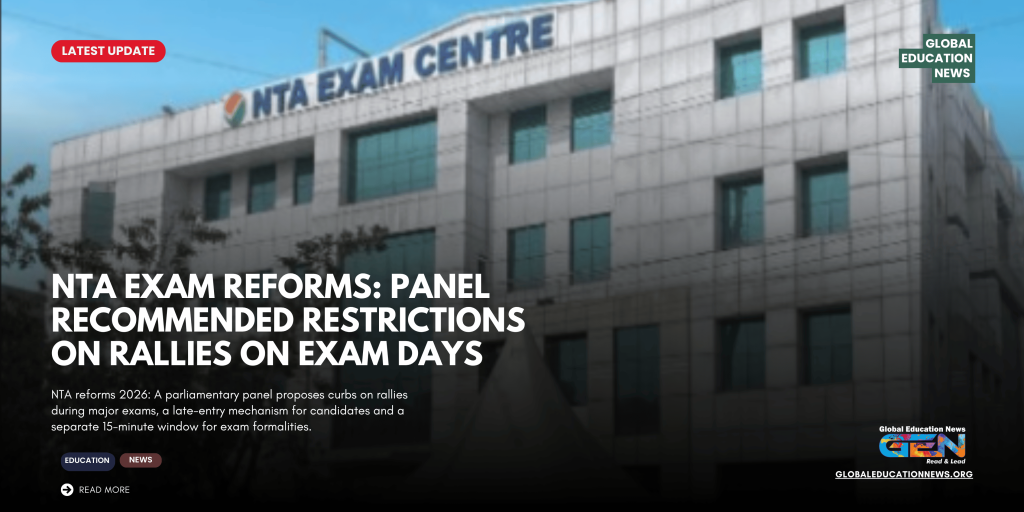
A parliamentary panel reviewing reforms to the National Testing Agency (NTA) has recommended restricting rallies, processions and large public gatherings on major competitive examination days to prevent traffic disruptions from affecting candidates. The panel has also proposed a mechanism to allow genuine late-arriving candidates to enter examination halls under specified conditions.
The recommendations form part of a broader review of examination administration following concerns over the conduct and integrity of national-level entrance tests. The committee has also called for a separate 15-minute window for invigilation formalities so that identity checks and related procedures do not interrupt students while they are taking an examination.
Important: These are recommendations from a parliamentary committee, not confirmation that the proposed changes have already become rules. Candidates should continue following the existing instructions issued for their examinations until official changes are announced.
What Are the Key NTA Reform Recommendations?
The parliamentary panel has proposed several measures aimed at improving examination-day arrangements and reducing avoidable difficulties for students.
| Proposed reform | What it means for candidates |
|---|---|
| Restrictions on rallies and processions | District administrations should withhold permission for large public gatherings on major exam days |
| Advance traffic arrangements | Authorities should plan traffic and law-and-order measures ahead of examinations |
| Late-entry mechanism | Candidates with genuine reasons for arriving late could be permitted to enter after signing an undertaking |
| No extra time for latecomers | Candidates allowed late entry would receive only the remaining examination time |
| Separate formalities window | A dedicated 15-minute period before or after the test would be used for signing and verification procedures |
| Legal amendment | The panel has recommended changes to the Public Examinations (Prevention of Unfair Means) Act, 2024 |
Why Has the Panel Recommended Restrictions on Rallies on Exam Days?
Large public gatherings can cause traffic congestion, road closures and delays. For students travelling to examination centres, even an unexpected delay can create considerable stress, particularly when entry deadlines are strict.
The panel has recommended that district administrations withhold permission for rallies, processions and other public gatherings on days when major competitive examinations take place. It has also called for traffic management and law-and-order arrangements to be prepared in advance.
The proposal aims to reduce the risk of candidates missing examinations because of disruptions beyond their control. Its implementation would depend on the relevant legal and administrative changes.
Will Late Candidates Be Allowed to Enter NTA Examination Centres?
The panel has recommended developing a mechanism to allow candidates who arrive late for genuine reasons to enter the examination hall after signing an undertaking documenting their late arrival.
However, the proposal includes an important condition: late-arriving candidates would be allowed to attempt the examination only for the remaining time, without any additional time.
This recommendation seeks to address situations in which candidates may miss an examination despite facing circumstances beyond their control. It does not mean that candidates can automatically enter late under the current rules.
Until an official change is announced, candidates should follow the reporting time and entry instructions on their admit cards.
Why Has the Panel Suggested a Separate 15-Minute Window for Exam Formalities?
Identity verification, signatures and other examination-centre procedures are necessary, but carrying them out during a test can interrupt candidates’ concentration.
The panel has therefore recommended a separate 15-minute window, either before or after the examination, for these formalities.
If adopted, this measure could help candidates use their examination time more effectively by reducing interruptions once the test begins.
How Could the Proposed NTA Reforms Affect NEET, JEE and Other Competitive Exams?
The recommendations are relevant to the wider system of national-level competitive examinations. If implemented through the required rules and administrative arrangements, they could affect how examination days are managed.
Potential implications include:
- Better advance coordination between examination authorities and district administrations.
- Reduced risk of traffic-related delays caused by large public gatherings.
- A defined procedure for handling candidates who arrive late for genuine reasons.
- Fewer interruptions from verification and signing formalities during tests.
- Greater clarity about responsibilities for examination-day arrangements.
However, the proposals should not be interpreted as immediate changes to NEET, JEE or other examination rules. Candidates must continue to follow the instructions issued by the relevant examination authority.
NTA Reform Recommendations 2026: Frequently Asked Questions
1. What has the parliamentary panel recommended about rallies on exam days?
It has recommended that district administrations withhold permission for rallies, processions and other large public gatherings on major competitive examination days to prevent disruptions for candidates.
2. Will latecomers automatically be allowed to take NTA examinations?
No. The panel has recommended a mechanism for allowing candidates with genuine reasons for arriving late to enter after signing an undertaking. The proposal is not an automatic relaxation of existing entry rules.
3. Will late-arriving candidates receive extra examination time?
Under the proposed mechanism, candidates would receive only the remaining examination time. No additional time would be granted.
4. What is the proposed 15-minute examination window?
The panel has recommended setting aside a separate 15-minute period before or after a test for signing, checking and other examination formalities.
5. Which law may need to be amended?
The panel has recommended amending the Public Examinations (Prevention of Unfair Means) Act, 2024, to address restrictions on public gatherings on examination days.
6. Have the recommendations become mandatory rules?
The recommendations are proposals from a parliamentary committee. Their adoption would depend on the relevant government, legal and administrative processes. Candidates should follow existing official examination instructions unless changes are formally announced.
7. Why are these NTA reforms being considered?
The recommendations form part of a wider review of examination administration, candidate experience and the functioning of the National Testing Agency following examination-related controversies.
8. What should students do before their next competitive examination?
Candidates should check their admit cards, confirm the reporting time and examination-centre address, plan their journey in advance and monitor official announcements for any changes.
Conclusion: Will the Proposed NTA Reforms Make Exam Days Easier for Students?
The parliamentary panel’s recommendations focus on a practical concern: candidates should not lose examination opportunities because of avoidable traffic disruptions or administrative interruptions. Restrictions on public gatherings, a defined late-entry mechanism and a separate window for examination formalities could address some of these difficulties if implemented.
For now, students should distinguish between proposed reforms and rules officially in force. Following current admit-card instructions and monitoring formal announcements remain essential for anyone preparing for a competitive examination.
Global Education News will continue to report on NTA reforms, entrance examination policies and developments affecting students across India.