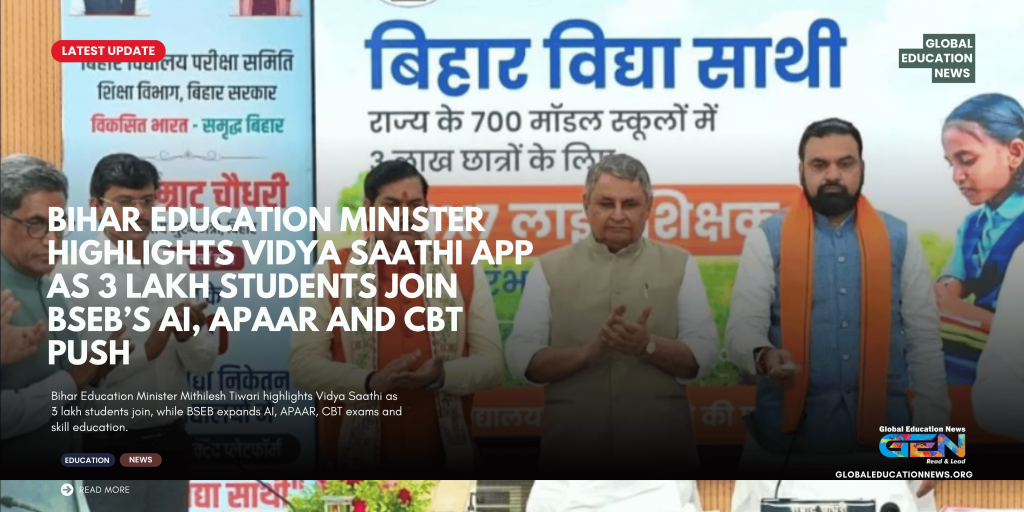
More than 3 lakh students have joined Bihar Vidya Saathi within a month of its launch, with nearly 73% coming from rural areas, as the Bihar School Examination Board expands technology-driven learning, APAAR integration and computer-based examinations.
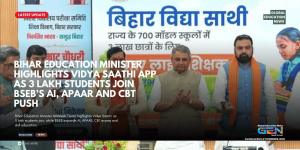
PATNA, BIHAR — More than 3 lakh students have already connected with the Bihar Vidya Saathi app, giving the state’s latest education technology initiative an unexpectedly broad early reach. Around 73% of those users are from rural areas, according to Education Minister Mithilesh Tiwari, underlining how the platform could become an important digital learning channel beyond Bihar’s major cities.
The numbers come barely a month after the platform was launched for students in Classes 9 to 12 across selected model schools. The initiative is part of a larger Bihar Board effort to bring teaching, examination systems and career-oriented education closer to the technology students already use every day.
But Vidya Saathi is only one part of the change.
The latest review meeting of the Bihar School Examination Board (BSEB) also examined the use of technology in examinations, the linking of APAAR IDs with face identification, faster declaration of computer-based test results and the expansion of vocational courses aimed at emerging employment opportunities.
Bihar Vidya Saathi App: What Is It and Who Can Use It?
The Bihar Vidya Saathi app was introduced as a free interactive learning platform designed to provide students with direct academic assistance.
The initial rollout covers students in Classes 9 to 12 across 700 Saraswati Vidya Niketan model schools in Bihar. Earlier reporting said the platform was expected to connect students with about 75,000 teachers, offering one-to-one academic support through the digital platform.
Students can seek help with questions related to their lessons instead of waiting for the next classroom session or relying solely on private coaching.
For many students, particularly those studying in areas where access to specialised teachers can be limited, that difference could matter.
The platform also includes digital learning resources and AI-based tools intended to support concept learning and practice. For Classes 11 and 12 science students, the programme has been linked with preparation for Bihar Board examinations, JEE and NEET.
Why the Rural Student Numbers Matter
The 73% rural participation figure is one of the most significant details in the latest update.
Digital education programmes often face their biggest test outside large urban centres, where students may have fewer subject specialists, coaching centres or other academic support systems within easy reach.
The early Vidya Saathi numbers suggest that the platform is not being used only by students in Bihar’s major urban centres. According to Tiwari, the majority of registered students are from rural areas.
That does not by itself establish how frequently students use the service or how much it improves academic outcomes. But it does show that the platform has begun reaching the population it is intended to serve.
Bihar Board Moves Towards AI-Based Learning
The Vidya Saathi initiative is also notable for its use of artificial intelligence in education.
Students are being provided with digital resources and learning support designed to help them understand concepts and practise lessons. The platform’s broader objective is to allow students to ask questions and receive academic assistance beyond conventional classroom hours.
The technology push comes as Bihar tries to widen access to competitive-exam preparation.
The Bihar Board has already expanded free JEE and NEET coaching to 155 Model Schools, while its Vidya Saathi interactive platform is being implemented across 700 Model Schools. Subject-wise video lessons aligned with JEE and NEET syllabi are also being provided through smart TVs and smart boards at participating schools.
The combination is significant: classroom teaching, digital doubt resolution, competitive-exam material and AI-assisted learning are being brought into the same education ecosystem.
APAAR ID and Face ID: Another Technology Shift
The latest BSEB review meeting also focused on the use of APAAR IDs and face identification during examinations.
Officials discussed preparations to link students’ APAAR IDs with face ID systems and implement the arrangement effectively at examination centres.
APAAR — the Automated Permanent Academic Account Registry — is designed to provide students with a digital academic identity through which educational records can be maintained.
For Bihar Board students, the proposed integration represents a move towards a more technology-based examination ecosystem.
The immediate focus, however, is implementation. Any digital identity or biometric-linked examination system has to work reliably at scale, particularly when thousands of students appear for examinations simultaneously.
Bihar Board Also Wants Faster CBT Results
The BSEB meeting did not focus only on how students study. It also examined how quickly and efficiently examinations are conducted and evaluated.
Officials discussed the timely declaration of results for computer-based tests (CBTs) and the wider use of technology-based examination systems to make the examination process more effective while ensuring that results are released on time.
For students, faster results are more than an administrative convenience.
A delayed result can affect college admissions, competitive-examination planning and decisions about the next academic year. Moving some examination processes towards computer-based systems could therefore have consequences beyond the examination hall.
From Traditional Courses to AI, Robotics and Electronics
Another major theme from the BSEB review was vocational education.
Tiwari directed officials to examine whether older trades and courses still match changing employment requirements and suggested introducing or expanding modern skill-based programmes.
Among the areas mentioned were:
- Artificial intelligence
- Animation designing
- Robotics
- Mobile repairing
- Electrical and electronics
- Other employment-oriented technical skills
The shift reflects a wider question facing school education: whether students are being prepared only for examinations or also for a labour market increasingly shaped by technology.
Bihar’s education authorities have indicated that vocational education should be more closely connected with employment opportunities and changing technological requirements.
What Happens to Students After Class 10?
The BSEB review also addressed a less visible problem: students who stop their education after Class 10.
Officials discussed preparing a strategy to connect students who do not continue through Class 12 with further education or skill training. The possibility of financial support to help some students continue their studies was also considered.
That makes the Vidya Saathi story bigger than an app launch.
The underlying policy challenge is continuity. A student may receive better academic support in school, but the benefit is limited if that student subsequently leaves formal education without a viable pathway into higher education, vocational training or employment-oriented skills.
Bihar’s Education Technology Push Is Expanding
Vidya Saathi follows a series of technology and education reforms being introduced across Bihar’s school system.
The state has already been expanding free JEE and NEET preparation in Model Schools, introducing digital learning resources and experimenting with AI-supported academic assistance.
The latest BSEB discussions add another layer: examination technology, digital academic identities, face identification, vocational modernisation and efforts to reduce post-Class-10 dropouts.
Taken together, the changes point towards an education system trying to connect learning, examinations, technology and employability rather than treating them as separate departments.
The real measure will come later.
Three lakh registrations can show reach. They cannot, on their own, show whether students are learning more, scoring better or staying longer in education.
For Bihar’s students, particularly those outside major cities, the next question is therefore straightforward: can this technology translate from access on a screen into meaningful academic support in the classroom, at home and eventually in the world of work?