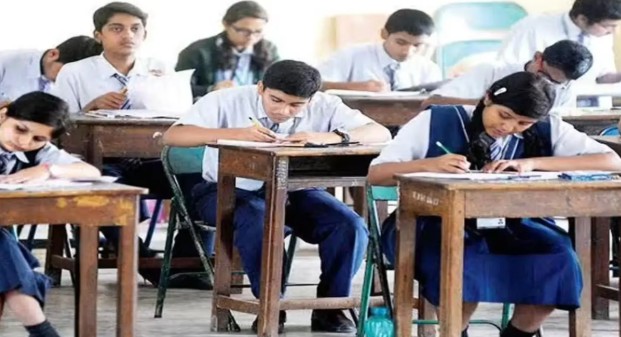
The **Supreme Court has asked the Central Board of Secondary Education (CBSE) to examine ways to protect students who may have been affected by discrepancies in the Board’s new On-Screen Marking (OSM) evaluation system.
The development has brought renewed attention to concerns surrounding the digital evaluation of CBSE Class 12 answer sheets, particularly after some students reportedly faced difficulties in meeting admission requirements despite qualifying their entrance examinations.
The court has fixed August 21, 2026, for the next hearing. It is expected to examine the remedial measures taken by CBSE and the Centre and consider what further safeguards may be necessary for affected students.
CBSE OSM Case: What the Supreme Court Was Told
The matter was heard by a bench comprising Chief Justice of India Surya Kant and Justices Joymalya Bagchi and V. Mohana.
During the proceedings, the petitioner’s counsel told the court that some students had successfully cleared their CBSE examinations and subsequently appeared for entrance examinations for higher education programmes.
However, according to the submissions, some of these students were unable to meet minimum marks or eligibility requirements for admission because of their CBSE scores.
In some cases, the court was informed, the academic sessions for the courses concerned had already begun, increasing the urgency of finding a possible remedy.
The bench consequently asked CBSE’s counsel to examine how the interests of such students could be protected.
Why the OSM Evaluation System Has Come Under Scrutiny
CBSE introduced On-Screen Marking for Class 12 examinations in 2026, replacing the conventional process in which teachers evaluated physical answer books.
Under the new system, physical answer sheets are scanned and converted into digital copies. Evaluators then access the scanned scripts electronically and award marks through the digital system.
CBSE had presented OSM as a way to improve efficiency and transparency while reducing the logistical challenges associated with transporting and handling large numbers of physical answer books. The Board’s original February 2026 communication cited benefits including reducing totalling errors, speeding up evaluation and widening teacher participation.
However, concerns about the system emerged following the declaration of the CBSE Class 12 results in May 2026.
Students and other stakeholders have raised allegations involving discrepancies in marks, technical problems and difficulties associated with the digital evaluation and grievance-redressal process. Similar concerns have also appeared in legal proceedings before other courts.
It is important to note that these are allegations and concerns raised in proceedings; the Supreme Court’s intervention does not itself establish that all CBSE results were incorrectly evaluated.
What Exactly Is CBSE On-Screen Marking?
The On-Screen Marking system is essentially a digital evaluation mechanism.
The broad process works as follows:
Physical answer book → Scanning → Digital answer script → Online evaluation → Marks recorded digitally
The objective is to reduce the physical movement of answer sheets and enable centralised monitoring of the evaluation process.
CBSE introduced the system for Class 12 examinations in 2026, while Class 10 answer books continued to be evaluated through the existing physical process during the year.
The transition represented a significant technological change for one of India’s largest school examination systems.
What Are the Concerns Raised by Students?
The controversy has centred on whether the new digital evaluation process worked reliably in all cases.
Among the concerns raised through petitions and student representations are allegations of:
- Technical difficulties during digital evaluation
- Problems involving scanned answer scripts
- Discrepancies between expected and awarded marks
- Difficulties in obtaining effective redressal
- Concerns about the evaluation of individual answers
- The impact of disputed marks on higher-education admissions
A petition before the Delhi High Court earlier sought measures including additional opportunities for verification and physical examination of answer sheets where disputes arise.
The Supreme Court is now examining the broader issue of safeguards and remedial measures.
Students Face a Bigger Problem Than Marks Alone
The controversy has become particularly significant because Class 12 marks can directly affect higher-education opportunities.
Many universities and professional programmes prescribe minimum Class 12 marks as part of their eligibility criteria. Students may also need to satisfy subject-specific requirements alongside their entrance-examination performance.
Consequently, a disputed board score can have consequences beyond the marksheet.
A student may clear an entrance examination but still face difficulty securing admission if the institution requires a particular percentage in Class 12.
That is why the Supreme Court’s focus on protecting affected students is particularly important.
Petition Seeks Clear Rules for CBSE OSM
The proceedings arise from a Public Interest Litigation filed by Rakesh Binjola through advocate Laxmikant Matadan Shukla.
The petition seeks directions to the Centre and CBSE to establish comprehensive regulations governing the use of the On-Screen Marking system for CBSE examinations.
It has also sought the creation of a high-powered committee to supervise the implementation of reforms and improve accountability and transparency in digital evaluation.
Another significant aspect of the petition concerns students who may have been disadvantaged by disputed marks.
The plea has sought consideration of appropriate relaxation in qualifying requirements for students who have already cleared entrance examinations or obtained provisional admissions but may have fallen short of minimum Class 12 marks because of evaluation-related discrepancies.
Government Has Already Set Up a Review Panel
The concerns are not being examined only through the court proceedings.
During an earlier hearing, the government informed the Supreme Court that it had constituted a one-member commission headed by former senior bureaucrat S. Radha Chauhan to examine the evaluation system and recommend systemic improvements.
The review is intended to look beyond individual complaints and consider broader changes to the digital evaluation mechanism.
This distinction is important.
While individual students need timely remedies, the larger policy question is how CBSE can ensure that future digital evaluation systems remain accurate, transparent and capable of resolving errors quickly.
Supreme Court Had Raised Concerns Earlier
The latest hearing is part of an ongoing judicial examination of the OSM issue.
On July 15, 2026, the Supreme Court had already expressed concern about the difficulties reportedly experienced by students following the introduction of the digital evaluation system.
The court had sought assistance from Solicitor General Tushar Mehta in examining the broader concerns.
The government subsequently indicated that several individual discrepancies had been resolved, while also treating the wider systemic issues seriously.
The August hearing has now shifted attention particularly towards the question of protecting students whose academic opportunities may have been affected.
Why August 21 Will Be Important
The Supreme Court’s next hearing on August 21 could provide greater clarity on two interconnected questions:
Immediate relief for students
The court may examine what measures CBSE can take to prevent students from losing admission opportunities because of disputed examination results.
Long-term OSM reforms
The hearing could also provide further direction on safeguards, regulations and accountability for digital evaluation.
The court was informed that the Solicitor General, who had earlier been asked to assist, was unavailable for the latest hearing. The matter was therefore posted for August 21.
What Could Change If Safeguards Are Introduced?
Any eventual reforms could potentially focus on several areas.
Better verification mechanisms
Students who dispute their marks may need a clear and accessible mechanism for checking the underlying answer script.
Physical verification in disputed cases
Where a digital scan is unclear or a serious discrepancy is alleged, physical examination could provide an additional safeguard.
Transparent grievance redressal
Students need to know how complaints are examined, within what timeframe and what remedy is available.
Technical quality controls
Scanning and digital evaluation systems must ensure that answer scripts are complete, legible and correctly linked to the relevant candidate.
Admission protection
Where a genuine evaluation error affects eligibility for higher education, mechanisms may be needed to prevent students from suffering irreversible academic consequences.
These are policy possibilities arising from the issues under consideration; the final measures will depend on the court’s directions and the actions taken by CBSE and the government.
The Larger Question: Can Digital Evaluation Be Both Fast and Fair?
The CBSE OSM controversy raises a broader question for India’s examination system.
Digital evaluation can potentially make large-scale examinations faster and easier to monitor. It can reduce physical handling, simplify logistics and create digital records.
But technology does not automatically guarantee accuracy.
A digital system is only as reliable as its scanning, software, infrastructure, evaluator training, quality controls and grievance-redressal mechanisms.
For students, the fundamental requirement remains unchanged:
The marks awarded must accurately reflect the answers they wrote.
That principle must remain at the centre of any transition from physical to digital evaluation.
What This Means for CBSE Students
For current and future CBSE students, the Supreme Court proceedings are important because they could influence how digital evaluation is handled in subsequent examination cycles.
However, students should avoid assuming that the court has already ordered a blanket revision of CBSE results or relaxation of admission criteria.
At present, the focus is on examining safeguards and possible remedies for affected students, with the next hearing scheduled for August 21.
Students with individual result-related concerns should continue to follow official CBSE instructions regarding verification, re-evaluation and other available procedures.
A Test of CBSE’s Digital Examination Transition
The introduction of OSM was intended to modernise the evaluation process. The Supreme Court proceedings now place the system under an important test: whether digital assessment can deliver not only efficiency but also accuracy, transparency and meaningful student protection.
For CBSE, the challenge is therefore larger than resolving individual complaints.
It is about establishing confidence in a system that could become an increasingly important part of India’s school examination infrastructure.
Final Takeaway
The CBSE On-Screen Marking controversy has moved beyond questions about individual marks and into a broader debate over how India’s largest school examination system should handle digital evaluation.
The Supreme Court has asked CBSE to explore measures to protect students who may have been affected by discrepancies, particularly those whose admission prospects could be damaged by their Class 12 scores.
The August 21 hearing will be closely watched for possible clarity on immediate safeguards as well as longer-term reforms to the OSM system.
The larger lesson is clear: technology can modernise examination evaluation, but student rights, accuracy and accountability cannot become secondary to speed and efficiency.
As CBSE continues its digital transition, the credibility of the system will ultimately depend on whether every student has a fair opportunity to have their work evaluated correctly—and a meaningful remedy when something goes wrong.