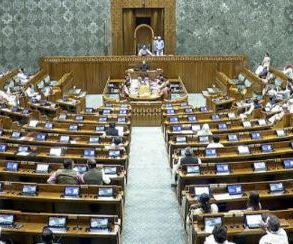
New Delhi: In a significant step towards strengthening the credibility of India’s examination system, the Central Government has introduced the Public Examinations (Prevention of Unfair Means) Amendment Bill, 2026 in the Lok Sabha. The proposed legislation seeks to tighten laws against examination paper leaks, organised cheating networks, and other unfair practices that have repeatedly disrupted major public examinations.
Ahead of the debate, Parliamentary Affairs Minister Kiren Rijiju appealed to all political parties to participate constructively in the discussion, describing the Bill as a crucial reform aimed at protecting the future of millions of students.
The proposed legislation comes in the wake of growing public concern over examination irregularities, particularly following controversies surrounding national entrance tests and recruitment examinations.
Government Seeks Consensus on a Student-Centric Reform
Calling the legislation a landmark initiative, the government stressed that examination integrity should rise above political differences.
Rijiju urged Members of Parliament to engage in a meaningful debate rather than allowing disruptions to overshadow a reform that directly affects students and job aspirants across the country. He said the government wants every political party to contribute to strengthening India’s examination system through constructive discussion.
Why the Anti-Paper Leak Bill Matters
Over the past few years, several competitive examinations—including recruitment tests and entrance exams—have been affected by allegations of paper leaks and organised malpractice.
These incidents have resulted in:
- Cancellation or postponement of examinations
- Fresh tests for lakhs of candidates
- Increased financial burden on students
- Loss of public trust in examination agencies
- Delays in admissions and recruitment
- Mental stress and uncertainty among aspirants
The amendment aims to address these recurring issues through a stronger legal framework and faster enforcement mechanisms.
Key Provisions of the Proposed Amendment Bill
The amended legislation proposes several stringent measures to deter examination fraud and organised cheating.
1. Tougher Punishments
The Bill introduces stricter penalties for individuals and organised groups involved in paper leaks and examination malpractice.
Among the proposed provisions are:
- Imprisonment of up to 10 years for serious offences
- Financial penalties of up to ₹10 crore in cases involving organised crime and commercial cheating networks
- Stronger accountability for institutions and entities facilitating examination fraud
The objective is to dismantle organised rackets rather than merely penalising individual offenders.
2. Faster Investigation and Trial
To ensure timely justice, the proposed law seeks to:
- Complete investigations within a fixed time frame
- Establish dedicated or fast-track courts for examination-related offences
- Expedite appeals and judicial proceedings
The government believes quicker legal action will improve deterrence and reduce prolonged uncertainty for students.
3. Stronger Protection for Public Examinations
The legislation covers a wide range of public examinations conducted by central agencies, including entrance tests, recruitment examinations, and other competitive assessments notified under the law.
The broader goal is to create uniform standards for preventing unfair means across multiple examination systems.
Part of a Larger Examination Reform Agenda
The Anti-Paper Leak Bill is one component of the government’s broader effort to overhaul India’s examination ecosystem.
Recent initiatives include:
- Formation of a high-powered task force on NTA reforms under technology expert Nandan Nilekani
- Greater use of artificial intelligence and digital monitoring
- Enhanced cybersecurity for question paper management
- Biometric verification and identity authentication
- Strengthened governance and accountability mechanisms
Together, these measures are intended to rebuild confidence in national examinations.
Impact on Students and Competitive Exams
If enacted and implemented effectively, the strengthened law could have far-reaching implications for examinations such as:
- NEET
- JEE Main
- CUET
- UGC NET
- Central recruitment examinations
- Other notified public examinations
Students could benefit from:
- More secure examinations
- Reduced risk of paper leaks
- Greater transparency
- Fairer competition
- Faster resolution of examination disputes
- Increased confidence in results
Political Debate Surrounding the Bill
While the government has expressed its readiness for an extensive parliamentary discussion, it has also indicated that it remains committed to passing the legislation even if the Opposition chooses not to participate in the debate.
According to the government, ensuring the integrity of examinations is a national priority that directly affects the aspirations of millions of young Indians.
Why Strong Exam Laws Are Becoming Increasingly Important
India conducts some of the world’s largest competitive examinations every year, with millions of candidates competing for limited seats in higher education institutions and government jobs.
As examination systems become larger and more technology-driven, experts believe robust legal safeguards must complement digital security measures.
A comprehensive framework combining:
- Strict legal penalties
- Advanced technology
- Transparent governance
- Faster investigations
- Institutional accountability
can significantly reduce organised examination fraud while protecting genuine candidates.
Looking Ahead
The introduction of the Anti-Paper Leak Amendment Bill marks one of the most significant legislative efforts in recent years to strengthen India’s examination framework.
If approved by Parliament, the law is expected to reinforce public confidence in competitive examinations, support ongoing NTA reforms, and send a strong message against organised examination malpractice.
For millions of students preparing for national entrance tests and recruitment examinations, the proposed legislation represents an important step toward a more transparent, secure, and trustworthy examination system.