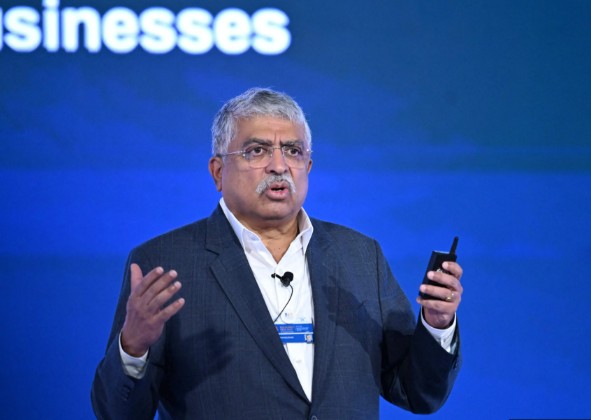
New Delhi: In one of the most significant education reform initiatives in recent years, the Central Government has appointed Infosys co-founder and digital governance pioneer Nandan Nilekani to lead a high-powered task force on examination reforms. The move comes amid growing demands for a secure, transparent, and technology-driven examination ecosystem following controversies surrounding national entrance examinations.
The newly constituted expert panel has been tasked with recommending structural, technological, and administrative reforms for the National Testing Agency (NTA)—the body responsible for conducting major national-level examinations such as NEET, JEE Main, CUET, UGC NET, and several other entrance tests.
The government believes that leveraging cutting-edge digital technologies, artificial intelligence, cybersecurity, and modern governance practices can restore public confidence in India’s examination system.
Why the Centre Has Turned to Nandan Nilekani
Nandan Nilekani is widely regarded as one of India’s foremost technology architects. Beyond co-founding Infosys, he played a transformative role in developing the Aadhaar digital identity platform, one of the world’s largest digital public infrastructure projects.
His experience in building secure, scalable digital systems is expected to help design an examination framework capable of handling millions of candidates while minimizing risks such as paper leaks, impersonation, data breaches, and operational failures.
The appointment reflects the government’s intention to address examination challenges through technology-backed governance rather than relying solely on administrative measures.
A Turning Point for the National Testing Agency
The National Testing Agency has faced intense scrutiny in recent years after repeated concerns over examination security, logistics, and transparency. These issues have affected student confidence in some of India’s most competitive entrance examinations.
The reform panel is expected to recommend comprehensive improvements across the examination lifecycle—from question paper preparation and secure transmission to candidate authentication, result processing, and grievance redressal.
Education experts believe that strengthening institutional systems is just as important as introducing new technology to ensure long-term credibility.
Key Areas the Task Force is Expected to Focus On
1. Secure Digital Examination Infrastructure
The committee is expected to examine methods for strengthening digital examination systems through:
- Advanced encryption for question papers
- Secure digital distribution mechanisms
- Real-time monitoring of examination centres
- End-to-end cybersecurity architecture
- Stronger data protection protocols
Such measures could significantly reduce vulnerabilities associated with large-scale examinations.
2. Technology-Driven Candidate Verification
Experts believe modern authentication technologies can improve examination integrity through:
- Multi-layer identity verification
- AI-assisted facial recognition
- Biometric validation
- Digital attendance systems
- Automated fraud detection
These technologies are already being used in several high-security public service systems.
3. Artificial Intelligence for Exam Monitoring
Artificial Intelligence is likely to play a larger role in future examinations by helping authorities:
- Detect suspicious examination patterns
- Monitor examination centres in real time
- Identify malpractice through data analytics
- Improve operational efficiency
- Enhance candidate support systems
AI-based monitoring could make large-scale examinations more reliable while reducing human error.
4. Institutional and Governance Reforms
Technology alone cannot solve systemic issues.
The panel is expected to recommend reforms relating to:
- Better accountability mechanisms
- Standard Operating Procedures (SOPs)
- Stronger examination governance
- Independent audits
- Risk management frameworks
- Continuous quality monitoring
These structural improvements could help create a more resilient examination ecosystem.
Building a Future-Ready Examination Ecosystem
The government’s broader objective extends beyond fixing immediate concerns.
The task force is expected to recommend a long-term roadmap for creating an examination system that is:
- Transparent
- Fair
- Technology-enabled
- Scalable
- Student-centric
- Globally benchmarked
Experts suggest that India’s expanding higher education landscape requires examination infrastructure capable of securely serving millions of candidates every year.
How Students Could Benefit
If implemented effectively, the proposed reforms may offer several benefits:
- Greater confidence in examination fairness
- Reduced chances of paper leaks
- Faster and more transparent grievance resolution
- Improved examination centre management
- Better digital communication with candidates
- Increased trust in national entrance examinations
For aspirants preparing for highly competitive exams, greater institutional reliability could significantly reduce uncertainty and stress.
Technology Will Complement, Not Replace Human Oversight
While digital systems are expected to become more sophisticated, education experts emphasize that human oversight will remain essential.
The ideal examination framework combines:
- Robust technology
- Transparent governance
- Administrative accountability
- Independent monitoring
- Continuous system upgrades
This balanced approach is expected to make examinations more secure while preserving fairness and inclusivity.
A Broader Vision for India’s Education Reforms
The appointment of Nandan Nilekani signals the government’s intention to align examination reforms with India’s rapidly expanding digital public infrastructure.
With increasing adoption of AI, cloud computing, cybersecurity solutions, and digital identity platforms across public services, education is expected to become the next major sector to benefit from technology-led governance.
The task force’s recommendations could influence not only NTA examinations but also broader reforms in public recruitment tests and other large-scale assessments conducted across the country.