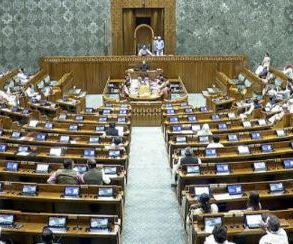
The Union Cabinet has approved a draft legislation that significantly strengthens India’s anti-paper leak law. The amendments to the Public Examinations (Prevention of Unfair Means) Act, 2024, propose a minimum prison term of five years, a maximum of 10 years for organised offences, and fines reaching ₹10 crore.
The proposal was cleared during a Cabinet meeting chaired by Prime Minister Narendra Modi at the Parliament House complex. Official sources said the bill is expected to be introduced in Parliament early next week.
Key Provisions of the Proposed Amendments
Under the revised framework:
- Individuals found guilty of paper leaks face a minimum imprisonment of five years, along with a financial penalty.
- Organised paper-leak rackets attract a maximum punishment of 10 years in jail and fines of up to ₹10 crore.
- Investigations into paper-leak cases must be completed within a fixed timeframe.
- Trials will be conducted in dedicated fast-track courts, with the aim of delivering judgments within three months.
The existing 2024 law currently provides for imprisonment of three to five years for individuals and five to 10 years for organised offences, with a minimum fine of ₹1 crore in the latter category. The amendments raise both the lower and upper thresholds of punishment and introduce stricter procedural timelines.
Scope of the Law
The Public Examinations (Prevention of Unfair Means) Act, 2024, covers recruitment examinations conducted by bodies such as the Union Public Service Commission and the Staff Selection Commission, as well as major entrance tests including NEET, JEE and CUET. The government has emphasised that the law targets organised criminal networks and institutions that profit from examination fraud, while ensuring that candidates themselves are not penalised under its provisions.
Background and Context
The original Act was the first central legislation specifically enacted to address paper leaks and organised examination malpractice. It came into force in June 2024 after repeated controversies over the integrity of national-level tests. Despite its existence, conviction rates under the law have remained low, prompting calls for stronger deterrence and faster judicial processes.
The Cabinet decision follows a late-night video message from the Prime Minister in which he announced that the government would bring legislation providing stronger legal action against paper leaks. The announcement came amid sustained student protests over alleged irregularities in the NEET-UG examination and demands for systemic reforms in the examination system.
Parallel measures already under way include the termination of 47 officials at the National Testing Agency, notification of specialist leadership positions, and a review of examination delivery processes, including a planned shift of NEET-UG to computer-based testing.
Next Steps
Sources indicated that the amendment bill is likely to be taken up in Parliament on Monday. Once enacted, the stronger penalties and time-bound trial provisions are expected to give the anti-paper leak framework sharper enforcement teeth.
The government has described the changes as part of a broader effort to deter organised examination fraud and restore confidence in the fairness of public examinations.