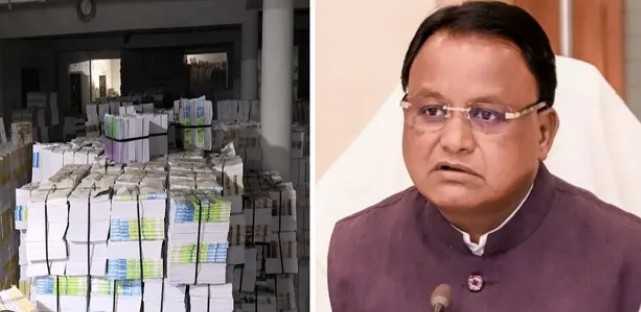
In a major move to safeguard the quality of school education, Odisha Chief Minister Mohan Charan Majhi has ordered a Crime Branch investigation into widespread errors found in State Council of Educational Research and Training (SCERT) textbooks prescribed for Classes I to VIII. The Chief Minister has also directed SCERT to register a First Information Report (FIR), paving the way for a comprehensive criminal investigation into the preparation, review, printing, and publication of the textbooks.
The decision follows widespread criticism after numerous factual, linguistic, grammatical, historical, and printing mistakes were identified in textbooks distributed for the 2026–27 academic session, raising serious concerns about academic quality and administrative accountability.
What Triggered the Controversy?
The controversy began after teachers, parents, and education experts reported an unusually high number of mistakes in newly printed textbooks.
Key Findings
- 1,678 errors were identified across 55 textbooks for Classes I to VIII.
- The mistakes included:
- Spelling and grammatical errors.
- Factual inaccuracies.
- Historical and geographical mistakes.
- Incorrect illustrations and captions.
- Editorial and printing lapses.
The books had already been distributed to over 5.2 million students, intensifying concerns about their impact on classroom learning.
Chief Minister Orders FIR and Crime Branch Investigation
Taking serious note of the issue, Chief Minister Mohan Charan Majhi instructed the Director of SCERT to lodge an FIR with the Crime Branch, enabling an independent criminal investigation.
The Crime Branch has been tasked with examining:
- Preparation of textbook manuscripts.
- Editing and proofreading processes.
- Fact-checking mechanisms.
- Printing and publication procedures.
- Approval and quality-control systems.
- Identification of officials or agencies responsible for the lapses.
Officials have indicated that investigators will determine whether the errors resulted from negligence, procedural failures, or any deliberate misconduct.
Earlier Administrative Action
Before ordering the criminal probe, the state government had already initiated disciplinary measures based on the findings of a high-level committee headed by the Development Commissioner.
Actions Taken
- Suspension of the then SCERT Director.
- Suspension of three Assistant Directors.
- Departmental proceedings initiated against six additional Assistant Directors for alleged supervisory lapses.
The committee reportedly identified significant failures in editorial oversight and textbook quality assurance.
Government Plans Systemic Reforms
Beyond fixing immediate errors, the Odisha government has announced measures to strengthen textbook preparation and quality assurance.
Proposed Reforms
- Creation of a Master Errata Register to document and communicate corrections.
- Distribution of corrected information to schools and students.
- Establishment of a dedicated Quality Assurance Cell within SCERT.
- Mandatory multi-stage verification covering:
- Language accuracy.
- Content validation.
- Illustrations and graphics.
- Printing quality before publication.
These measures aim to prevent similar lapses in future editions of school textbooks.
Impact on Students and Schools
Textbooks are the primary learning resource for millions of school students, making accuracy essential for effective education.
Potential Consequences of the Errors
- Confusion among students.
- Challenges for teachers during classroom instruction.
- Risk of incorrect understanding of historical and scientific concepts.
- Additional workload for schools to explain and correct mistakes.
- Erosion of public confidence in educational institutions.
Education experts note that even minor textbook inaccuracies can have long-term consequences when they affect foundational learning in primary and upper-primary classes.
A Wake-Up Call for Textbook Development
The incident has renewed discussion on the need for stronger editorial and academic review processes in textbook development.
Experts suggest that future textbook preparation should include:
- Independent subject experts.
- Professional language editors.
- Multiple rounds of peer review.
- Digital proofreading tools.
- Pilot testing before statewide distribution.
- Greater transparency in textbook approval processes.
Such safeguards can improve both content quality and public trust in school education.
Broader Significance for School Education
The Odisha textbook controversy highlights the importance of robust governance in curriculum development. As states continue to revise textbooks in line with the National Education Policy (NEP) 2020, maintaining high standards of academic accuracy, editorial quality, and accountability will be essential.
The government’s decision to order both administrative and criminal investigations reflects an effort to reinforce accountability while protecting students’ academic interests.