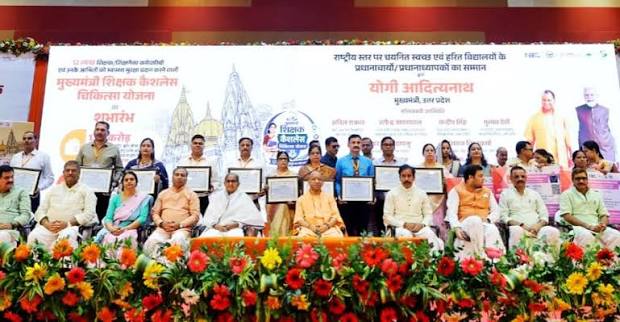
In a major boost to employee welfare in the education sector, the Uttar Pradesh Government has launched the Chief Minister’s Teachers’ Cashless Medical Scheme, extending cashless healthcare benefits of up to ₹5 lakh to teachers, non-teaching staff, and their eligible family members. Launched by Chief Minister Yogi Adityanath in Varanasi, the scheme aims to eliminate financial barriers to quality healthcare while strengthening the social security framework for education professionals. It is expected to benefit over 15 lakh teaching and non-teaching personnel, making it one of the largest healthcare initiatives exclusively for the education sector in India.
The initiative reflects the state’s growing emphasis on improving the welfare of educators, recognising that healthy and financially secure teachers contribute significantly to better educational outcomes.
A Major Step Towards Teacher Welfare
Teachers form the backbone of the education system, yet healthcare expenses often place a significant financial burden on them and their families.
Medical emergencies frequently lead to:
- High out-of-pocket expenditure
- Delayed treatment
- Financial stress
- Dependence on loans or personal savings
The new cashless medical scheme addresses these concerns by enabling eligible beneficiaries to receive treatment without making immediate payments at empanelled hospitals, reducing administrative hurdles and ensuring quicker access to healthcare.
Key Features of the Chief Minister’s Teachers’ Cashless Medical Scheme
The scheme introduces a comprehensive healthcare support system for education employees.
Cashless Medical Coverage
Eligible beneficiaries can avail cashless hospitalization and treatment up to ₹5 lakh per family per year, reducing the financial burden during medical emergencies.
Wide Beneficiary Coverage
The scheme covers:
- Government school teachers
- Non-teaching staff
- Eligible dependent family members
- Other notified education department personnel, including PM POSHAN cooks under notified provisions.
Treatment at Empanelled Hospitals
Beneficiaries can receive treatment at hospitals empanelled under the scheme, ensuring cashless access to approved medical services.
Digital Registration and Verification
A dedicated online registration system has been introduced to simplify enrolment and verification, improving transparency and accessibility.
Objectives Behind the Scheme
The state government has introduced the initiative with multiple long-term objectives.
Financial Protection
Reducing healthcare-related financial stress for teachers and staff.
Timely Access to Healthcare
Ensuring beneficiaries receive quality treatment without delays caused by financial constraints.
Improved Employee Welfare
Enhancing overall social security and well-being of education professionals.
Boosting Workplace Productivity
Healthy educators are better positioned to deliver quality teaching and contribute effectively to the education system.
Who Will Benefit?
The scheme is expected to benefit a large section of Uttar Pradesh’s education workforce.
Primary beneficiaries include:
- Teachers working in government schools
- Non-teaching employees
- Eligible family members
- Other notified education staff covered under the programme
Overall, the scheme is projected to provide healthcare security to more than 15 lakh beneficiaries, making it one of the state’s largest employee-focused welfare initiatives.
How the Scheme Works
The implementation model focuses on convenience and efficiency.
Step 1: Registration
Eligible employees register through the designated government portal.
Step 2: Verification
Departmental verification confirms eligibility.
Step 3: Digital Identification
Beneficiaries receive approval for accessing cashless medical services.
Step 4: Cashless Treatment
Treatment can be availed at empanelled hospitals without upfront payment, subject to scheme guidelines and coverage limits.
A Growing Focus on Employee Welfare
The cashless medical scheme is part of Uttar Pradesh’s broader effort to improve the welfare ecosystem for teachers and school employees.
Alongside healthcare, the state has introduced initiatives such as:
- Direct Benefit Transfer (DBT) support for students
- Digital governance in education
- Teacher recruitment and training reforms
- Expansion of welfare measures for education personnel
At the launch event, the government also announced DBT support for school students, underscoring a dual focus on both learners and educators.
Health Security and Quality Education Go Hand in Hand
Education experts have long argued that teacher welfare directly influences educational quality.
Healthcare protection contributes to:
- Reduced absenteeism
- Better physical and mental well-being
- Increased job satisfaction
- Higher professional commitment
- Improved classroom performance
By reducing concerns over medical expenses, teachers can devote greater attention to academic responsibilities and student learning.
Comparison with Similar Health Schemes
Several Indian states have introduced dedicated health insurance programmes for government employees.
The Uttar Pradesh initiative stands out because of:
- Exclusive focus on the education workforce
- Cashless treatment model
- Large beneficiary base
- Integration with digital registration systems
- Coverage for eligible dependents
The scheme complements broader national efforts to strengthen social protection for public sector employees while addressing the specific needs of the education community.
Implementation Challenges
Like any large-scale welfare programme, successful implementation will require continuous monitoring.
Key challenges include:
Awareness Among Employees
Ensuring all eligible beneficiaries understand registration procedures and available benefits.
Hospital Network Expansion
Maintaining an adequate network of empanelled hospitals across urban and rural districts.
Efficient Claims Processing
Ensuring seamless cashless treatment with minimal administrative delays.
Technology Integration
Strengthening digital infrastructure for registration, verification, and grievance redressal.
Potential Long-Term Impact
If implemented effectively, the scheme could deliver significant long-term benefits.
These include:
- Greater financial security for teachers
- Improved healthcare access
- Higher employee morale
- Better retention of education professionals
- Enhanced productivity in schools
- Stronger public confidence in government welfare initiatives
The initiative also reinforces the government’s recognition that investments in teacher welfare are investments in educational quality.
The Road Ahead
The launch of the Chief Minister’s Teachers’ Cashless Medical Scheme marks an important milestone in Uttar Pradesh’s education and healthcare policy.
By offering cashless medical treatment of up to ₹5 lakh, the government has addressed a longstanding need for comprehensive health protection for teachers and education staff. Beyond financial assistance, the scheme reflects a broader commitment to improving the quality of life of educators who play a critical role in shaping future generations.
As implementation progresses, the scheme’s success will depend on effective enrolment, robust hospital networks, timely service delivery, and continuous monitoring. If executed efficiently, it could emerge as a model for other states seeking to strengthen employee welfare in the education sector.