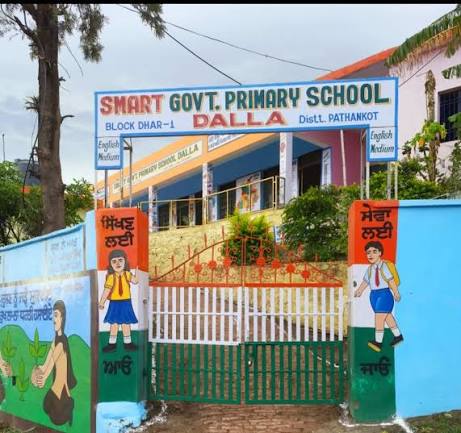
India’s school education system is witnessing a major transformation. According to the UDISE+ 2025-26 Report released by the Ministry of Education, enrolment in government schools has fallen by nearly 86 lakh students over the past two academic years, while recognised private unaided schools have added more than 88 lakh students during the same period. The findings point to a growing preference among families for private education, despite sustained government investments in school infrastructure, teacher recruitment and welfare schemes. At the same time, the report records encouraging progress in reducing school dropout rates and expanding the teaching workforce, indicating that India’s education system is improving in several areas even as it faces new challenges.
Key Highlights of the UDISE+ 2025-26 Report
The latest data presents a mixed picture of India’s school education system:
- Government school enrolment declined by nearly 86 lakh students over two years.
- Private unaided recognised schools gained over 88 lakh students.
- Total student enrolment across all schools witnessed only a marginal decline.
- Teacher strength crossed the one crore mark for the first time.
- National dropout rates continued to improve across several school stages.
- The total number of schools registered under UDISE+ declined slightly due to rationalisation and consolidation.
These figures indicate that while access to education remains largely stable, the type of school parents are choosing is changing rapidly.
Why Are Parents Moving Towards Private Schools?
The migration from government to private schools is driven by multiple factors rather than a single reason.
1. Perception of Better Learning Outcomes
Many parents believe private schools provide:
- Better classroom discipline
- Stronger English-medium education
- Improved academic performance
- Greater focus on competitive examinations
Even in rural areas, affordable private schools have expanded significantly, offering parents more choices.
2. Aspirations for Quality Education
Economic growth and rising household incomes have encouraged families to invest more in education.
Parents increasingly view education as a pathway to better employment opportunities and therefore prioritise schools perceived to offer higher-quality teaching and better exposure.
3. Expansion of Affordable Private Schools
The rapid growth of low-cost private schools has made private education accessible to middle- and lower-income families.
Many parents are willing to bear additional expenses if they believe it will improve their children’s future prospects.
4. Urbanisation and Changing Demographics
Migration towards urban and semi-urban areas has increased demand for private schools, where options are often more readily available than government institutions.
The Positive Story: Dropout Rates Continue to Decline
While enrolment trends have raised concerns, the report also highlights encouraging improvements.
India’s school dropout rates have steadily declined across multiple stages of education, suggesting that once students enter school, they are more likely to remain enrolled than in previous years. Improved retention reflects the impact of initiatives such as:
- Mid-Day Meal (PM POSHAN) Scheme
- Free textbooks and uniforms
- Scholarship programmes
- Digital learning initiatives
- Improved school infrastructure
- Awareness campaigns promoting education, especially for girls and disadvantaged communities.
Teacher Strength Crosses One Crore
One of the most significant achievements highlighted by the UDISE+ report is that the number of teachers in India’s school system has crossed one crore.
This milestone reflects:
- Ongoing recruitment efforts
- Better teacher availability
- Expansion of educational institutions
- Improved pupil-teacher ratios in many states
An adequate teaching workforce remains one of the strongest foundations for improving learning outcomes and ensuring quality education.
Government Schools Still Play a Crucial Role
Despite declining enrolment, government schools continue to educate nearly half of India’s school-going children and remain indispensable for ensuring educational equity.
They are particularly important for:
- Rural communities
- Economically weaker sections
- Tribal and remote regions
- Children requiring free education and welfare support
- Inclusive education for disadvantaged groups
Government schools also implement flagship schemes that support nutrition, health and social inclusion.
What Could Be Driving the Decline?
Education experts suggest that several structural and demographic factors may be contributing to the enrolment shift.
Changing Parent Expectations
Families increasingly expect schools to provide digital learning, spoken English, skill development and career-oriented education.
Falling Birth Rates
Some decline in total enrolment may also reflect demographic changes, with fewer children entering the school-age population in several regions.
School Consolidation
States have merged or rationalised schools with very low enrolment to improve resource utilisation, which may influence institutional statistics without necessarily reducing access to education.
Migration Patterns
Seasonal and long-term migration continues to affect school enrolment, particularly in urbanising districts.
Quality Over Quantity: The Next Challenge
The latest UDISE+ findings suggest that India’s challenge is no longer simply enrolling children in schools.
The focus is gradually shifting towards:
- Improving learning outcomes
- Strengthening foundational literacy and numeracy
- Enhancing classroom quality
- Building digital infrastructure
- Training teachers in modern pedagogical practices
- Increasing accountability and transparency
Parents today are evaluating schools not only on accessibility but also on the quality of education delivered.
The Need to Reinvent Government Schools
To regain public confidence, education experts believe government schools should prioritise:
Better Learning Outcomes
Improving reading, mathematics and critical thinking skills.
Digital Classrooms
Expanding smart classrooms, internet connectivity and technology-enabled learning.
Teacher Professional Development
Continuous training in competency-based teaching and assessment.
Community Engagement
Greater involvement of parents and local communities in school governance.
Career-Oriented Learning
Introducing vocational education, coding, entrepreneurship and future-ready skills aligned with the National Education Policy (NEP) 2020.
State-Level Differences Matter
The national trend masks considerable variation across states.
Some states continue to record strong government school enrolment due to effective welfare programmes and quality improvements, while others are witnessing faster migration towards private institutions.
Recent performance assessments also show that states differ widely in retention rates, learning outcomes and overall school quality, underlining the importance of state-specific policy interventions rather than one-size-fits-all solutions.
Policy Implications for the Future
The UDISE+ report serves as an important policy indicator.
Going forward, policymakers may focus on:
- Improving public school quality
- Expanding early childhood education
- Strengthening foundational learning
- Enhancing teacher accountability
- Investing in digital infrastructure
- Increasing community participation
- Ensuring equitable access to quality education across rural and urban India
The challenge is not merely retaining students but ensuring that every child receives meaningful, high-quality learning regardless of the type of school they attend.