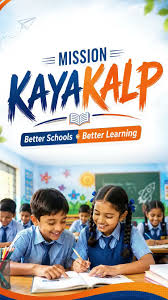
In a major push to strengthen public education, the Delhi Government has launched Mission Kayakalp, an ambitious initiative aimed at transforming government schools into modern, safe, clean, and student-friendly learning spaces. The programme focuses on comprehensive infrastructure development to improve the quality of education while creating a more inclusive and engaging environment for students.
Announcing the initiative, Chief Minister Rekha Gupta said that the objective extends beyond renovating school buildings. Mission Kayakalp seeks to create inspiring educational spaces where students can learn, grow, and thrive through improved infrastructure and enhanced facilities.
What is Mission Kayakalp?
Mission Kayakalp is a comprehensive school infrastructure modernisation programme that aims to upgrade government schools across Delhi through repairs, renovation, beautification, and the introduction of modern educational facilities.
Unlike conventional maintenance projects, the initiative combines physical infrastructure improvements with community participation, making it one of the capital’s most comprehensive school transformation programmes.
Major Infrastructure Upgrades Under Mission Kayakalp
The initiative includes extensive renovation and modernization works across selected government schools.
Key Infrastructure Improvements
- Repair of damaged school buildings.
- Painting and whitewashing of campuses.
- Roof waterproofing and leakage repairs.
- Improvement of rooftop drainage systems.
- Renovation of classrooms.
- Modernisation of science laboratories.
- Installation of RO drinking water plants.
- Water coolers for students.
- Renovation of toilets and sanitation facilities.
- Campus beautification and plantation drives.
- Improved facilities for Children with Special Needs (CWSN).
- Strengthening electrical infrastructure.
- Rainwater harvesting systems in selected schools.
These upgrades aim to create healthier, safer, and more conducive learning environments across Delhi’s government schools.
Transformation Already Visible Across Multiple Districts
Mission Kayakalp is already being implemented in several districts across the National Capital.
North Delhi
Selected schools have witnessed:
- Renovation of a sensory park for children with special needs.
- Installation of RO plants and water coolers.
- Modernisation of physics laboratories.
South Delhi
Government schools in Mehrauli and Qutub Mehrauli have undergone:
- Roof repairs.
- Classroom renovations.
- Toilet modernization.
- Building repainting.
- Plantation drives.
- Improved drinking water facilities.
West Delhi
Schools in Mohan Garden and Janakpuri are receiving:
- Roof waterproofing.
- Rainwater harvesting systems.
- Sewer line improvements.
- Electrical upgrades.
- Renovated sanitation facilities.
North-East and Outer North Delhi
Schools in Gokalpur, Shahdara, and Sawda Ghevra have benefited from:
- Building repairs.
- Renovated libraries.
- Water cooler installations.
- Green campus development.
- Space laboratory development in selected schools.
- Covered sheds and improved learning infrastructure.
Community Participation at the Core
One of the distinguishing features of Mission Kayakalp is its collaborative implementation model.
The initiative is being carried out with support from:
- Delhi Education Department.
- District administrations.
- Corporate Social Responsibility (CSR) initiatives.
- Social organisations.
- Market associations.
- Local communities.
According to the government, public participation is helping accelerate infrastructure development while strengthening community ownership of government schools.
Focus on Inclusive and Student-Centric Learning
Mission Kayakalp is designed not only to improve physical infrastructure but also to create learning environments that support every student.
The initiative gives special attention to:
- Safe and hygienic campuses.
- Accessibility for children with special needs.
- Better sanitation.
- Improved drinking water facilities.
- Modern laboratories for practical learning.
- Green and aesthetically pleasing school environments.
These improvements are expected to enhance both student well-being and academic engagement.
How Better Infrastructure Can Improve Learning
Research consistently shows that well-maintained educational infrastructure positively influences learning outcomes.
Improved school facilities can contribute to:
- Higher student attendance.
- Better classroom participation.
- Enhanced concentration.
- Improved teacher satisfaction.
- Stronger science and practical learning.
- Greater student safety and comfort.
Mission Kayakalp reflects this understanding by investing in facilities that support holistic educational development.
Supporting Quality Education in Delhi
The initiative complements broader efforts to strengthen public education by ensuring that infrastructure keeps pace with evolving educational needs.
The programme is expected to:
- Improve the overall quality of government schools.
- Reduce infrastructure disparities.
- Encourage experiential learning through upgraded laboratories.
- Promote healthier and safer school environments.
- Build greater confidence among students, teachers, and parents.