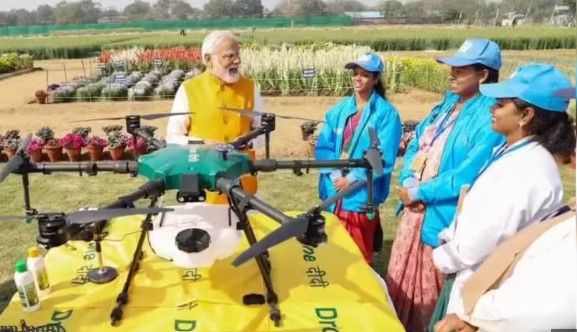
India’s ambitious Namo Drone Didi Scheme is expanding its scope, with a stronger focus on training rural women in drone technology. The initiative is transforming traditional self-help groups (SHGs) into tech-enabled service providers, marking a significant shift in both agriculture and women empowerment.
With increased training efforts and wider implementation, the scheme is emerging as a flagship model for integrating technology into rural livelihoods.
Key Highlights of the Expansion
- 👩🌾 Focus on large-scale drone training for women SHGs
- 🚁 Target to equip 15,000 women-led SHGs with drones by 2026
- 💰 Total outlay of around ₹1,261 crore
- 📅 Implementation period: 2023–24 to 2025–26
- 🎯 Aim: Create drone-based rural entrepreneurs
The expansion reflects the government’s intent to move beyond distribution and focus on skill development and practical deployment.
Core Objective: Technology Meets Women Empowerment
The scheme is designed to achieve multiple goals simultaneously:
🎯 Key Objectives:
- Empower women self-help groups (SHGs) with modern technology
- Promote precision agriculture using drones
- Generate sustainable income opportunities
- Reduce farming costs and improve productivity
By enabling women to operate drones, the initiative is bridging the gap between rural communities and advanced agri-tech solutions.
Training Component: The Heart of the Expansion
A major highlight of the scheme is its structured drone training program:
- 🧑✈️ 15-day drone pilot training for selected SHG members
- 👩🔧 5-day assistant training for additional members
- 📜 Certification through DGCA-authorised training centres
The training ensures that women are not just beneficiaries but skilled professionals capable of operating drones independently.
How Drones Are Being Used in Agriculture
The trained “Drone Didis” are using drones for:
- 🌾 Spraying fertilizers and pesticides
- 📡 Monitoring crop health
- 📊 Collecting farm data
- 💧 Promoting efficient use of resources
This leads to:
- Reduced manual labour
- Faster operations
- Increased crop yield
👉 Drones can cover large areas in minutes, making farming more efficient and cost-effective.
Business Model: From Training to Income Generation
The scheme is not just about training—it is about creating livelihood opportunities.
💰 How Women Earn:
- Provide drone spraying services to farmers
- Work with fertilizer and agri-companies
- Operate as local drone service entrepreneurs
Women SHGs act as rental service providers, offering drone services on demand.
Financial Support: Strong Government Backing
To make the scheme accessible:
- 💵 80% subsidy on drone cost (up to ₹8 lakh)
- 📦 Complete drone package includes:
- Equipment
- Training
- Technical support
This reduces financial barriers and ensures easy adoption of high-cost technology.
Implementation Status: Progress So Far
- 🚁 Over 1,000 drones already distributed
- 🎯 First phase includes 3,000+ SHGs
- 📈 Gradual scaling across states
The government is coordinating with:
- Agriculture departments
- Rural development agencies
- Fertilizer companies
to ensure consistent implementation and business opportunities.
Analytical Insight: Why This Scheme Matters
✅ Strengths
- Combines technology + livelihood + gender empowerment
- Promotes modern agriculture practices
- Creates new rural job roles
- Encourages entrepreneurship among women
⚠️ Challenges
- Need for continuous technical support
- Adoption barriers in remote areas
- Ensuring long-term demand for drone services
Broader Impact: Transforming Rural Economy
The scheme is contributing to:
- 🌱 Digital transformation of agriculture
- 👩💼 Increased female workforce participation
- 📉 Reduction in rural unemployment
- 🚀 Growth of India’s drone ecosystem
It also supports national goals like:
- Atmanirbhar Bharat
- Digital India
- Women-led development