The increasing reliance on temporary and contractual teachers in West Bengal has emerged as a critical issue within the state’s education system. What began as a stop-gap arrangement to address teacher shortages has gradually evolved into a structural dependency, raising concerns about education quality, job security, and governance inefficiencies.
Understanding the Trend: A Shift from Permanent to Temporary Staffing
Key Observations:
- A significant proportion of teaching positions are now filled through contractual, guest, or ad-hoc appointments
- In some institutions, temporary teachers outnumber permanent faculty
- Multiple categories of temporary appointments exist, each with varying pay and job security
Studies indicate that vacant posts and financial constraints have driven institutions to prefer short-term hires over permanent recruitment.
Root Causes Behind the Rise
A. Chronic Teacher Vacancies
Government schools and colleges often operate with large numbers of unfilled sanctioned posts, forcing administrations to rely on temporary hires.
B. Delays in Recruitment Processes
Centralized recruitment systems, such as those conducted by state commissions, often take years, leaving classrooms understaffed.
C. Cost-Cutting Measures
Hiring contractual teachers allows institutions to:
- Avoid long-term financial commitments
- Reduce salary and benefit burdens
D. Administrative and Policy Gaps
Lack of streamlined hiring frameworks and inconsistent policies have contributed to the institutionalization of temporary employment.
Impact on Teachers: Job Insecurity and Limited Growth
Key Challenges Faced:
- Low and inconsistent salaries
- Lack of benefits such as pensions, health insurance, and job stability
- Minimal opportunities for career advancement
- Vulnerability to sudden termination
Research highlights that many contractual teachers operate in a “volatile academic ecosystem” with little legal or institutional protection.
Impact on Education Quality
Critical Concerns:
- High turnover leads to lack of continuity in teaching
- Reduced motivation among teachers due to insecurity
- Limited accountability and institutional commitment
In extreme cases, schools have been forced to:
- Combine classes
- Assign teachers to subjects outside their expertise
This directly affects learning outcomes and student engagement.
Link to Broader Education Crisis
The issue of temporary teachers is not isolated—it is part of a larger structural challenge:
Emerging Issues:
- Teacher shortages across districts
- Rising student dropouts in some regions
- Increasing reliance on informal or underqualified teaching support
These trends indicate a system under stress, where temporary staffing is a symptom rather than the root problem.
Recent Developments: Recruitment Crisis and Protests
The situation has intensified following recent developments in the state:
Key Events:
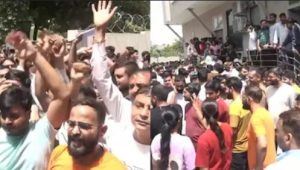
- Cancellation of over 25,000 teaching appointments due to irregularities
- Large-scale protests by affected candidates demanding reinstatement
- Ongoing legal and administrative challenges
This has further disrupted the education system and increased dependence on temporary staffing.
Structural Issues in the System
Systemic Weaknesses:
- Centralized recruitment causing delays
- Lack of autonomy at the school level
- Absence of real-time vacancy management
Experts argue that government schools lack the flexibility seen in private institutions, where vacancies are filled quickly and locally.
Policy Implications and the Way Forward
Recommended Reforms:
A. Accelerated Recruitment
- Conduct regular and timely teacher recruitment drives
B. Policy Standardization
- Define clear guidelines for contractual hiring
- Ensure minimum pay and benefits
C. Strengthening Teacher Workforce
- Invest in training and capacity building
- Improve working conditions
D. Decentralized Hiring Models
- Provide schools with limited autonomy to fill urgent vacancies