In a pathbreaking move that redefines access to aerospace education, Indian Institute of Technology Madras has unveiled a new online Bachelor of Science (BS) programme in Aeronautics and Space Technology. This undergraduate degree, offered entirely online, does not require a JEE Main or JEE Advanced score for admission, making quality space education more inclusive and far-reaching.
🚀 What’s New: Flexible Eligibility & Open Enrollment
Traditionally, admission to premier technical education in India has been tightly linked to competitive examinations like JEE Advanced. However, this newly announced programme diverges from that model:
- No JEE Main or Advanced Score Required: Eligibility is based on Class 12 pass or equivalent, including diploma holders.
- Open Enrollment with No Cap: There is no maximum limit on the number of students enrolled, opening doors for learners from diverse backgrounds.
- Flexible Completion Timeline: Students can complete the degree within prescribed milestones and at a flexible pace.
- Sunday Exam Schedule: Online and centre-based assessments are offered, with examinations typically held on Sundays, to accommodate working learners and multi-taskers.
This model is an extension of IIT Madras’s broader push into online BS degrees that remove traditional barriers and expand access to higher education.
📘 Course Focus: What You Will Learn
The programme centres on skill-based training tailored to aerospace and aeronautics:
- Aeronautical Systems Fundamentals
- Space Technology Concepts
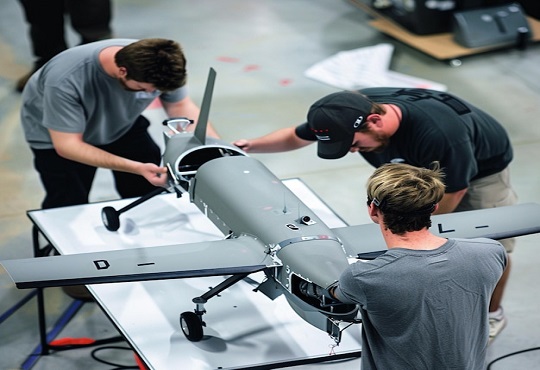
- Unmanned Aerial Vehicles (UAVs)
- Computational Simulations & Design Tools
- Sector-aligned Practical Projects
Students at diploma stages work on core engineering tools like computational fluid dynamics and finite element analysis, while those at the BS level undertake a capstone project — often involving aircraft or spacecraft design.
🎓 How This Differs from Traditional Degrees
This initiative embraces a hybrid education model that blends online instruction with structured evaluation mechanisms:
- Recorded Lectures and Live Tutorials
- Online Discussion Forums
- Centre-based or Online Proctored Exams
- Internship and Placement Opportunities Coordinated via Career Cell
- Pathways to Higher Studies and Competitive Exams (like GATE)
The flexibility allows students to learn from anywhere in India or abroad while managing other commitments — such as employment or simultaneous degrees.
🎯 Why This Matters: Accessibility Meets Industry Demand
The space sector and aviation industry are among the fastest-growing technology arenas globally. India’s strategic push toward aerospace manufacturing, satellite deployment, and UAV systems has heightened demand for skilled professionals. This programme:
✅ Bridges the skill gap in fast-emerging engineering domains
✅ Offers affordable, accessible, and quality STEM education
✅ Enables a diverse cohort of learners — including those from non-engineering streams — to enter the aerospace field
✅ Supplements traditional JEE-based pathways with flexibility and inclusivity
💼 Career Prospects and Beyond
Graduates can pursue roles in:
- Public sector undertakings and defence aerospace firms
- Private space startups and aviation technology companies
- R&D, design, simulation, and testing labs
- Higher studies at institutions such as IITs, IISc, or international universities
- Competitive exams like GATE for postgraduate specialisations
This blend of theoretical depth and practical exposure positions learners for success in both industry and academia.
📊 A Strategic Shift in Indian Higher Education
IIT Madras’s launch is part of a broader trend where premier institutions are offering online, inclusive degree programmes — many of which do not mandate competitive entrance exam scores. Similar initiatives (like the BS in Data Science and Applications) have already enabled thousands to pursue IIT-level education with flexible eligibility.
This shift reflects a recognition that talent and potential isn’t limited to exam scores and that flexible models can democratise access to high-impact, future-focused education.