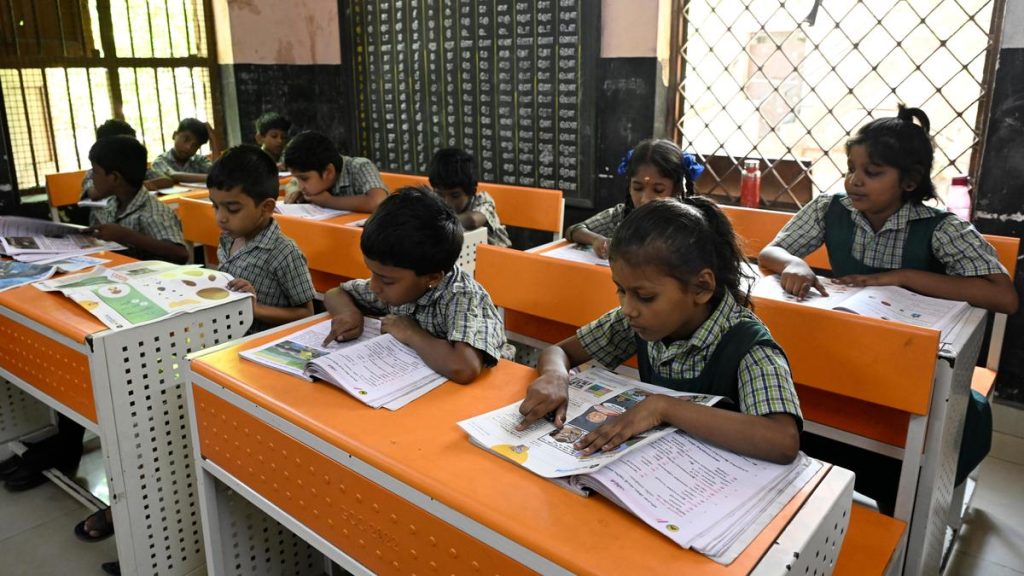
With nearly 40% of its population under 25, India stands on the brink of a demographic goldmine, but experts warn that without a bold pivot in education spending, this potential could fizzle into frustration. As the Union Budget 2026 approaches, voices from academia and industry are uniting in a clarion call: move beyond swelling enrollment figures to fortify quality infrastructure, ignite digital innovation, and equip the next generation for a knowledge economy. Last year’s ₹1.28 lakh crore education outlay—up 6.22% with ₹50,077 crore for higher education—marked progress, but the Economic Survey 2024-25 reveals a stark truth: a 13.8% surge in higher education institutions and Gross Enrolment Ratio climbing from 23.7% to 28.4% have outstripped upgrades in labs, hostels, and digital tools. This mismatch risks churning out graduates ill-prepared for jobs in AI, machine learning, and sustainable tech, undermining the Viksit Bharat 2047 vision. Drawing from ongoing reforms under the National Education Policy (NEP) 2020, stakeholders envision Budget 2026 as the inflection point—potentially hiking allocations to ₹1.5 lakh crore or more—to weave education, health, and skilling into a cohesive strategy that could boost employability by 20-30% and slash rural-urban learning divides.
Key Points:
- Demographic Urgency: 40% youth under 25 demands skilled talent for economic leap.
- Budget Benchmark: ₹1.28 lakh crore in 2025; experts eye 10-15% hike for quality focus.
- Growth Gaps: GER at 28.4%, but infra lags—labs and digital access key bottlenecks.
- Vision Tie-In: Aligns NEP 2020 with Viksit Bharat for AI-ready, equitable education.
The Enrollment Surge vs. the Quality Crunch: Why Infrastructure Can’t Wait
India’s education system, the world’s second-largest, has ballooned impressively—adding thousands of colleges and drawing in millions more students—yet this quantitative triumph masks a deepening crisis in qualitative depth. Experts spotlight how rapid expansion has strained physical assets like well-equipped labs and modern hostels, leaving many institutions resembling overcrowded relics rather than innovation hubs. In rural pockets, where 70% of learners hail from, crumbling facilities exacerbate dropout rates hovering at 15-20%, while urban campuses grapple with outdated tech that stifles hands-on research. This infra deficit not only hampers learning outcomes but also fuels a employability paradox: 50% of graduates deemed unready for industry roles, per recent skill surveys. Budget 2026, proponents argue, must channel funds into resilient buildings, green campuses, and connectivity upgrades—mirroring global benchmarks where nations like South Korea invested 5-6% of GDP in ed-tech infra to turbocharge growth. By prioritizing these, India could transform its 1.3 crore higher ed seats into true launchpads, fostering a 15% annual rise in research outputs and narrowing the 30% urban-rural quality chasm.
Key Points:
- Expansion Reality: 13.8% more institutions, but facilities lag—overcrowded labs a red flag.
- Rural-Urban Divide: 70% rural students face 15-20% dropout; infra upgrades could cut this by half.
- Employability Hit: 50% grads job-unready; modern hostels/labs boost readiness 25%.
- Global Lesson: 5-6% GDP ed-tech spend yields 15% research surge—India’s cue.
Expert Voices: A Unified Push for Skills, Digital, and Equity in Budget 2026
From university presidents to academic deans, India’s education vanguard is scripting a manifesto for Budget 2026—one that elevates human capital through targeted investments. Dr. P.R. Sodani of a leading health management institute champions ramped-up public outlays in education and health, urging a focus on digital transformation and multilingual tools to democratize access. “Budget 2026 could be the turning point,” he asserts, envisioning funds for institutional capacity that preps students for a gig-economy future. Echoing this, Pankaj Priya from a top business school decries the infra-enrollment mismatch, calling for a pivot to deep research and employability metrics. He pushes curriculum infusions of generative AI and machine learning, aligned with NEP’s flexibility ethos, to ensure 80% of learners graduate with industry credentials. Broader chorus from industry bodies like CII amplifies the need for integrated skilling-health linkages, while ed-tech pioneers highlight rural broadband gaps—projecting a ₹10,000 crore digital infra injection could bridge 40% of inequities. These insights converge on a theme: quality isn’t a luxury but the bedrock for India’s 2047 ambitions, with experts forecasting a 10-12% GDP productivity lift from such reforms.
Key Points:
- Sodani’s Call: Boost ed/health spend for digital/multilingual capacity-building.
- Priya’s Pivot: Research/employability focus; AI/ML in curricula per NEP.
- Industry Echo: CII urges skilling-health nexus; ₹10k crore for rural broadband.
- Projected Gains: 10-12% GDP boost via equitable, tech-savvy education.
Priority Pillars: Infrastructure, Training, Digital, and Equity – A Roadmap for Action
Budget 2026’s education blueprint, as sketched by experts, rests on interlocking pillars that blend bricks-and-mortar upgrades with forward-thinking enablers. At the forefront: quality infrastructure, from solar-powered smart classrooms to AI labs in 5,000+ underserved colleges, potentially absorbing ₹30,000-40,000 crore to match enrollment’s pace. Teacher training emerges as a linchpin—allocating ₹15,000 crore for 10 lakh educators in NEP-mandated continuous professional development, emphasizing pedagogy for hybrid learning and inclusive practices. Digital equity demands a surge in tools like affordable devices and VR simulations, closing the 50% urban-rural tech divide and enabling multilingual content for 22 official languages. Finally, research and equity funding—₹20,000 crore for grants and scholarships—could empower marginalized groups, lifting female GER by 10% and fueling 1 lakh startups annually. This holistic framework, experts note, transforms Budget 2026 from a ledger entry to a legacy builder, aligning with global pacts like SDG 4 for inclusive quality education.
Priority Pillars Table:
| Pillar | Key Recommendations | Expected Allocation (Est.) | Impact Projection |
|---|---|---|---|
| Quality Infrastructure | Smart labs, green hostels, rural connectivity | ₹30,000-40,000 crore | 20% enrollment-infra parity; 15% dropout drop |
| Teacher Training | NEP-aligned programs for 10 lakh educators | ₹15,000 crore | 25% better learning outcomes; inclusive pedagogy |
| Digital Tools & Equity | Devices, VR, multilingual platforms | ₹25,000 crore | 50% urban-rural gap closure; 10% female GER rise |
| Research & Skilling | Grants, AI/ML curricula, startup incubators | ₹20,000 crore | 1 lakh jobs created; 80% employable grads |
Key Points:
- Infra Overhaul: ₹30k-40k crore for labs/hostels to sync with 28.4% GER.
- Training Thrust: ₹15k crore for hybrid pedagogy, targeting 10 lakh teachers.
- Digital Leap: ₹25k crore for tools/equity, slashing 50% access divides.
- Research Fuel: ₹20k crore for grants, sparking 1 lakh startups.
Challenges Ahead: Bridging Gaps in a Fragmented Landscape
Even as optimism builds, stark challenges loom—chronic underfunding at 3% of GDP versus the 6% NEP target, fragmented state-center coordination, and a persistent 30% learning poverty rate among schoolers. Rural schools, starved of basics like electricity and internet, see 40% fewer digital natives emerging, while higher ed’s research output lags global peers by 60%. Teacher shortages—needing 1 million more qualified hires—compound inequities, with marginalized communities facing 2x dropout risks. Yet, Budget 2026 holds promise: targeted incentives for states, PPPs for infra, and outcome-linked funding could accelerate fixes, as seen in pilot schemes lifting regional GERs by 5-7%. Experts stress monitoring via dashboards for transparency, ensuring dollars translate to diplomas that deliver.
Key Points:
- Funding Shortfall: 3% GDP vs. 6% NEP goal; risks stalling youth gains.
- Rural Tech Void: 40% fewer digital skills; 30% learning poverty persists.
- Teacher Crunch: 1M hires needed; 2x dropout for marginalized.
- Fix Pathways: PPPs/outcome funding could boost GER 5-7% regionally.