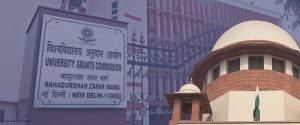
In the hallowed halls of Indian higher education, where NEP 2020 beckons toward flexible, multidisciplinary horizons, a quiet rebellion simmers against the tyranny of the attendance register. A December 2025 Delhi High Court verdict granting law students exam eligibility without meeting stringent presence quotas has ignited this discourse, echoing an op-ed’s poignant plea: “Mandating student presence erases learning.” Penned by a veteran academic with four decades in the classroom, the piece indicts compulsory attendance as a relic of paternalistic pedagogy—coercing compliance where curiosity should reign. Far from fostering scholarship, it argues, this bureaucratic cudgel reduces universities to compliance factories, sidelining the dialogic essence that Paulo Freire championed. As India grapples with post-pandemic hybrid models and rising student stress, this ruling and reflection compel a reckoning: Should presence proxy for progress? This analysis unpacks the op-ed’s thesis, dissects its arguments and evidence, explores alternatives, and probes implications for NEP’s vision, revealing how surveillance stifles the very intellect it seeks to sharpen.
Thesis: Presence as Proxy, Not Proof of Pedagogy
At its core, the op-ed posits that mandating physical attendance is “pedagogically bankrupt,” a coercive mechanism that equates bodies in seats with brains at work. This practice, it contends, erodes the university’s sacred charge: Cultivating curiosity over compliance. The Delhi High Court’s intervention—allowing exams despite shortfalls—serves as a judicial rebuke, affirming that learning defies surveillance. Quote: “A university worthy of its name should cultivate curiosity, not compliance.” In India’s context, where UGC norms often enforce 75-80% attendance, this critique strikes at the heart of a system where rote metrics overshadow reflective growth, potentially alienating the very youth NEP aims to empower through choice and critique.
Arguments Against the Attendance Imperative: From Paternalism to Perfunctory Transfer
The author’s indictment unfolds in layers, framing mandatory presence as a symptom of deeper malaise: A managerial mindset that views education as information deposit, not dialogic awakening.
- Paternalism’s Pitfall: Attendance stems from an outdated belief that students need herding into intellect, producing obedience, not originality. It ignores why classes empty—not disinterest, but disengagement from uninspired delivery.
- Managerial Misstep: Classrooms become rote rituals, better served by digital archives; presence measures control, not comprehension, inverting the teacher-student dynamic.
- Indian Institutional Irony: Central oversight tools like UGC mandates weaponize attendance against autonomy, clashing with NEP’s flexible ethos and fostering a culture of fear over inquiry.
These critiques resonate amid 2025’s rising dropout debates, where 20-25% of undergrads cite “irrelevance” as a quit trigger.
Evidence: Anecdotes, Icons, and Intellectual Anchors
The op-ed marshals a mosaic of lived lore and literary lodestars to substantiate its stance, blending personal vignettes with global exemplars.
- Personal Pedagogy: Over 40 years, the author skipped attendance sheets, permitting exams freely—yet classrooms brimmed with voluntary vigor. Outdoor Wordsworth recitals on ridges sparked collective awe; Walden trails ignited Thoreau-fueled debates on solitude versus society.
- Lectern Legends: Icons like Isaiah Berlin’s meticulously crafted orations, Terry Eagleton’s incendiary provocations, Germaine Greer’s rebellious riffs, Christopher Bayly’s vivid histories, and Frank Kermode’s wine-tinged literary lounges drew crowds through charisma, not compulsion.
- Global Benchmarks: Oxford, Cambridge, Harvard, MIT thrive sans mandates, trusting maturity; Paulo Freire’s Pedagogy of the Oppressed decries “banking” education, advocating co-creation over coercion.
- Indian Echo: The High Court’s ruling disrupts law schools’ apathy, a microcosm of NEP’s autonomy aspirations.
| Evidence Type | Example | Insight |
|---|---|---|
| Personal | No-attendance policy over 40 years | Engagement blooms from invitation, not imposition. |
| Iconic | Berlin’s lectures | Preparation trumps presence; desire drives depth. |
| Theoretical | Freire’s dialogic model | Learning as awakening, not deposit. |
| Judicial | Delhi HC 2025 ruling | Presence ≠ Proficiency; autonomy prevails. |
This evidentiary tapestry transforms anecdote into argument, grounding critique in lived luminosity.
Alternatives: Rekindling Curiosity Through Pedagogical Reinvention
Rather than rigid registers, the op-ed urges introspection and innovation, flipping the script from enforcement to enchantment.
- Teacherly Reflection: Empty seats signal stale syllabi—innovate with experiential spaces that ignite intrinsic interest.
- Dialogic Design: Embrace Freire’s co-creation; foster peer admiration over punitive proxies.
- Autonomy Amplification: Decouple attendance from exams, spurring self-directed study; NEP’s credit banks enable flexible pathways.
- Indian Inflection: UGC could pivot to outcome metrics, rewarding engagement via portfolios over punch-ins.
Quote: “By removing the coercive element of compulsory attendance, educators will be compelled to innovate and reimagine their pedagogical approaches.” This blueprint beckons a renaissance where classrooms pulse with passion, not policing.
Implications: NEP’s Autonomy in the Balance
The op-ed’s clarion call reverberates through NEP 2020’s corridors, where flexibility clashes with fossilized norms. Positively, the HC ruling could cascade, easing 75% mandates in 500+ institutions; negatively, entrenched bureaucracies may double down, widening urban-rural rifts (rural attendance at 60% vs. 80% urban). For students, it liberates time for self-study amid 2025’s 15% stress surge; for faculty, it demands dynamism in a tenure-tied system. Globally, it nods to hybrid havens like Stanford, urging India toward a “curiosity curriculum.”
Yet, caveats linger: Without safeguards, autonomy risks apathy; NEP’s 2026 audits must balance freedom with frameworks.