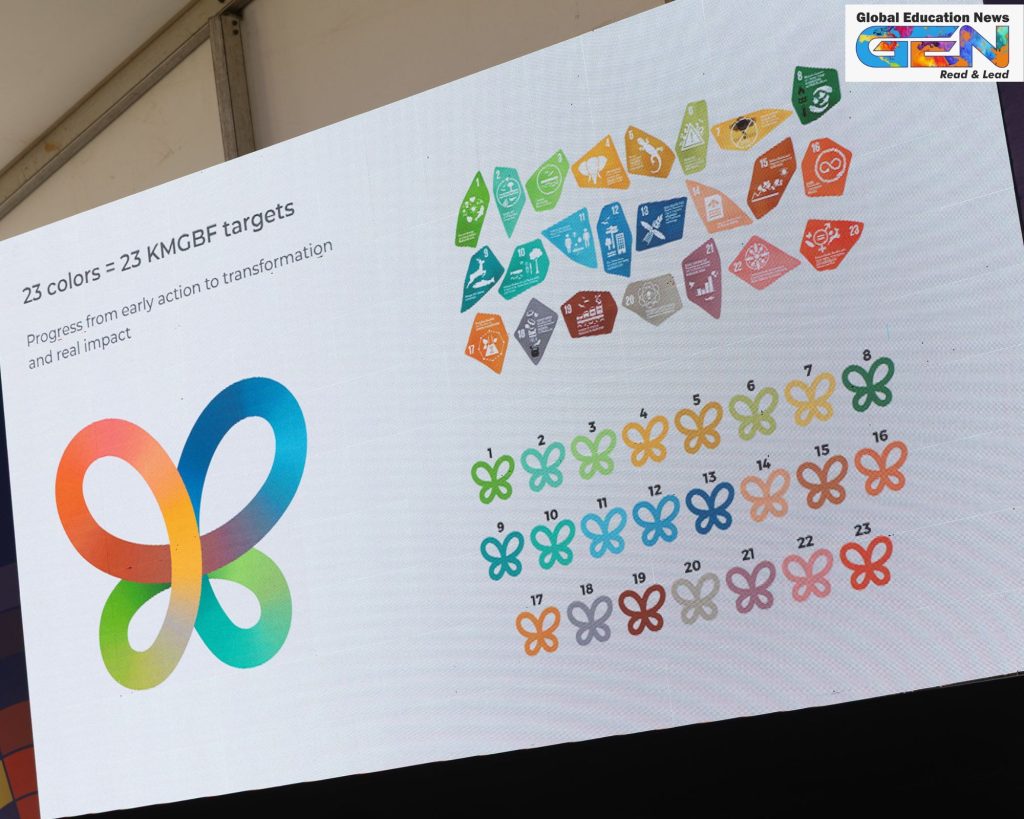
As of December 26, 2025, Armenia has marked a symbolic milestone in global environmental diplomacy by introducing the official logo for the 17th Conference of the Parties (COP17) to the Convention on Biological Diversity (CBD). Featuring the rare Erivan Anomalous Blue butterfly (Polyommatus eriwanensis)—a species endemic to the Yerevan region—the emblem encapsulates the nation’s commitment to translating international pledges into tangible conservation. Set against the backdrop of the Kunming-Montreal Global Biodiversity Framework’s inaugural review, this logo transcends aesthetics, serving as a clarion call for coordinated action on habitat loss, species decline, and subsidy reforms. With COP17 slated for October 2026 in Yerevan, the design’s butterfly motif underscores fragility and interdependence, aligning with Armenia’s emerging leadership in biodiversity governance. This analysis probes the logo’s conception, deeper symbolism, conference imperatives, and far-reaching implications, highlighting how such emblems evolve from mere icons to catalysts for accountability.
Background: Armenia’s Ascendancy in Global Biodiversity Diplomacy
Armenia’s selection as COP17 host in 2023 positions it as a bridge between Europe and Asia, leveraging its rich Caucasian ecosystems—home to over 3,500 plant species and 400 vertebrates—amid accelerating threats like deforestation and climate variability. The CBD, established in 1992 at the Rio Earth Summit, has convened annually to advance the 2010 Aichi Targets’ successor: the 2022 Kunming-Montreal Framework, with its 23 ambitious targets for 2030.
- Historical Evolution of COP Logos: Early summits (e.g., COP1 in Nassau, 1994) used generic green motifs; recent ones, like COP16 in Cali, Colombia (2024), spotlighted the Inirida White-Lipped Peccary, signaling a pivot from awareness to localized, actionable symbolism.
- Armenia’s Contextual Stakes: As a landlocked nation with 12% forest cover, Armenia faces acute biodiversity erosion—losing 20% of endemic species habitats since 2000—making its hosting a platform for advocacy on mountain ecosystems.
- Global Urgency: The Framework’s review at COP17 comes amid dire UN reports: 1 million species at risk, with 75% of land altered by humans, necessitating a shift from rhetoric to measurable outcomes.
This unveiling, timed for pre-summit momentum, reflects Armenia’s strategic narrative: small nations wielding outsized influence through cultural and ecological authenticity.
The Logo Unveiled: Design Elements and Aesthetic Ingenuity
Crafted through a national design competition, the logo centers on the Erivan Anomalous Blue, a diminutive Lycaenidae butterfly discovered in 1928 near Yerevan, whose iridescent wings evoke the region’s arid grasslands.
- Core Visuals: A stylized butterfly silhouette dominates, rendered in 23 harmoniously blended hues—each shade representing one of the Framework’s targets, from sustainable agriculture (Target 7) to invasive species control (Target 8).
- Slogan Integration: “Taking Action for Nature” arcs below, in sleek sans-serif font, emphasizing implementation over aspiration.
- Technical Craftsmanship: Digital vector format ensures scalability for merchandise, digital platforms, and venue branding; color palette draws from Armenian folk art, infusing cultural resonance.
- Accessibility Features: High-contrast variants for digital/print, with alt-text descriptions promoting inclusivity in global outreach.
This design not only adheres to CBD branding guidelines but innovates by embedding quantifiable policy markers, making it a visual manifesto for the summit’s agenda.
Symbolism Decoded: From Local Endemic to Universal Metaphor
The Erivan Anomalous Blue isn’t arbitrary—its selection amplifies themes of vulnerability and interconnectedness, mirroring biodiversity’s precarious web.
- Ecological Indicator Role: Butterflies, as keystone pollinators, signal ecosystem health; this species’ dependence on unidentified host plants highlights knowledge gaps, with its calcareous grassland habitat shrinking 15% due to urbanization.
- Interdependence Narrative: The 23 colors illustrate target synergies—e.g., protecting 30% of lands (Target 3) bolsters genetic diversity (Target 13)—warning that isolated efforts falter.
- Fragility and Transformation: Butterflies embody metamorphosis, urging a “caterpillar-to-butterfly” evolution in global policy from Kunming’s visioning to Montreal’s monitoring.
- Cultural Echoes: In Armenian lore, butterflies symbolize souls and renewal, tying national heritage to planetary stewardship.
Analytically, this emblem critiques past COP shortfalls (only 16% Aichi Targets met), positioning COP17 as an accountability pivot.
Conference Context: COP17’s High-Stakes Review and Armenia’s Hosting Blueprint
Slated for October 5-18, 2026, in Yerevan’s Karen Demirchyan Sports and Concerts Complex (capacity: 10,000+), COP17 will convene 196 parties, NGOs, and indigenous voices to dissect Framework progress via National Reports.
| Agenda Pillar | Key Focus Areas | Expected Outcomes |
|---|---|---|
| Implementation Review | Compliance with 23 Targets; funding gaps in Global Biodiversity Fund ($20B pledged, $5B disbursed) | Mid-term adjustments; enhanced monitoring via IPBES assessments |
| Thematic Streams | Habitat restoration; subsidy reforms ($500B harmful annually); digital sequence info sharing | Binding protocols on biotech access; youth/indigenous quotas (30% delegates) |
| Side Events | Armenia-specific: Caucasus biodiversity corridor; global: Nature-based solutions for climate | 200+ sessions; $100M+ in pledges for post-2020 action |
| Logistical Prep | Visa facilitations; hybrid format for 5,000 in-person attendees | Carbon-neutral venue; AI-driven translation in 10 languages |
- Armenia’s Unique Angle: As a non-mega-diverse nation, it champions “small-state solutions,” like community-led conservancies protecting 50,000 ha.
- Precedents and Pressures: Building on COP15’s Montreal adoption, it anticipates tensions over Target 21 (resource mobilization), with developing nations demanding equity.
Yerevan’s compact scale fosters intimate dialogues, contrasting larger hosts like Sharm El-Sheikh (COP14).
Implications and Challenges: Catalyzing Action or Mere Symbolism?
The logo’s debut heralds COP17’s potential to galvanize $200B+ in biodiversity finance by 2030, but risks symbolic inertia if unbacked by enforcement.
- Positive Ripples: Elevates endemic species awareness, potentially boosting Armenia’s eco-tourism (up 20% post-logo); inspires youth campaigns, with #ButterflyAction trending in 50 countries.
- Conservation Catalysts: Spotlights vulnerable indicators like Polyommatus eriwanensis (not Red-Listed but range-restricted), urging IUCN assessments and habitat safeguards.
- Global Equity Lens: Reinforces South-South solidarity, as Armenia advocates for technology transfers to counter North-driven subsidies.
- Hurdles Ahead: Geopolitical strains (e.g., regional conflicts) may deter attendance; ensuring 50% women/indigenous representation amid 2026 elections.
Critically, the logo’s success metrics—target fulfillment rates—will test if visual poetry yields policy prose.